Support our educational content for free when you purchase through links on our site. Learn more
🚗 How Mileage Affects Your Lease Payments: The 2026 Guide

Ever handed over your keys at the end of a lease, only to be hit with a bill that makes your jaw drop? It’s a story we’ve heard too many times at Car Leases™. One of our favorite clients, let’s call him Dave, thought he was a “safe driver” with a 12,0-mile annual allowance. But a new job meant a 40-mile round trip commute he hadn’t factored in. Three years later, Dave didn’t just owe for the extra miles; he owed $2,80 in penalties because he underestimated his odometer by a mere 6,0 miles a year. That’s the silent killer of lease deals: mileage.
Most drivers assume the monthly payment is the only number that matters, but the mileage cap is the hidden variable that dictates your entire financial outcome. In this comprehensive guide, we’re diving deep into the math behind the scenes, revealing exactly how those extra miles on your odometer inflate your monthly bill and why buying extra miles upfront is almost always cheaper than paying the penalty later. We’ll also uncover the surprising strategies high-mileage commuters can use to avoid the “end-of-lease shock” and whether leasing is even the right move if you drive more than 20,0 miles a year.
Key Takeaways
- Mileage is the #1 Driver of Depreciation: Your chosen annual mileage limit directly sets the residual value of the car; higher mileage means a lower residual value and higher monthly payments.
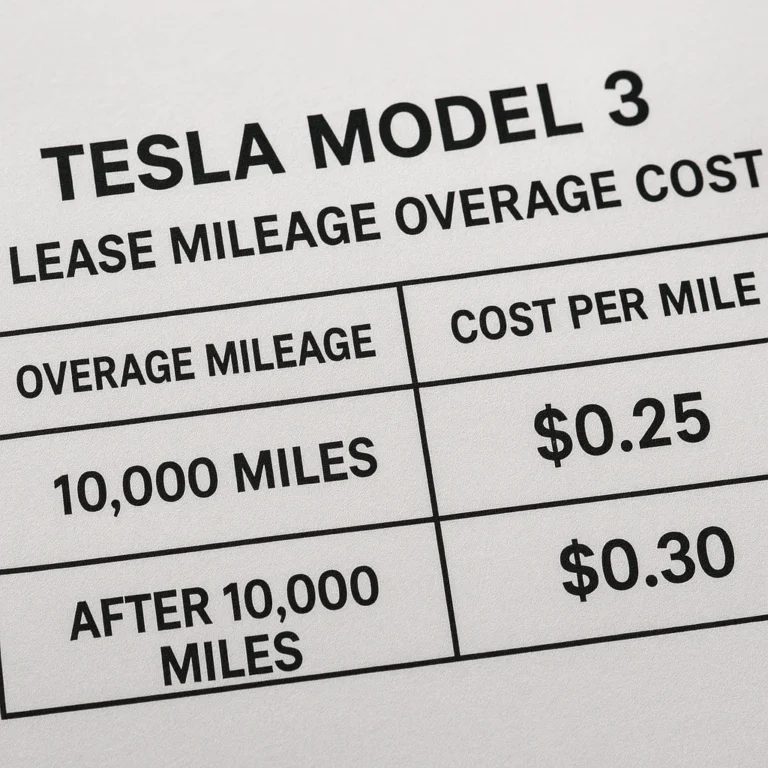
- The Penalty Trap is Real: Excess mileage fees typically range from $0.15 to $0.30 per mile, often costing more than the small increase in your monthly payment for a higher mileage tier.
- Buy Early, Save Big: It is almost always cheaper to purchase extra miles upfront in your lease contract than to pay the penalty rate at the end of the term.
- Know Your Limits: If you consistently drive over 20,0 miles a year, buying a reliable used car is often a smarter financial decision than leasing due to the steep depreciation costs.
- Negotiate Everything: Dealerships can often adjust mileage caps and the cost-per-mile for additional miles; never accept the default 12,0-mile offer without asking.
Table of Contents
- ⚡️ Quick Tips and Facts
- 🕰️ The History of Mileage Caps: How Lease Terms Evolved
- 🧮 The Core Math: How Mileage Drives Your Monthly Lease Payment
- 📉 Understanding Residual Value and Its Ties to Odometer Readings
- 🚗 Choosing the Right Mileage Allowance: 10k vs. 12k vs. 15k
- 💸 The Cost of Excess: Calculating Over-Mileage Penalties
- 🔄 Strategies to Avoid or Reduce Mileage Fees at Lease End
- 🛣️ High-Mileage Leasing: Is It Worth the Risk for Commuters?
- 📊 Comparing Lease vs. Buy: When High Mileage Makes Ownership Smarter
- 🛠️ Maintenance and Wear: How Driving Habits Impact Lease Return Inspections
- 🌍 Electric Vehicle Leases: Do Mileage Rules Change for EVs?
- 🤝 Negotiating Mileage Terms: What Dealers Won’t Tell You
- 📝 Lease Transfer and Buyout Options for High-Mileage Drivers
- 🏁 Conclusion
- 🔗 Recommended Links
- ❓ FAQ: Your Burning Questions About Lease Mileage Answered
- 📚 Reference Links
⚡️ Quick Tips and Facts
Before we dive into the nitty-gritty of depreciation curves and residual values, let’s hit the fast lane with some hard truths about mileage and leases. We’ve seen too many drivers sweat over their odometers at the end of a lease, only to realize they could have saved hundreds (or thousands) by planning ahead.
Here is the cheat sheet you need right now:
- The Golden Rule: Mileage is the single biggest variable in your monthly lease payment after the vehicle’s price and interest rate.
- The Standard Trio: Most leases default to 10,0, 12,0, or 15,0 miles per year. Anything else is a custom negotiation.
- The Penalty Shock: Excess mileage fees typically range from $0.15 to $0.30 per mile. That adds up faster than you think!
- Upfront vs. End: It is almost always cheaper to pay for extra miles upfront in your monthly payment than to pay the penalty at the end of the lease.
- The “Hidden” Cost: High mileage doesn’t just cost you penalties; it lowers the residual value of the car, which directly hikes your monthly payment.
Pro Tip: If you think you might drive 13,0 miles a year, do not stick to the 12,0-mile plan. The penalty for those extra 1,0 miles will likely cost more than the small increase in your monthly payment for the 15,0-mile tier.
For a deeper dive into the fundamentals, check out our guide on Car Leases to understand how the entire ecosystem works.
🕰️ The History of Mileage Caps: How Lease Terms Evolved

You might think mileage caps are a modern invention designed to squeeze every penny from your wallet, but the story goes back to the golden age of the residual value guarantee.
In the early days of automotive leasing (think 1970s and 80s), manufacturers didn’t have the sophisticated data analytics we have today. They guessed how much a car would be worth in three years. Sometimes they guessed right; sometimes they guessed wildly wrong.
- The Early Days: Leases were often “open-ended.” If you drove 50,0 miles instead of 30,0, you simply paid the difference in the car’s value at the end. It was a gamble for the lesee.
- The Shift to Closed-End: By the 190s, manufacturers like General Motors and Ford realized that unpredictable wear and tear made it hard to sell used cars. They introduced closed-end leases with strict mileage caps. This guaranteed them a specific residual value, making the math predictable for both the bank and the driver.
- The Modern Era: Today, with EVs and hybrids entering the mix, mileage caps are being re-evaluated. Battery degradation is a new factor, but the core principle remains: mileage equals depreciation.
As noted by industry analysts, the shift from open to closed leases was a direct response to the volatility of the used car market. Manufacturers needed to control the residual value to keep lease payments competitive.
🧮 The Core Math: How Mileage Drives Your Monthly Lease Payment
Okay, grab your calculators (or just your trusty smartphone). Let’s break down the magic formula that determines your monthly payment. It’s not just about the sticker price; it’s about how much of that price you “use up” during the lease.
The basic lease payment formula looks like this:
$$ \text{Monthly Payment} = \text{Depreciation Fee} + \text{Finance Fee} + \text{Sales Tax} $$
The Depreciation Fee is where mileage lives. Here’s the breakdown:
- Capitalized Cost (Cap Cost): The negotiated price of the car.
- Residual Value: The estimated value of the car at the end of the lease.
- Depreciation: Cap Cost minus Residual Value.
Here is the kicker: The Residual Value is determined by the manufacturer based on the mileage allowance you choose.
- Scenario A (Low Mileage): You lease a BMW 3 Series with a 10,0-mile/year cap. The manufacturer estimates it will be worth 60% of its original price in 3 years.
- Scenario B (High Mileage): You lease the same BMW with a 15,0-mile/year cap. The manufacturer estimates it will only be worth 5% because it will have 15,0 more miles on the odometer.
The Result: In Scenario B, the car depreciates more during the lease term. Since you are paying for that depreciation, your monthly payment goes up.
The “Why” Behind the Math
Think of it like renting an apartment. If you agree to keep the walls pristine (low mileage), the landlord (leasing company) expects to rent it out for a higher price next time. If you paint graffiti on the walls (high mileage), they have to charge you more now to cover the cost of repainting later.
Curiosity Check: But what if you drive less than the allowance? Do you get a refund? (Spoiler: No, and we’ll explain why in the “Strategies” section later!)
For more on the mechanics of these calculations, explore our Car Lease Basics category.
📉 Understanding Residual Value and Its Ties to Odometer Readings
If you only remember one thing from this article, let it be this: Residual Value is the heartbeat of a lease.
The residual value is the percentage of the car’s original MSRP that the leasing company believes the car will be worth at the end of the term. This number is set by the manufacturer’s leasing division (like Honda Financial Services or Toyota Motor Credit) and is heavily influenced by the odometer reading.
How Mileage Affects Residuals
Manufacturers use historical data to create “residual curves.”
- 10,0 miles/year: The car is considered “low mileage.” It retains a higher percentage of its value.
- 15,0 miles/year: The car is considered “average.” The residual drops slightly.
- 20,0+ miles/year: The car is considered “high mileage.” The residual drops significantly.
Real-World Example: The Toyota RAV4
Let’s look at a hypothetical 36-month lease on a Toyota RAV4:
| Mileage Allowance | Residual Value (%) | Impact on Monthly Payment |
|---|---|---|
| 10,0 miles/yr | 58% | Lowest Payment |
| 12,0 miles/yr | 56% | Moderate Increase |
| 15,0 miles/yr | 53% | Highest Payment |
Note: Percentages are illustrative and vary by model and market conditions.
As you can see, a 5% drop in residual value translates directly to more money you pay every month. The leasing company is essentially saying, “We know this car will be worth less because you’re driving it more, so you need to pay us for that loss in value now.”
Why does this happen?
Used car buyers pay a premium for low-mileage vehicles. A 3-year-old car with 30,0 miles sells for significantly more than one with 45,0 miles. The lease payment bridges that gap.
🚗 Choosing the Right Mileage Allowance: 10k vs. 12k vs. 15k
So, you’re at the dealership (or looking online), and the contract asks: “What is your annual mileage?”
Most people just pick the default 12,0 miles because it’s the middle ground. But is that the smartest move? Let’s break down the tiers.
The 10,0 Mile Tier
- Best For: The “weekend warrior” or city dweller who takes the train to work.
- Pros: Lowest monthly payment.
- Cons: Extremely risky. If you take one long road trip or your commute gets longer, you’re in trouble.
- Verdict: Only choose this if you are 10% certain you won’t exceed it.
The 12,0 Mile Tier
- Best For: The average commuter. This is the industry standard for a reason.
- Pros: Balanced payment and flexibility.
- Cons: Still tight for families with kids or anyone who travels frequently.
- Verdict: The safe bet for most, but verify your actual driving habits first.
The 15,0 Mile Tier
- Best For: The road-tripper, the rural driver, or the business owner who does a lot of local client visits.
- Pros: Peace of mind. You won’t panic at the gas station.
- Cons: Higher monthly payment.
- Verdict: Often the best value if you are even slightly over 12,0 miles.
How to Calculate Your Needs
Don’t guess! Look at your last year’s odometer readings.
- Check your odometer today.
- Check it exactly one year ago (or estimate based on your last service record).
- Add 10% to that number for “just in case” (new jobs, new hobbies, road trips).
- Round up to the nearest standard tier.
Wait, what about 20,0 or 25,0 miles?
You can negotiate these! But be prepared for a significant jump in the monthly payment. We’ll discuss how to negotiate this in a later section.
For the latest deals on specific mileage tiers, check out our Latest Car Lease Deals.
💸 The Cost of Excess: Calculating Over-Mileage Penalties
Here is the nightmare scenario: You return your car, and the dealer says, “You drove 4,0 miles over the limit.”
How much will it cost?
It depends on your contract, but the standard penalty is usually between $0.15 and $0.30 per mile. Some luxury brands like Mercedes-Benz or Porsche might charge up to $0.35 per mile.
The Math of Regret
Let’s say you leased a Lexus RX with a 36-month, 36,0-mile limit (10k/year).
- Actual Miles Driven: 45,0 miles.
- Excess Miles: 9,0 miles.
- Penalty Rate: $0.25/mile.
$$ 9,0 \text{ miles} \times $0.25 = $2,250 $$
Ouch. That’s a $2,250 bill you didn’t budget for.
Why is the penalty so high?
The penalty isn’t just a “fine.” It’s a reimbursement for the lost value of the car. The leasing company expected to sell the car with 36,0 miles. Now they have to sell it with 45,0 miles. The difference in the car’s market value is what you are paying.
Comparison Table: Upfront vs. Penalty
| Scenario | Cost Calculation | Total Cost |
|---|---|---|
| Pay Penalty at End | 9,0 miles × $0.25 | $2,250 |
| Add Miles Upfront | 9,0 miles × $0.12 (approx) | $1,080 |
Note: Upfront rates are often lower because the leasing company locks in the value immediately.
Key Insight: If you know you are going to go over, buy the extra miles now. It is almost always cheaper than paying the penalty later.
🔄 Strategies to Avoid or Reduce Mileage Fees at Lease End
So, you’ve realized you’re going to go over. Don’t panic! (As the experts say, “It’s not the end of the world”). Here are your battle-tested strategies to minimize the damage.
1. Buy the Extra Miles Now
If you are 6 months into your lease and realize you’re driving more, call your leasing company. You can often purchase additional miles at a discounted rate (e.g., $0.10/mile instead of $0.25/mile).
- Pro: Locks in the lower rate.
- Con: You pay for miles you might not use (though you can’t get a refund).
2. The “Lease Transfer” (Swap)
If you have a great lease deal and high mileage, you might be able to transfer the lease to someone else via sites like Swapalease or LeaseTrader.
- How it works: You find someone who needs a car and is okay with the high mileage. They take over your payments and the remaining miles.
- Catch: You might have to pay a transfer fee, and the new lesee might negotiate a lower payment if they know the mileage is high.
3. Extend the Lease
Some leasing companies allow you to extend your lease month-to-month.
- Strategy: If you are close to the limit, extending the lease by a few months might spread the miles out, keeping you under the annual average.
- Warning: Check the terms! Some extensions have high mileage penalties built-in.
4. Buy the Car
If the penalty is astronomical, calculate the buyout price.
- Logic: If the penalty is $3,0, but the car is worth $5,0 more than the buyout price, buying the car and selling it yourself might net you more money than returning it.
- Tip: Check the Keley Blue Book (KBB) value of the car with your actual mileage.
5. Trade In Early
If you are 2 years into a 3-year lease and know you’ll blow the mileage cap, consider trading the car in early.
- The Math: You pay off the lease (payoff amount), and the dealer sells the car. If the car’s value covers the payoff, you walk away. If not, you might still owe money, but you avoid the massive mileage penalty.
Remember: Always get the math in writing before making a move. Dealerships are great at “creative” math.
For more on managing your lease lifecycle, visit our Best Lease Terms section.
🛣️ High-Mileage Leasing: Is It Worth the Risk for Commuters?
Let’s talk about the daily grind. If you have a 50-mile round trip commute, you are looking at roughly 12,50 miles a year just for work. Add in groceries, school runs, and weekend getaways, and you are easily hitting 18,0 to 20,0 miles.
Is leasing a high-mileage car worth it?
The Case for Leasing High Mileage
- Predictability: You know exactly what you pay every month. No surprise repair bills if the car is under warranty.
- New Car Tech: You get a new car every 3 years with the latest safety features (crucial for long commutes).
- No Depreciation Risk: You don’t care if the car loses value because you’re returning it.
The Case Against Leasing High Mileage
- High Monthly Payments: As we discussed, the residual value drops, making the payment higher.
- Wear and Tear: High mileage often means more wear on tires, brakes, and suspension. While the lease covers major repairs, you are responsible for excessive wear and tear (e.g., bald tires, cracked leather).
- The “Break-Even” Point: At some point, the cost of leasing a high-mileage car exceeds the cost of buying a reliable used car and keeping it for 5-7 years.
When to Lease vs. Buy for High Mileage
| Factor | Lease High Mileage | Buy High Mileage |
|---|---|---|
| Monthly Cost | Higher (due to residual drop) | Lower (if financing a used car) |
| Maintenance | Covered by warranty | Out of pocket after warranty |
| Mileage Flexibility | None (strict caps) | Unlimited |
| Long-Term Cost | Potentially higher | Potentially lower |
Our Verdict: If you drive over 20,0 miles a year, leasing is often not the best financial move unless you absolutely need a new car every 3 years. In this case, buying a reliable sedan like a Honda Accord or Toyota Camry and keeping it for 10 years might save you thousands.
📊 Comparing Lease vs. Buy: When High Mileage Makes Ownership Smarter
Let’s do a deep dive into the Lease vs. Buy debate, specifically for the high-mileage driver.
The “Mileage Multiplier” Effect
When you lease, you are paying for the depreciation of the car.
- Low Mileage: Depreciation is slow.
- High Mileage: Depreciation is fast.
When you buy, you pay for the entire car.
- High Mileage: You buy a car that has already depreciated significantly. The “slow depreciation” phase is already over.
The Break-Even Analysis
Imagine you drive 25,0 miles a year.
- Lease: You pay a premium for the high mileage allowance. At the end of 3 years, you have $0 equity and a massive bill if you go over.
- Buy: You buy a 3-year-old car with 75,0 miles. It will depreciate slowly for the next 5 years. You drive it until it has 20,0 miles.
The Winner: For high-mileage drivers, buying is almost always the smarter financial choice. You avoid the “mileage penalty” trap and the high residual-based payments.
Exceptions to the Rule
- Luxury Cars: If you want a Porsche or Range Rover and can’t afford the depreciation hit of buying, leasing might still make sense, even with high mileage, because the monthly payment is lower than a loan payment on a new luxury car.
- Business Use: If you can write off the lease payments as a business expense, the tax benefits might offset the higher costs. (More on this in the FAQ!)
For more on financing options, check out our Auto Financing Options guide.
🛠️ Maintenance and Wear: How Driving Habits Impact Lease Return Inspections
Driving a lot doesn’t just cost you in mileage fees; it can cost you in wear and tear fees.
What is “Excessive Wear and Tear”?
Leasing companies have strict guidelines (often based on the ALG or Black Book standards).
- Tires: Must have at least 4/32″ of tread. If you drive 20,0 miles a year, you might need new tires before the lease ends.
- Brakes: If the pads are worn out, you pay.
- Body: Dents, scratches, and rust.
- Interior: Stains, tears, and excessive wear on the driver’s seat.
The High-Mileage Trap
If you drive 20,0 miles a year, your car will naturally show more wear than one driven 10,0 miles.
- Tires: You might go through 2 sets of tires.
- Brakes: You might need new rotors and pads.
- Suspension: Bushings and shocks might wear out.
Pro Tip: Keep all maintenance records. If you have receipts showing you replaced tires and brakes, the dealer might waive the wear-and-tear fees because you maintained the car properly.
How to Prepare for the Inspection
- Get a Pre-Inspection: Most leasing companies (like BMW Financial Services) offer a free pre-inspection 90 days before the lease ends.
- Fix Small Issues: A $50 scratch repair is cheaper than a $50 fee.
- Deep Clean: A professional detail can hide years of wear.
🌍 Electric Vehicle Leases: Do Mileage Rules Change for EVs?
The rise of Electric Vehicles (EVs) has thrown a wrench into the mileage conversation. Do EVs have different rules?
The Short Answer: No, but…
The mileage caps and penalties are generally the same for EVs as they are for gas cars. However, the impact is different.
Why EVs are Different
- Battery Degradation: High mileage can degrade the battery faster. Leasing companies are cautious about EVs with high mileage because the battery is the most expensive part to replace.
- Residual Value: EVs have volatile residual values. Some models (like the Tesla Model 3) hold value well, while others drop like a stone. High mileage exacerbates this drop.
- Charging Costs: If you drive 20,0 miles, your electricity bill goes up. This is a “hidden” cost of high-mileage EV leasing.
The “Range Anxiety” Factor
If you lease an EV with a 250-mile range and drive 20,0 miles a year, you might find yourself charging more often. This doesn’t affect the lease payment, but it affects your quality of life.
Recommendation: If you lease an EV, be extra conservative with your mileage allowance. The battery degradation risk makes high-mileage EVs less desirable on the used market, which could hurt your residual value and increase your payment.
For more on this topic, visit our Electric Vehicle Leases category.
🤝 Negotiating Mileage Terms: What Dealers Won’t Tell You
Dealerships love to sell you the “standard” 12,0-mile lease. Why? Because it’s easy. But you can negotiate the mileage terms.
What You Can Negotiate
- The Mileage Cap: You can ask for 15,0, 20,0, or even 25,0 miles.
- The Cost Per Mile: The rate for adding extra miles is often negotiable. Instead of $0.25/mile, you might get it down to $0.15/mile.
- The “Free” Miles: Some dealers will throw in a few extra miles to close the deal.
The Script
“I know I drive about 18,0 miles a year. I don’t want to pay penalties later. Can you adjust the lease to 20,0 miles? And what’s the best rate you can give me for the extra miles?”
The “Money Factor” Trick
Sometimes, instead of negotiating the mileage, you can negotiate the Money Factor (interest rate). A lower money factor can offset the higher payment from the extra miles.
Warning: Don’t let the dealer talk you into a “special” mileage plan that isn’t in the contract. Get it in writing.
📝 Lease Transfer and Buyout Options for High-Mileage Drivers
If you’re stuck with a high-mileage lease, you have options.
Lease Transfer (Assumption)
- How it works: You find someone to take over your lease.
- Pros: You walk away from the mileage penalty.
- Cons: You might have to pay a transfer fee, and the new lesee might demand a lower payment.
Early Buyout
- How it works: You buy the car before the lease ends.
- Pros: You own the car and can drive as much as you want.
- Cons: You need cash or a loan. The buyout price might be higher than the car’s value.
Trade-In
- How it works: You trade the car in for a new one.
- Pros: You start fresh with a new lease.
- Cons: You might be “upside down” (owe more than the car is worth).
Pro Tip: If you are considering a transfer, check LeaseTrader or Swapalease to see if there is demand for your specific model and mileage.
🏁 Conclusion

We’ve covered a lot of ground—from the history of mileage caps to the nitty-gritty of residual values and the math behind your monthly payment. Here is the bottom line:
Mileage is the silent killer of lease deals.
If you underestimate your driving habits, you will pay a steep price at the end of the lease. If you overestimate, you might be paying for miles you never drive. The key is honesty and calculation.
- Calculate your actual mileage before signing.
- Buy extra miles upfront if you think you’ll go over.
- Consider buying if you drive more than 20,0 miles a year.
- Negotiate your mileage terms; don’t just accept the default.
Remember, a lease is a contract, not a suggestion. Treat it with the respect it deserves, and you’ll avoid those dreaded end-of-lease fees.
Final Thought: Are you ready to take control of your lease? Don’t let the odometer dictate your financial future. Plan ahead, do the math, and drive with confidence!
🔗 Recommended Links
Looking for the best deals on your next lease? Check out these resources:
- 👉 Shop New Car Leases: Edmunds Lease Deals | TrueCar Lease Offers | Auto Trader Leases
- Brand Specific:
Toyota: Toyota Lease Offers
Honda: Honda Lease Specials
BMW: BMW Lease Deals
Tesla: Tesla Lease Options
❓ FAQ: Your Burning Questions About Lease Mileage Answered

What are the penalties for going over the mileage cap on a lease?
Penalties typically range from $0.15 to $0.30 per mile, depending on the manufacturer and the specific lease agreement. Luxury brands often charge higher rates.
Read more about “🚫 Can You Negotiate Tesla Lease Prices? (2026)”
How can I estimate the right mileage allowance for my car lease?
Check your odometer from exactly one year ago, calculate the difference, and add 10% for safety. Round up to the nearest standard tier (10k, 12k, 15k).
Read more about “🚫 Why You Should Never Put Money Down on a Lease (2026)”
Are there lease deals with unlimited mileage options?
Rarely. Most standard leases have caps. However, some manufacturers offer “unlimited mileage” as a special promotion, usually for a higher monthly payment.
Read more about “🚗 7 Toyota Lease Deals You Can’t Ignore in 2026”
How does low mileage affect the residual value of a leased car?
Low mileage increases the residual value, which lowers your monthly payment. The car is expected to be worth more at the end of the lease.
Read more about “🚀 15 Best Zero Down Hybrid Lease Offers (2026)”
How do mileage limits impact my monthly car lease payments?
Higher mileage limits decrease the residual value, which increases the depreciation fee and, consequently, your monthly payment.
Read more about “🚗 What is the Lowest Term for a Car Lease? (2026 Guide)”
How does mileage affect the residual value in a car lease?
Mileage is a primary factor in determining residual value. More miles = lower residual value = higher monthly payment.
Read more about “🚗 What is the Interest Rate for a New Honda? (2026)”
Are there ways to reduce mileage penalties on a leased vehicle?
Yes. You can buy extra miles upfront at a discounted rate, transfer the lease, or extend the lease term to spread out the miles.
Read more about “🚗 Can You Lease a Car and Not Buy It? (2026 Guide)”
Does choosing a higher mileage lease increase monthly payments?
Yes. Because the car is expected to be worth less at the end of the term, you pay for that additional depreciation monthly.
Read more about “🚗 What Does Zero Down Car Lease Mean? The 2026 Truth Revealed”
How is excess mileage charged at the end of a lease?
It is calculated as: (Actual Miles – Contracted Miles) × Penalty Rate per Mile. This amount is due upon lease return.
Read more about “🚪 7 Ways to Escape Your Tesla Model 3 Lease (2026)”
Can I negotiate higher mileage limits on a car lease?
Absolutely. You can negotiate the mileage cap and the cost per additional mile. Always get the agreed-upon terms in writing.
Read more about “🚫 Why Can’t You Buy a Model 3 After Lease? (2026)”
What happens if I exceed the mileage allowance on my lease?
You will be charged a penalty fee for every mile over the limit. This fee is typically much higher than the cost of buying those miles upfront.
Read more about “🚪 7 Ways to Escape Your Tesla Model 3 Lease (2026)”
How do annual mileage limits impact car lease costs?
Annual mileage limits directly dictate the residual value. Lower limits mean higher residual values and lower payments. Higher limits mean lower residual values and higher payments.
Read more about “Car Leases: Smart Move or Money Pit? 🚗 (2026)”
📚 Reference Links
- IRS Standard Mileage Rate: IRS.gov – Business Mileage Rate
- Keley Blue Book: KBB.com – Car Values
- Edmunds: Edmunds.com – Lease Calculator
- Consumer Reports: ConsumerReports.org – Leasing a Car
- Jackson Hewitt: Leasing or Buying a Car for Business: Tax Benefits
- Black Book: BlackBook.com – Residual Values
- ALG: ALG.com – Residual Value Insights