Support our educational content for free when you purchase through links on our site. Learn more
🚨 Hyundai Lease Mileage Penalty: The $0.25/mile Trap (2026)

You’ve driven your Hyundai with care, kept the tires inflated, and avoided the potholes, only to face a final bill that feels like a punch in the gut. It’s a scenario we’ve seen play out too many times at Car Leases™: a driver returns a Hyundai lease thinking they’re in the clear, only to be hit with a mileage penalty that costs thousands. Why does a simple odometer reading turn into a financial nightmare? The answer lies in the fine print of your contract, specifically the excess mileage fee that can range from $0.15 to $0.25 per mile.
Imagine leasing a Hyundai Tucson for three years with a 30,0-mile limit, only to realize at month 35 that you’ve driven 38,0 miles. That 8,0-mile overage isn’t just a number; at $0.20 per mile, it’s a $1,60 surprise bill due before you can walk away. But here’s the twist: you don’t always have to pay that full price. In this guide, we’ll reveal the 5 smart strategies to avoid or reduce this fee, including a dealer trade-in trick that saved one of our readers over $1,0. Whether you’re staring down a cold return or considering a trade-in, we’ll show you exactly how to navigate the math and keep your wallet safe.
Key Takeaways
- The Cost is Real: Hyundai leases typically charge $0.15 to $0.25 per mile for every mile driven over your contract limit, which can quickly add up to thousands of dollars.
- Negotiation is Possible: While you cannot change the per-mile rate set by Hyundai Motor Finance, you can often negotiate who pays the fee by trading the car in for a new lease.
- Avoid the “Cold Return”: Returning a car without a new deal usually triggers the full penalty plus a $350 disposition fee; trading it in is almost always the cheaper option.
- Check Your Equity: If your car’s market value exceeds your residual value, buying the car outright can eliminate the mileage penalty entirely.
- Plan Ahead: Use a pre-inspection and calculate your exact mileage 30 days before lease end to explore lease extensions or private sale options.
Table of Contents
- ⚡️ Quick Tips and Facts
- 📜 The History of Hyundai Lease Mileage Clauses: How We Got Here
- 🚗 Decoding the Hyundai Lease Mileage Penalty: The Math Behind the Fee
- 📊 7 Critical Scenarios That Trigger the Hyundai Mileage Penalty
- 🛠️ 5 Smart Strategies to Avoid or Reduce Your Hyundai Mileage Penalty
- 🔄 Returning a Lease vs. Trading It In: Which Saves You More Cash?
- 🧮 How to Calculate Your Exact Hyundai Over-Mileage Fee Before You Drive
- 🤔 Real Owner Stories: When the Mileage Penalty Hit Hard (and How They Fixed It)
- 🏁 Conclusion
- 🔗 Recommended Links
- ❓ FAQ: Your Burning Questions About Hyundai Lease Mileage Penalties Answered
- 📚 Reference Links
⚡️ Quick Tips and Facts
Before we dive into the nitty-gritty of why your odometer might be costing you an arm and a leg, let’s hit the high notes with some rapid-fire truths. We’ve seen it all at Car Leases™, from the “oops, I forgot I was driving a taxi” stories to the “I bought a third car to haul my kids” scenarios.
- The Standard Rate: Most Hyundai leases charge between $0.15 and $0.25 per mile for every mile you exceed your contract limit.
- The “Gotcha” Moment: You won’t know the exact total until you return the car. It’s a surprise bill that hits right when you think you’re done.
- Negotiation Reality: You generally cannot negotiate the per-mile rate with Hyundai Motor Finance (HMF) directly. However, you can often negotiate who pays it (more on that later!).
- The Extension Hack: If you’re close to the limit, HMF often allows a lease extension (up to 6 months) which might include a small mileage buffer or simply buy you time to sell the car privately.
- Disposal Fee: Don’t forget the $350 disposition fee that hits you if you don’t buy the car or lease another Hyundai, regardless of mileage.
- Wear and Tear: High mileage often correlates with more wear. HMF waives the first $60 of wear and tear charges if you lease another Hyundai, but excess mileage is a separate beast.
Pro Tip: If you think you’re going to go over, do not just drive it into the dealership and hope for the best. Have a plan.
For those looking to avoid this headache entirely, check out our latest Hyundai Lease Deals where we often find contracts with higher mileage allowances baked into the deal.
📜 The History of Hyundai Lease Mileage Clauses: How We Got Here
Why does Hyundai charge for miles? It’s not just to punish you for loving the open road; it’s about residual value.
Back in the day, leasing was a niche market. Now, it’s a massive engine in the automotive industry. When you lease a Hyundai, you aren’t paying for the whole car; you’re paying for the depreciation that happens while you drive it. The leasing company (often Hyundai Motor Finance) bets on what the car will be worth at the end of the term.
The Residual Value Equation
If you agree to drive 10,0 miles a year, the bank calculates the car’s future value based on that wear and tear. If you drive 20,0 miles, the car is worth significantly less. That “lost value” is the mileage penalty.
- 10,0 miles/year: The “Standard” commuter. Highest residual value, lowest monthly payment.
- 12,0 miles/year: The “Realist.” A bit more room, slightly higher payment.
- 15,0 miles/year: The “Road Warrior.” Lowest residual value, highest monthly payment.
Why the confusion?
Many drivers assume the penalty is a flat fee or a “one-time” charge. It’s not. It’s a per-mile accumulation. If you drive 50,0 miles over a 3-year lease, and the rate is $0.20, that’s a $10,0 surprise. Ouch.
Fun Fact: The mileage penalty rates are set by the leasing company, not the dealership. While the dealer sells you the lease, HMF holds the bag (and the bill).
🚗 Decoding the Hyundai Lease Mileage Penalty: The Math Behind the Fee
Let’s get nerdy for a second. Understanding the math is the only way to stop the panic when the bill arrives.
The Formula
The calculation is surprisingly simple, but the execution is where people get burned.
$$ \text{Total Penalty} = (\text{Actual Miles} – \text{Contract Miles}) \times \text{Penalty Rate} $$
The Rates Breakdown
While rates can vary slightly based on the specific model and current market conditions, here is the typical structure for Hyundai leases:
| Mileage Tier | Typical Penalty Rate | Best For… |
|---|---|---|
| 10,0 miles/yr | $0.20 – $0.25 | City dwellers, short commutes |
| 12,0 miles/yr | $0.15 – $0.20 | Suburban families, moderate travel |
| 15,0 miles/yr | $0.10 – $0.15 | Long commutes, road trippers |
Wait, why is the rate lower for higher mileage?
It’s counter-intuitive, right? Actually, the rate per mile is often lower for higher mileage caps because the bank expects more wear and has already priced that into the monthly payment. However, the total risk is higher because you have a larger buffer to exceed.
A Real-World Nightmare Scenario
Imagine you leased a Hyundai Tucson with a 36-month, 10,0-mile-per-year contract (30,0 total).
- Your Odometer: 42,0 miles.
- Overage: 12,0 miles.
- Rate: $0.20/mile.
- The Bill: 12,0 x $0.20 = $2,40.
That $2,40 is due before you can drive away in your new car or walk away. It’s a cash-on-delivery situation.
📊 7 Critical Scenarios That Trigger the Hyundai Mileage Penalty
We’ve seen these scenarios play out in the parking lots of dealerships across the country. Which one are you?
- The “I Thought I Had More Time” Driver: You signed a 24-month lease but kept the car for 36 months because you loved it. The mileage cap was based on 2 years, but you drove 3 years’ worth. Result: Massive overage.
- The “New Job” Commuter: You moved to a new city with a 60-mile daily commute. Your old 10k-mile lease suddenly feels like a prison. Result: You burn through the allowance in 18 months.
- The “Road Trip Enthusiast”: You decided to drive from coast to coast three times in two years. Result: The odometer spins faster than your credit card can process.
- The “Family Expansion” Surprise: You leased a compact SUV, then had twins. Suddenly, you need a bigger car, but you’re stuck with the old one until the lease ends, racking up miles. Result: High mileage on a small car.
- The “Lease Extension” Trap: You extended your lease to avoid a buyout, but the extension didn’t include extra miles. Result: You drove 6 more months over the limit.
- The “Gig Economy” Driver: You started driving for Uber or Lyft on the side. Result: Commercial use often voids leases, but even if allowed, the mileage adds up instantly.
- The “Sold It, Didn’t Check” Seller: You sold the car privately but didn’t check the odometer against the contract. The buyer returns it to the bank, and the bank bills you. Result: You owe the penalty even though you don’t have the car.
Question: Have you ever guessed your mileage and been wrong? We have. It’s not a fun feeling.
🛠️ 5 Smart Strategies to Avoid or Reduce Your Hyundai Mileage Penalty
Okay, so you’re over the limit. Panic mode: OFF. Here is how we at Car Leases™ handle it.
1. The “Buy the Car” Maneuver
If the market value of the car is higher than your residual value (buyout price), buy the car!
- How it works: You pay the residual value to Hyundai. You now own the car. The mileage penalty is gone.
- The Catch: You need the cash or financing.
- Check: Look up your car’s value on Keley Blue Book (KBB) or NADA Guides. If Value > Residual, you win.
2. The “Dealer Trade-In” Hack
This is the most common solution. You trade the leased car into a dealership for a new Hyundai.
- The Magic: The dealer can often roll the mileage penalty into your new loan/lease.
- The Deal: The dealer might say, “We’ll cover the $2,0 overage fee if you sign a new lease with us.”
- Why it works: Dealers make money on the new car. They’d rather eat the $2,0 fee than lose a customer.
3. The “Lease Extension” Buffer
Contact Hyundai Motor Finance (HMF) before the lease ends.
- The Offer: They often allow a month-to-month extension (up to 6 months).
- The Benefit: Some extensions come with a small mileage buffer (e.g., 1,0 miles/month) or simply give you time to sell the car privately to a third party who doesn’t care about the lease terms.
- Note: You must pay the monthly payment during the extension.
4. The “Private Sale” (With a Twist)
You can sell the car privately, but you must pay off the lease first.
- The Math: If the car is worth $20,0 and your payoff is $18,0, you have $2,0 equity. You use that to pay the mileage penalty.
- The Risk: If the car is worth less than the payoff (negative equity), you have to pay the difference plus the mileage penalty. This is dangerous.
5. The “Pre-Inspection” Negotiation
Schedule a pre-inspection 30-60 days before the lease ends.
- Why: You might find out you have less overage than you thought (maybe you misread the odometer?).
- The Win: If you are close to the limit, you can sometimes drive fewer miles in the final month to stay under.
Critical Insight: Never assume the penalty is fixed. While HMF won’t change the rate, the total cost can be absorbed by a dealer.
🔄 Returning a Lease vs. Trading It In: Which Saves You More Cash?
This is the million-dollar question. Let’s break down the two paths.
Path A: The “Cold Return” (Walk Away)
You drive the car to the dealership, hand over the keys, and pay the bill.
- Pros: Clean break. No new debt.
- Cons: You pay the full mileage penalty + disposition fee + wear and tear.
- Cost: High. You are paying for the car’s depreciation and the overage.
Path B: The “Trade-In” (Lease Another Hyundai)
You trade the car into a Hyundai dealer for a new lease.
- Pros:
Disposition Fee: Usually waived.
Wear & Tear: First $60 often waived.
Mileage Penalty: Can be negotiated into the new deal. - Cons: You are locked into a new 3-year commitment.
- Cost: Variable. Often lower than a cold return.
The Verdict:
If you plan to stay in the Hyundai ecosystem, trading in is almost always the winner. The dealer has a financial incentive to absorb the overage to secure the new sale. If you want to leave the brand, you are stuck with the cold return costs.
Wait, what about the “Leasehackr” story?
In a popular forum thread, a user with a Santa Fe was 4,0 miles over. They estimated a $1,250 cold return cost. By trading in, the dealer covered the mileage penalty, and HMF waived the disposition fee. The user saved nearly $1,0 just by switching dealers.
🧮 How to Calculate Your Exact Hyundai Mileage Penalty Before You Drive
Don’t wait until the end. Do the math now.
Step 1: Find Your Contract
Look at your lease agreement. Find the line that says “Mileage Limit” and “Excess Mileage Charge.”
- Example: 36 months, 10,0 miles/year = 30,0 total. Rate = $0.20/mile.
Step 2: Check Your Odometer
Get the current mileage.
- Example: 38,50 miles.
Step 3: Do the Subtraction
- 38,50 (Current) – 30,0 (Limit) = 8,50 miles over.
Step 4: Multiply by the Rate
- 8,50 x $0.20 = $1,70.
Step 5: Add the “Hidden” Fees
- Disposition Fee: $350 (if not trading in).
- Wear and Tear: Estimate $10 (if not trading in).
- Total Estimated Bill: $1,70 + $350 + $10 = $2,150.
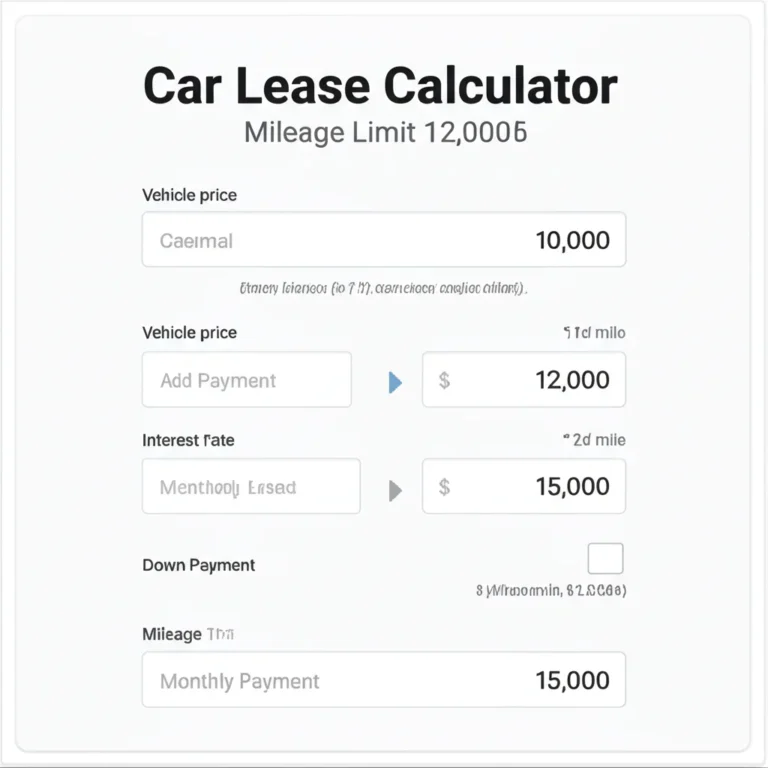
Pro Tip: Use an online Lease Calculator (like the one on Edmunds or TrueCar) to input your numbers. It gives you a ballpark figure instantly.
🤔 Real Owner Stories: When the Mileage Penalty Hit Hard (and How They Fixed It)
We love a good cautionary tale. Here are two stories from our community.
Story 1: The “Road Trip” Disaster
The Situation: Sarah leased a Hyundai Elantra for 24 months, 10k miles/year. She loved the car but decided to take a cross-country trip for her honeymoon, then another for a work conference.
The Result: She returned the car with 28,0 miles. The limit was 20,0.
The Bill: 8,0 miles x $0.25 = $2,0.
The Fix: Sarah didn’t have $2,0 cash. She called a local Hyundai dealer. They agreed to take the car as a trade-in for a new Hyundai Sonata. The dealer rolled the $2,0 into her new lease, increasing her monthly payment by only $45.
The Lesson: Don’t pay cash if you can finance it into a new deal.
Story 2: The “Smart Seller”
The Situation: Mike leased a Hyundai Kona. He realized at month 20 that he was going to be 5,0 miles over.
The Result: He calculated the penalty: $1,0.
The Fix: Instead of returning it, he sold it privately to a friend. He paid off the lease ($12,0) and the penalty ($1,0) using the sale proceeds ($14,0). He walked away with $1,0 cash.
The Lesson: If the car has equity, selling privately can beat the dealer’s trade-in offer.
Unresolved Question: What if the car has negative equity? We’ll cover that in the FAQ, but the short answer is: Don’t sell privately. Stick to the dealer trade-in.
Conclusion

So, what is the mileage penalty for a Hyundai lease? It’s a per-mile fee (usually $0.15–$0.25) that can turn into a thousands-of-dollars surprise if you aren’t careful.
The Good News:
- It’s calculable.
- It’s often negotiable if you trade in.
- Hyundai Motor Finance is surprisingly flexible with extensions.
The Bad News:
- You can’t change the rate once signed.
- A “cold return” is expensive.
Our Final Recommendation:
If you know you’re going to go over, do not return the car cold. Find a dealer, negotiate a new lease, and let them eat the mileage fee. If you have equity, sell it privately. If you have negative equity, trade it in. And next time? Be conservative with your mileage estimate. It’s cheaper to pay a few extra dollars a month for 15,0 miles than to pay $0.20 for every mile you exceed 10,0.
Ready to find a lease with the right mileage cap for your lifestyle? Check out our Latest Car Lease Deals or explore Electric Vehicle Leases if you’re looking to switch gears.
🔗 Recommended Links
👉 Shop Hyundai Leases on:
- Hyundai Official Website: Find a Lease Deal
- Edmunds: Hyundai Lease Offers
- TrueCar: Hyundai Lease Specials
- Auto Trader: Hyundai Lease Listings
Related Articles:
❓ FAQ: Your Burning Questions About Hyundai Lease Penalties Answered

What is the standard mileage allowance for a Hyundai lease?
The standard allowances are typically 10,0, 12,0, or 15,0 miles per year.
- 10,0 miles: Best for city drivers.
- 12,0 miles: The most common “standard” choice.
- 15,0 miles: Best for commuters.
- Note: You can often request custom mileage limits, but the monthly payment will adjust accordingly.
Read more about “🚀 15 Cars with the Highest Residual Value Leases (2026)”
How much does it cost per mile to exceed the Hyundai lease limit?
The cost is generally between $0.15 and $0.25 per mile.
- This rate is determined by Hyundai Motor Finance (HMF) and is listed in your contract.
- It varies by model and the specific mileage tier you chose.
- Source: Hyundai Motor Finance Lease Terms
Read more about “🚗 15 Affordable Car Leases with Zero Down Payment (2026)”
Can I negotiate the mileage penalty rate with Hyundai Financial Services?
No. HMF does not negotiate the per-mile rate. It is a fixed contractual term.
- However, you can negotiate who pays the fee. Dealers often absorb the cost if you trade in for a new vehicle.
- You can also negotiate a lease extension which might include a small mileage buffer.
What happens if I return my Hyundai lease with high mileage?
You will receive a bill for the total overage (miles over x rate) plus any wear and tear charges and the $350 disposition fee (if not trading in).
- You must pay this bill before you can drive away in a new car or walk away.
- If you don’t pay, it will go to collections and hurt your credit score.
What if I have negative equity and high mileage?
If the car is worth less than the payoff and you have high mileage, a private sale is risky. The dealer trade-in is your best option, as they can roll the negative equity and mileage penalty into a new loan.
Can I buy the car to avoid the penalty?
Yes. If the market value of the car is higher than your residual value (buyout price), buying the car eliminates the mileage penalty entirely. You own the car, and the miles don’t matter anymore.
Read more about “🚨 Honda Lease Mileage Penalty: The $0.25/mile Shock (2026)”
📚 Reference Links
- Hyundai Motor Finance: Lease FAQ & Terms
- Keley Blue Book: Lease Calculator & Values
- Edmunds: Understanding Lease Mileage Penalties
- Consumer Reports: Leasing a Car: The Fine Print
- Leasehackr Forum: Returning a Lease or Trading the Lease
- NADA Guides: Used Car Values