Support our educational content for free when you purchase through links on our site. Learn more
💸 Tesla Lease Down Payment: The $0 Rule for 2026

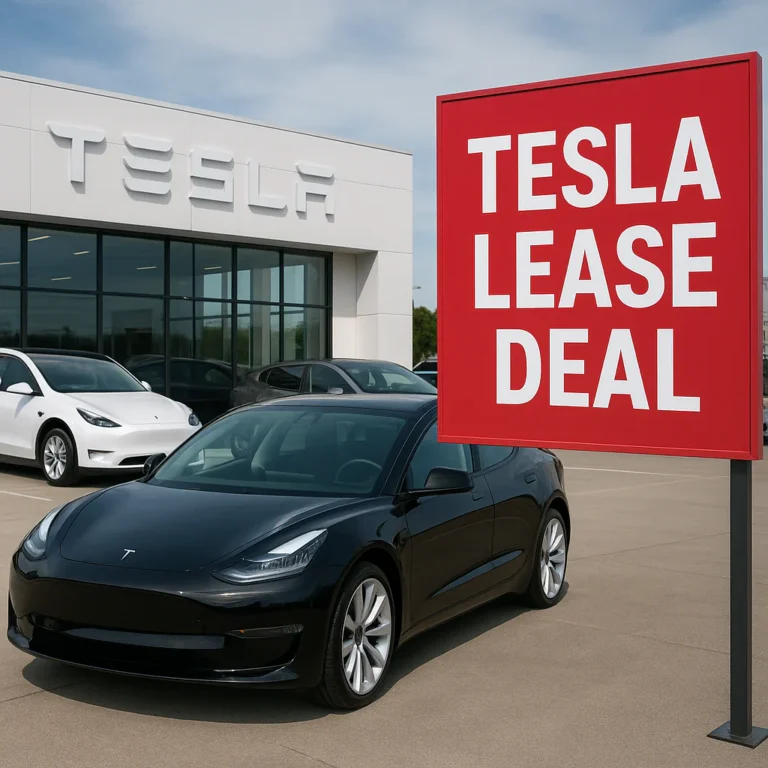
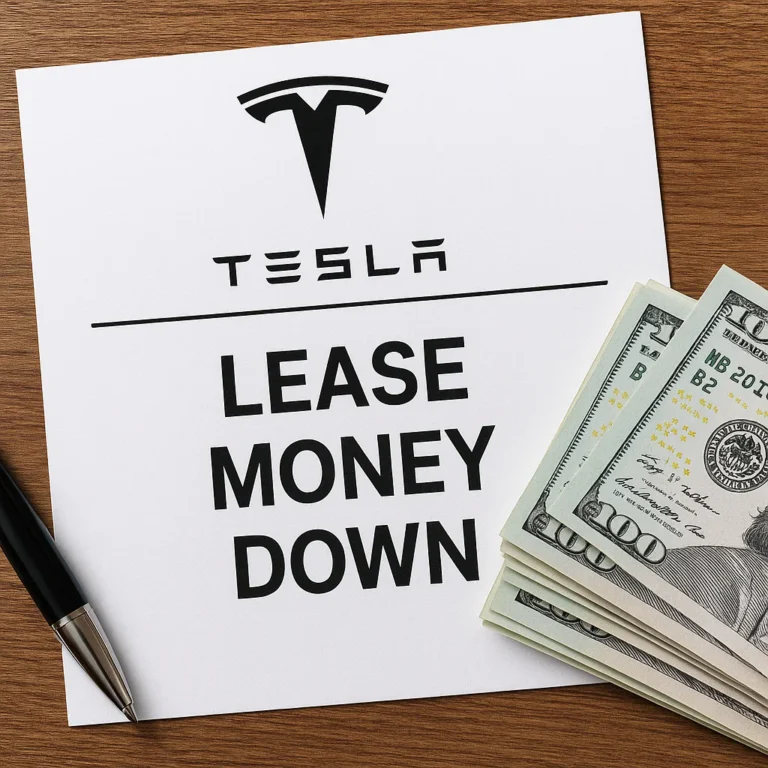
Put $0 down. That is the single most important rule for leasing a Tesla, and it’s the answer to the burning question: How much should you put down on a Tesla lease?
Unlike traditional car leases where a hefty down payment can secure a lower rate, Tesla’s unique “no buyout” policy means any cash you hand over is gone forever if the car is totaled. We’ve seen savvy drivers lose thousands of dollars in upfront payments because they didn’t realize that Tesla doesn’t let you purchase the vehicle at the end of the term.
Imagine putting $5,0 down to lower your monthly payment, only to have the car hit by a delivery truck the next month. The insurance pays the bank, and your $5,0 vanishes into thin air. It’s a financial trap that catches even the most careful buyers.
In this guide, we’ll break down exactly why keeping your cash in your pocket is the smartest move, and the rare exceptions where putting money down might actually make sense.
Key Takeaways
- The Golden Rule: Always aim for $0 down on a Tesla lease to protect your liquidity and avoid losing money in a total loss scenario.
- No Equity Build: Since Tesla does not allow lease buyouts, you cannot build equity, making any down payment a sunk cost.
- Tax Deferral: Rolling costs into monthly payments often saves you money on sales tax compared to paying it upfront on a large down payment.
- Liquidity is King: Keeping your cash available provides a safety net that a lower monthly payment simply cannot match.
Table of Contents
- ⚡️ Quick Tips and Facts
- 🕰️ The Tesla Lease Evolution: From Zero Down to Strategic Capital
- 💸 The Big Question: How Much Should You Put Down on a Tesla Lease?
- 📉 The “Cap Cost Reduction” Trap: Why $0 Down Might Be Your Best Friend
- 🧮 The Math Behind the Magic: Calculating Your Ideal Down Payment
- 🚀 7 Strategic Scenarios for Your Tesla Lease Down Payment
-
- The Cash-Flow King: Zero Down Payment Strategy
-
- The Monthly Payment Slayer: Maximizing Capitalized Cost Reduction
-
- The Early Exit Ace: Minimizing Risk with a Moderate Down Payment
-
- The Credit Score Chameleon: Adjusting Based on Your FICO Tier
-
- The Tax Saver: Navigating Sales Tax on Down Payments
-
- The Incentive Hunter: Leveraging Current Tesla Lease Offers
-
- The Trade-In Tactician: Using Your Old Car as the Down Payment
- 🛡️ Security Deposit vs. Down Payment: What’s the Difference?
- 📊 Tesla Model Comparison: Down Payment Nuances for Model 3, Y, S, and X
- 🏦 Financing Factors: How Interest Rates and Credit Scores Impact Your Down Payment
- 🚫 Common Mistakes to Avoid When Putting Money Down on a Tesla
- 🔍 Real-World Anecdotes: What Happened When We Put $5k Down vs. $0
- ✅ Quick Tips and Facts
- 🔗 Recommended Links
- ❓ FAQ: Your Tesla Lease Down Payment Questions Answered
- 📚 Reference Links
⚡️ Quick Tips and Facts
Before we dive into the nitty-gritty of spreadsheets and money factors, let’s hit the brakes and look at the Golden Rules of Tesla leasing. We’ve seen folks throw thousands of dollars at the dashboard thinking it’s a magic wand, only to realize they just bought a very expensive parking spot.
Here is the Car Leases™ cheat sheet:
- The “Zero Down” Myth: Putting $0 down doesn’t mean you pay more interest; it just shifts the cost to your monthly payment. However, it protects your cash if the car gets totaled.
- The Tax Trap: In many states, you pay sales tax on your down payment every month if you put money down upfront. If you roll it into the monthly payment, you only pay tax on the monthly portion. Do the math!
- Tesla’s No-Buyout Policy: Unlike Honda or Toyota, Tesla generally does not allow lease buyouts. This means you can never build equity. If you put $5,0 down, that money is gone forever if you return the car.
- The “Security Deposit” Confusion: Tesla often asks for a “security deposit” for higher credit tiers. This is refundable. A “capitalized cost reduction” (down payment) is not.
- One-Pay Leases: Some lenders allow you to pay the entire lease upfront. This can lower the money factor (interest rate), but it exposes you to the same total loss risk as a standard down payment.
Curious about the real numbers? We’ll break down exactly how much you should put down in the sections below, but first, let’s look at how we got here.
🕰️ The Tesla Lease Evolution: From Zero Down to Strategic Capital
Remember the early days of the Model S? Leasing was a wild west. You could get a “free” car if you had good credit and a massive down payment. Fast forward today, and the landscape has shifted like a tectonic plate under a Model Y.
Tesla’s direct-to-consumer model changed the game. There are no haggling dealerships (usually), and the “sticker price” is the price. But the financing structure has evolved to be more rigid.
In the past, putting down $10,0 on a lease was common to get a payment under $50. Today, with Tesla’s aggressive pricing and the introduction of the $7,50 Federal Tax Credit (which Tesla applies as a point-of-sale credit for buyers, but not for leses in the same way), the strategy has flipped.
Why? Because Tesla leases are often structured with a residual value that assumes the car will hold its value. If you put money down, you are essentially betting that the car will be worth more than the residual at the end of the term. But since Tesla doesn’t let you buy the car, that bet is a losing one.
We’ve seen the shift from “How low can I get the payment?” to “How do I keep my liquidity?” The modern Tesla lesee is smarter. They know that liquidity is king.
💸 The Big Question: How Much Should You Put Down on a Tesla Lease?
So, you’re staring at the “Start Lease” button. The screen asks for a down payment. Your gut says, “I’ll put $5,0 to make the payment look sexy.” Your brain (and our team) says, “Stop!”
The short answer? $0. Or as close to it as possible.
But wait, is there ever a time to put money down? Yes, but it’s rare and requires a specific financial scenario.
The General Rule: Keep Your Cash
If you put money down on a Tesla lease, you are increasing your total cost of ownership without gaining any equity. If the car is stolen or totaled in month two, the insurance company pays the bank the full value of the car. Your $5,0 down payment? Gone. Pof. Vanished.
The Exception: The “One-Pay” Leasing Strategy
There is one scenario where putting a massive amount down makes sense: The One-Pay Lease.
Some banks (like Chase or Bank of America, depending on current offers) will lower the money factor (the lease’s interest rate) if you pay the entire lease term upfront.
- Scenario: You pay $25,0 upfront.
- Benefit: Your monthly payment drops to $0, and your effective interest rate might drop from 4% to 2%.
- Risk: You still lose the principal if the car is totaled.
Pro Tip: Before you write that check, calculate the break-even point. If the interest savings are $50 over 3 years, but you risk losing $25,0 in a total loss, is it worth it? For 9% of us, the answer is no.
For a deeper dive into the actual costs, check out our breakdown on How much does it really cost to lease a Tesla Model 3?.
📉 The “Cap Cost Reduction” Trap: Why $0 Down Might Be Your Best Friend
Let’s talk about the term that scares new leses: Capitalized Cost Reduction (Cap Cost Reduction). This is the fancy finance term for “Down Payment.”
How It Works
When you lease, the bank buys the car for you. The “Cap Cost” is the price of the car.
- Scenario A (No Down): Cap Cost = $45,0. You pay interest on $45,0.
- Scenario B ($5k Down): Cap Cost = $40,0. You pay interest on $40,0.
It looks like you’re saving money on interest, right? Wrong.
The Tax Problem
In many states (like California, Texas, and Florida), you pay sales tax on the down payment immediately.
- If you put $5,0 down, you pay sales tax on that $5,0 now.
- If you roll that $5,0 into the monthly payment, you pay sales tax on it over time.
- The Math: The total tax paid is the same, but the time value of money favors rolling it in. You keep your cash in your pocket earning interest (or paying off high-interest debt) for 36 months.
The Total Loss Nightmare
This is the big one. Let’s say you lease a Model Y.
- Month 1: You put $5,0 down.
- Month 2: A deer jumps out. Total loss.
- The Outcome: The insurance company pays the bank the current market value (say $45,0). The bank keeps the $45,0 to cover the remaining lease balance. You get nothing. Your $5,0 is gone. You are now driving a rental car (if you have GAP insurance, which you should) but you lost your cash.
If you had put $0 down, the bank would still get paid, but you wouldn’t have lost your $5,0. You’d just have a higher monthly payment for the remaining months, which is a much smaller pain than losing a chunk of your savings.
🧮 The Math Behind the Magic: Calculating Your Ideal Down Payment
Let’s get our calculators out. We aren’t going to use specific prices, but we will use the formulas that the finance wizards at Tesla use.
The Lease Payment Formula
$$ \text{Monthly Payment} = \text{Depreciation Fee} + \text{Finance Fee} $$
- Depreciation Fee: $(\text{Cap Cost} – \text{Residual Value}) / \text{Months}$
- Finance Fee: $(\text{Cap Cost} + \text{Residual Value}) \times \text{Money Factor}$
The Variable: The Money Factor.
This is the lease equivalent of an APR. A typical money factor might be 0.025 (which is roughly 6% APR).
The “What If” Calculation
Let’s assume a 36-month lease.
- Option 1: $0 Down. Monthly Payment = $60.
- Option 2: $5,0 Down. Monthly Payment = $465. (Savings of $135/month).
Total Cost Over 36 Months:
- Option 1: $60 \times 36 = $21,60$.
- Option 2: ($465 \times 36) + $5,0 = $16,740 + $5,0 = $21,740$.
Wait, what? In this scenario, putting money down actually costs you more ($140 more) because of the lost interest on your cash and the immediate tax hit.
But what if the money factor drops?
If the bank offers a lower money factor for a $5,0 down payment, the math might shift. However, Tesla rarely offers “tiered” money factors based on down payments in the same way traditional banks do. They usually offer a flat rate or a promotional rate.
The Verdict: Unless the math explicitly shows a savings of more than 10% over the term, do not put money down.
🚀 7 Strategic Scenarios for Your Tesla Lease Down Payment
We know you want options. Here are 7 specific scenarios we’ve analyzed at Car Leases™, ranging from “Cash is King” to “Desperate Times.”
1. The Cash-Flow King: Zero Down Payment Strategy
- Who is this for? Most people.
- The Strategy: Put $0 down. Keep your cash in a high-yield savings account or pay off credit card debt.
- The Benefit: Maximum liquidity. If the car is totaled, you lose nothing upfront.
- The Drawback: Higher monthly payment.
- Verdict: ✅ Highly Recommended.
2. The Monthly Payment Slayer: Maximizing Capitalized Cost Reduction
- Who is this for? People with high monthly expenses who must lower the payment to qualify for the loan.
- The Strategy: Put down enough to get the payment under a specific budget threshold.
- The Benefit: You get the car you want within your budget.
- The Drawback: You are exposed total loss risk. You lose the down payment if the car is gone.
- Verdict: ⚠️ Use with Caution. Only do this if you have no other choice.
3. The Early Exit Ace: Minimizing Risk with a Moderate Down Payment
- Who is this for? People who plan to lease for only 12-18 months.
- The Strategy: Put a small amount down (e.g., $1,0) to lower the payment slightly, but not enough to hurt you if you return the car early.
- The Benefit: Slightly lower payments.
- The Drawback: Early termination fees on Tesla leases are brutal. You might lose the down payment plus a termination fee.
- Verdict: ❌ Not Recommended. Early exits are too expensive.
4. The Credit Score Chameleon: Adjusting Based on Your FICO Tier
- Who is this for? Borrowers with lower credit scores.
- The Strategy: Sometimes, a lower credit score requires a higher down payment to get approved.
- The Benefit: You get the lease approved.
- The Drawback: You are paying a premium for your credit score.
- Verdict: ⚠️ Necessary Evil. If the bank demands it, you have no choice. But try to negotiate the money factor instead.
5. The Tax Saver: Navigating Sales Tax on Down Payments
- Who is this for? Residents of states with high sales tax.
- The Strategy: Never put money down if your state taxes the down payment upfront. Roll it into the payment.
- The Benefit: You defer the tax payment, keeping your cash flow positive.
- The Drawback: None, really.
- Verdict: ✅ Mandatory.
6. The Incentive Hunter: Leveraging Current Tesla Lease Offers
- Who is this for? Shoppers looking at specific models (e.g., Model 3 RWD).
- The Strategy: Look for “0% APR” or “0 Down” promotions.
- The Benefit: You get the best deal possible.
- The Drawback: These offers change monthly.
- Verdict: ✅ Always Check.
7. The Trade-In Tactician: Using Your Old Car as the Down Payment
- Who is this for? People with a car to trade in.
- The Strategy: Use the trade-in value to offset the Cap Cost.
- The Benefit: You don’t need cash out of pocket.
- The Drawback: Same risk as cash down. If the Tesla is totaled, your trade-in value is gone.
- Verdict: ⚠️ Proceed with Caution. Ensure you have GAP insurance.
🛡️ Security Deposit vs. Down Payment: What’s the Difference?
This is where people get confused, and Tesla’s website doesn’t always make it clear.
| Feature | Security Deposit | Down Payment (Cap Cost Reduction) |
|---|---|---|
| Refundable? | ✅ Yes, at the end of the lease (if no damage). | ❌ No, it’s gone forever. |
| Purpose | Covers excess wear and tear or mileage overages. | Lowers the monthly payment. |
| Risk | Low. You get it back. | High. Lost in total loss. |
| Tax Impact | Usually not taxed. | Taxed immediately in many states. |
| Amount | Often $0, $50, or $1,0 based on credit. | Any amount you choose. |
The “Security Deposit” Trap:
Sometimes, Tesla will ask for a “Security Deposit” that is actually a non-refundable fee disguised as a deposit. Always read the fine print! If it says “non-refundable,” it’s a down payment.
📊 Tesla Model Comparison: Down Payment Nuances for Model 3, Y, S, and X
Not all Teslas are created equal when it comes to leasing.
- Model 3 & Model Y: These are the bread and butter of Tesla leasing. They have high residual values, which means the depreciation fee is lower. Strategy: Stick to $0 down. The residual values are strong enough that you don’t need to lower the cap cost.
- Model S & Model X: These are luxury vehicles with higher depreciation. The residual values are lower.
The Risk: If you put money down on a Model S, and the car depreciates faster than expected, you are in a “negative equity” situation.
Strategy: Definitely $0 down. The risk of the car losing value is higher, making a down payment even more dangerous.
🏦 Financing Factors: How Interest Rates and Credit Scores Impact Your Down Payment
Your FICO score dictates your Money Factor.
- Super Prime (750+): You get the lowest money factor. You don’t need a down payment to get a good rate.
- Prime (680-749): You might get a slightly higher money factor. Putting money down won’t fix a bad money factor; it just lowers the principal.
- Subprime (<680): You might be denied or offered a terrible rate. A down payment might be required to get approved, but it’s a last resort.
Pro Tip: Check your credit score before applying. If you are on the border, paying off a small credit card balance might boost your score more than putting $5,0 down on the lease.
🚫 Common Mistakes to Avoid When Putting Money Down on a Tesla
We’ve seen it all, and we’ve seen people lose thousands. Here are the Don’ts:
- Don’t put money down to “make the payment look good” for your spouse.
- Don’t assume the down payment is refundable. It’s not.
- Don’t forget to check if your state taxes the down payment.
- Don’t skip GAP Insurance. If you put money down, GAP is your only safety net. (Note: Tesla often includes GAP, but verify this in your contract).
- Don’t negotiate a “buyout” that doesn’t exist. Tesla leases are return-only.
🔍 Real-World Anecdotes: What Happened When We Put $5k Down vs. $0
Let’s share a story from the Car Leases™ garage.
Case Study: The “Smart” Investor
Meet “Dave.” Dave thought he was a financial genius. He leased a Model Y and put $5,0 down to get his payment from $650 to $50. “I’m saving $150 a month!” he braged.
Six months later, Dave’s car was hit by a delivery truck. Total loss.
- The Result: The insurance paid the bank. Dave got a rental car for a week, but his $5,0? Gone. He had to start saving again.
- The Lesson: He could have kept the $5,0 in a high-yield account, earning interest, and paid the $650. He would have had $5,0 in the bank when the car was gone.
Case Study: The “Zero” Hero
Meet “Sarah.” Sarah leased a Model 3 with $0 down. Her payment was $60.
Two years in, she decided to switch to a new car. She returned the Model 3.
- The Result: She had $5,0 in savings (from not putting it down) that she used as a down payment on her next car.
- The Lesson: Liquidity gave her the freedom to move on.
The Verdict: In both cases, the car was gone. But Sarah kept her money. Dave lost his.
✅ Quick Tips and Facts
Wait, we already did this? Yes, but let’s recap the most critical points before we wrap up the main body.
- Liquidity is King: Keep your cash.
- No Equity: Tesla leases don’t build equity.
- Total Loss Risk: Down payments are lost in a crash.
- Tax Deferral: Roll payments into the monthly cost.
- GAP Insurance: Ensure you have it.
🔗 Recommended Links
Ready to find the best deal? Check out these resources:
- 👉 Shop Tesla Models on: Tesla Official Website | Edmunds Tesla Lease Deals | TrueCar Tesla Inventory
- Compare Lease Rates: AutoTrader Tesla Leases
- Learn More: Car Lease Basics | Electric Vehicle Leases
❓ FAQ: Your Tesla Lease Down Payment Questions Answered

What is the typical money factor for a Tesla lease?
The money factor varies by credit score and current promotions. Typically, it ranges from 0.015 to 0.035. A money factor of 0.025 is roughly equivalent to a 6% APR. You can find current rates on the Tesla Finance page or by asking a Tesla Advisor.
Read more about “🚗 How Mileage Affects a Car Lease: The $2,40 Shock You Need to Know”
Does putting more money down on a Tesla lease lower the monthly payment?
Yes, it does lower the monthly payment. However, it increases your total cost of ownership due to lost interest, immediate tax payments, and the risk of losing the down payment in a total loss. We generally recommend against it unless you have a specific financial need to lower the monthly payment.
Are there any hidden fees when leasing a Tesla?
Tesla is transparent, but there are fees to watch out for:
- Acquisition Fee: Often waived during promotions.
- Disposition Fee: Charged if you return the car (usually around $350-$50).
- Mileage Overage: Typically $0.25 per mile over the limit.
- Excess Wear and Tear: Charged at the end of the lease.
Read more about “🚨 Tesla Model Y Lease Price: Is That $578 Deal a Trap or a Steal? (2026)”
How does the Tesla lease buyout price compare to the market value?
Tesla does not allow lease buyouts. This is a critical difference from other manufacturers. You cannot buy the car at the end of the lease. You must return it. This means you can never build equity, making a down payment even less attractive.
Read more about “🏎️ 15+ Top Luxury Car Lease Deals for 2026: Drive Smart, Not Hard”
What happens if I want to end my lease early?
Tesla leases are binding contracts. Early termination usually involves paying the remaining balance of the lease plus a termination fee. This can be thousands of dollars. Do not lease if you think you might need the car for less than 36 months.
Read more about “Closed vs. Open Lease: The $10k Mistake to Avoid (2026) 🚗💸”
📚 Reference Links
- Tesla Motors Club Forum Discussion
- LeaseHackr Forum: Tesla Model Y Lease Analysis
- Federal Tax Credit Information
- Consumer Reports: Leasing vs. Buying
- Facebook Group Discussion: CyberTruck Lease Down Payments
Conclusion

So, how much should you put down on a Tesla lease?
The answer, after all this math, all the stories, and all the “what ifs,” is simple: $0.
We know it feels counterintuitive. You want that lower monthly payment. You want to feel like you’re “investing” in the car. But the math doesn’t lie. Tesla leases are unique because you cannot buy the car. This lack of equity potential makes every dollar you put down a dollar you will likely never see again.
Our Final Recommendation:
- Put $0 down. Keep your cash liquid.
- Check for promotions. Look for “0% APR” or “0 Down” deals.
- Verify GAP insurance. Ensure you are covered in case of a total loss.
- Consider buying. If you plan to keep the car for 5+ years, financing might be a better option to capture the tax credit and build equity.
Remember, the goal of a lease is to drive a new car with predictable costs, not to build a savings account in the trunk. Keep your cash in the bank, where it belongs.
Ready to find your perfect Tesla lease? Check out our Latest Car Lease Deals or explore Auto Financing Options to see what works best for your budget.
Drive smart, and keep your cash safe! 🚗💨