Support our educational content for free when you purchase through links on our site. Learn more
🚗 What Happens to Leased Cars After the Lease Ends?

What happens to leased cars after the lease ends? Usually, the leasing company takes the car back, checks its mileage and condition, then sells it through a dealership, certified pre-owned program, or wholesale auction. You may also be able to buy the car, extend the lease, or sell or trade it, depending on your contract and the lessor’s rules.
The surprise for many drivers is that returning the car doesn’t always end the paperwork that day. A final bill may follow for excess mileage, damage, or other contract charges, so it pays to inspect the car, document its condition, and compare your options before handing over the keys.
At Car Leases™, we recommend getting a current buyout quote and several real offers before deciding. A car that seems destined for auction might be worth keeping—or could have enough equity to make a sale worthwhile.
Key Takeaways
- Most returned lease cars are resold by the leasing company through dealers, certified pre-owned programs, or auctions.
- Returning the car is only one option: You may be able to buy it, extend the lease, or sell or trade it if the lessor allows.
- Check mileage and condition early: Excess mileage or damage beyond the contract’s wear standards can lead to charges.
- Compare the official buyout with real offers: The contract’s residual value isn’t necessarily the complete buyout amount.
- Keep records: Photograph the car, save inspection reports, and get a dated receipt when you return it.
Table of Contents
- ⚡️ Quick Tips and Facts
- 🚗 What Happens to a Leased Car After You Return It?
- Lease-end inspection, repairs, and fees
- Where returned cars go next
- 🕰️ How Lease-End Vehicle Remarketing Works
- 🔀 Your Main Lease-End Options
- 1. Return the car and walk away
- 2. Buy out your leased car
- 3. Extend your car lease
- 4. Sell or trade in your leased vehicle
- 💸 What Happens to the Car’s Residual Value?
- Residual value versus market value
- Equity, negative equity, and lease buyouts
- 🔍 Lease-End Inspection: Mileage, Wear, and Tear
- Excess mileage charges
- Excess wear-and-tear fees
- What to fix before returning your car
- 🧾 Lease Return Fees, Taxes, and Final Bills
- 🛠️ What Happens If You Buy the Car at Lease End?
- Lease buyout financing and taxes
- Title transfer, registration, and warranty considerations
- 📋 Step-by-Step: Prepare for Your Lease-End Decision
- ⚠️ Common Lease-End Mistakes to Avoid
- 🤔 Is Returning, Buying, or Trading In Your Leased Car Best?
- ✅ Quick Tips for a Smooth Lease Return
- 🏁 Conclusion
- 🔗 Recommended Links
- ❓ FAQ
- Do leased cars go back to the dealership?
- Are leased cars sold as used cars?
- Can I sell my leased car before the lease ends?
- Can I negotiate the lease buyout price?
- What happens if I return a leased car with damage?
- Can I return a leased car to a different dealership?
- What happens if I go over my lease mileage allowance?
- Can I extend my lease instead of returning the car?
- 📚 Reference Links
Table of Contents
- ⚡️ Quick Tips and Facts
- 🚗 What Happens to a Leased Car After You Return It?
- Lease-end inspection, repairs, and fees
- Where returned cars go next
- 🕰️ How Lease-End Vehicle Remarketing Works
- 🔀 Your Main Lease-End Options
- 1. Return the car and walk away
- 2. Buy out your leased car
- 3. Extend your car lease
- 4. Sell or trade in your leased vehicle
- 💸 What Happens to the Car’s Residual Value?
- Residual value versus market value
- Equity, negative equity, and lease buyouts
- 🔍 Lease-End Inspection: Mileage, Wear, and Tear
- Excess mileage charges
- Excess wear-and-tear fees
- What to fix before returning your car
- 🧾 Lease Return Fees, Taxes, and Final Bills
- 🛠️ What Happens If You Buy the Car at Lease End?
- Lease buyout financing and taxes
- Title transfer, registration, and warranty considerations
- 📋 Step-by-Step: Prepare for Your Lease-End Decision
- ⚠️ Common Lease-End Mistakes to Avoid
- 🤔 Is Returning, Buying, or Trading In Your Leased Car Best?
- ✅ Quick Tips for a Smooth Lease Return
- 🏁 Conclusion
- 🔗 Recommended Links
- ❓ FAQ
- Do leased cars go back to the dealership?
- Are leased cars sold as used cars?
- Can I sell my leased car before the lease ends?
- Can I negotiate the lease buyout price?
- What happens if I return a leased car with damage?
- Can I return a leased car to a different dealership?
- What happens if I go over my lease mileage allowance?
- Can I extend my lease instead of returning the car?
- 📚 Reference Links
⚡️ Quick Tips and Facts
The short version: the car usually goes back to the leasing company, not automatically into the hands of the dealership where you signed the paperwork. After that, the finance company may inspect it, sell it at auction, or send it to a dealer for resale. But returning it is only one possible ending.
If your lease is nearing its final months, start comparing your options early. Our first recommendation is to check your contract and request an official payoff or buyout quote from the leasing company. Then compare that number with real purchase offers for your car. This is especially useful if you’ve been asking why the Model 3 is not available after lease: lease-end choices are governed by the contract and automaker’s current policy, not just the car’s resale value.
| Lease-end fact | What it means for you |
|---|---|
| The leasing company owns the vehicle during the lease | You can’t assume you can sell or trade it like a car you own. The lessor must approve the transaction. |
| Your contract usually states a purchase option | Check the lease-end or purchase-option section, then get a current payoff quote. |
| Residual value is not necessarily the buyout total | Taxes, fees, remaining payments, or other contract terms can change the amount due. |
| Mileage and condition can affect your final bill | Excess mileage and chargeable damage may be assessed under your contract. |
| You may have equity—or not | Compare the current market value with your actual buyout amount, not a rough residual estimate. |
| Lease transfers and third-party sales vary by lender | Confirm the lessor’s current rules before accepting an offer. |
Quick plan: Read your contract, arrange the lease-end inspection, get a buyout quote, and collect multiple offers before committing. The Federal Trade Commission’s car-leasing guidance also recommends understanding your mileage limits, wear standards, and end-of-lease obligations. For more on the basics, visit our Car Lease Basics guide.
🚗 What Happens to a Leased Car After You Return It?
Once you return a leased car, the leasing company—or its designated inspection and remarketing partner—takes control of it. The vehicle is checked against the lease terms, including mileage, condition, maintenance requirements, and any required return items such as keys and charging cables. After the inspection and account reconciliation, the lessor decides what happens next.
The car might be:
- Sold at a wholesale auction to a used-car dealer.
- Returned to a franchised dealership for inspection, reconditioning, and resale.
- Sold through a certified pre-owned program, if it meets the automaker’s age, condition, and warranty criteria.
- Transferred to another market or dealer group, depending on demand and the lessor’s remarketing arrangements.
A returned lease car doesn’t always go to the same dealer you visited to hand over the keys. The dealer may simply be acting as a return location; the legal owner is often the leasing company or its finance arm. For example, Toyota Financial Services and Ford Credit provide their own lease-end guidance and processes.
Lease-end inspection, repairs, and fees
The inspection checks whether the car meets the contract’s standards. Depending on the leasing company, the inspection may happen before return, at the dealership, or after the vehicle is collected. A third-party inspector may photograph damage and record odometer mileage.
You could be billed for:
- Mileage above your contracted allowance.
- Damage beyond what the lease defines as normal wear.
- Missing keys, equipment, or accessories.
- Unpaid amounts or other obligations described in the lease agreement.
The details matter. A tiny scuff may be treated differently from a cracked windshield or a damaged bumper, and wear standards vary by lessor. Ask for the inspection criteria in writing and take your own dated photos before handing over the car.
One detail catches many drivers off guard: a clean return receipt doesn’t always mean the account is settled immediately. The lessor may still process inspection results and final charges afterward. Keep your return paperwork and watch for the final statement.
Where returned cars go next
Many lease returns re-enter the used-car supply chain. Cars with clean histories, manageable mileage, and a desirable configuration may be reconditioned and sold by a franchise dealer or through a certified pre-owned program. Vehicles that need more work, or are less suitable for retail, may be sold at auction.
The route depends on the car’s condition and the finance company’s business model. A two- or three-year-old lease return with service records may be attractive to a used-car buyer; a vehicle with substantial damage may head to wholesale channels instead. There is no universal destination for every returned car.
For a broader view of how lease-end choices work, see Car and Driver’s lease-end guide and the Consumer Financial Protection Bureau’s guide to auto loans and leases.
🕰️ How Lease-End Vehicle Remarketing Works
Remarketing is the process of moving a vehicle from the leasing company’s fleet back into the market. The lessor needs to recover the car’s value, while the customer needs to settle any contract obligations. That’s why a lease contract estimates the vehicle’s future value—its residual value—before you know what the used-car market will look like at the end.
A simplified path looks like this:
| Stage | What happens |
|---|---|
| 1. Return or buyout decision | You return the vehicle, purchase it, or use another option permitted by your contract. |
| 2. Inspection and account review | The lessor records mileage, condition, missing equipment, and any outstanding obligations. |
| 3. Reconditioning decision | The vehicle may be cleaned, serviced, repaired, or sent directly to wholesale sale. |
| 4. Resale channel | The lessor may offer it through a dealership, certified program, or auction. |
| 5. Final account settlement | You receive any remaining statement or refund, or pay applicable charges. |
The lease return process is not the same as a private sale: you’re returning property owned by the lessor, subject to the contract. You may be able to buy the car or sell the lease-buyout rights, but eligibility depends on the finance company’s rules. Capital One’s overview of lease-end options explains that selling or transferring a lease’s purchase option can depend on the lessor and transaction structure.
A quick market check can reveal whether the car is worth more than the buyout. Yet there’s a catch: an online estimate is not the same as a firm offer, and the lessor’s payoff may include items an estimate doesn’t. We’ll unpack that difference below.
🔀 Your Main Lease-End Options
Most drivers have four broad paths: return the car, buy it, ask to extend the lease, or explore a sale or trade-in. Which choices are actually available depends on your contract, state rules, and lessor policies.
| Option | Best suited to | Main upside | Main caution |
|---|---|---|---|
| Return it | You want to move on or the car has little/no equity | Simple exit when the contract is met | Inspection charges or mileage fees may apply |
| Buy it | You like the car, know its history, or see potential equity | Keep a familiar vehicle and avoid shopping for a replacement | Taxes, financing, and maintenance become your responsibility |
| Extend it | You need time or replacement vehicles are delayed | More time with a car you know | Extension terms and mileage rules vary |
| Sell or trade it | The car’s value may exceed the payoff | Potentialy capture equity | Third-party sale restrictions can block the deal |
The National Automobile Dealers Association and valuation services such as Kelley Blue Book can help you understand the market, but your lessor’s official payoff and written transaction rules are the figures to trust.
1. Return the car and walk away
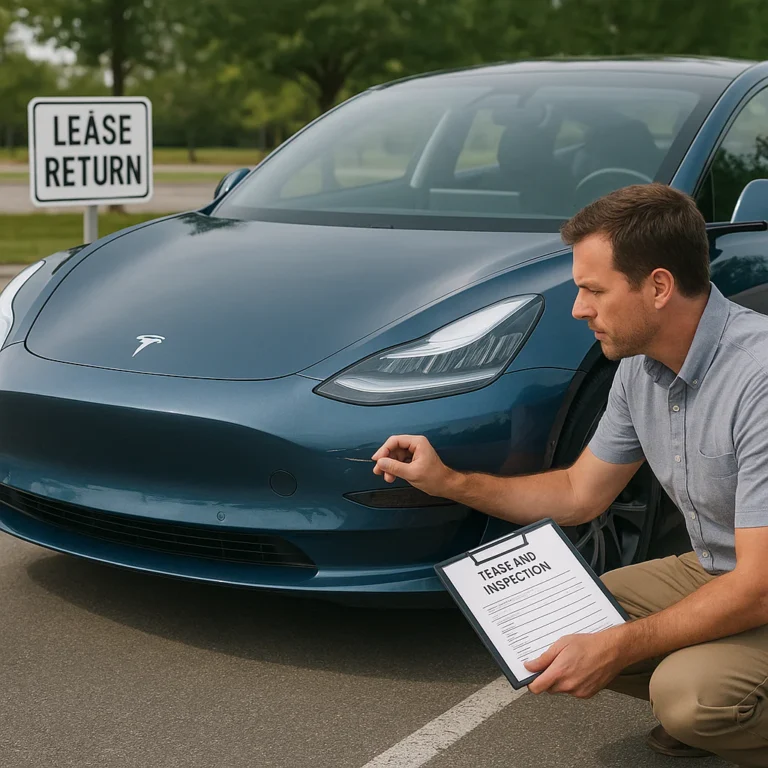
Returning the vehicle is usually the most straightforward option if you’ve followed the lease terms. Schedule the return with an authorized location, complete the inspection process, remove personal items, and get a signed receipt showing the date, mileage, and vehicle identification number.
Before you hand over the keys:
- Confirm where the lessor allows returns.
- Ask whether a pre-return inspection is available.
- Gather all keys, manuals, charging equipment, and accessories included with the car.
- Photograph the exterior, interior, odometer, and equipment.
- Request confirmation of any remaining obligations.
This option can be sensible if the vehicle’s market value is below the buyout amount or you simply don’t want to own it. But don’t assume “return and walk away” means “no final bill”: mileage, condition, unpaid charges, or a disposition fee may still apply.
2. Buy out your leased car
A lease buyout lets you purchase the vehicle under the terms of your contract or the lessor’s current purchase quote. It can be appealing when you like the car, know its maintenance history, and want to avoid replacing it.
LeeAnn Shattuck, quoted in Capital One’s lease-end guide, puts a key benefit plainly: “You know its history, where it has been, and how well it has been maintained.” That’s a real advantage over buying an unfamiliar used car—assuming you’ve maintained it properly and it still fits your needs.
Before buying, compare:
- The lessor’s official buyout quote.
- Current market estimates and actual dealer offers.
- Taxes, title, registration, and any purchase-related fees.
- Your financing cost, if you’ll need a loan.
- Expected maintenance and repair costs.
If the buyout appears favorable, ask your lender or credit union about financing options. Our Auto Financing Options guide covers questions to ask before taking out a vehicle loan.
3. Extend your car lease
An extension can provide breathing room if you need more time to choose a replacement or your next vehicle is delayed. Extensions are not automatic. Contact the leasing company before the lease ends and ask whether it offers a formal extension, a month-to-month arrangement, or another short-term option.
Get the details in writing:
- Extension length and payment amount.
- Whether your mileage allowance changes.
- How maintenance and warranty obligations apply.
- Whether you can still buy the car.
- What return date and inspection rules apply afterward.
Some lessors may offer extensions for a few months; others may not. Don’t assume that continuing to drive after the contract’s end date counts as an approved extension. Ask first, and keep the confirmation.
4. Sell or trade in your leased vehicle
You generally can’t sell a car you don’t own outright, but you may be able to arrange a sale through the lessor, buy the vehicle and then resell it, or transfer purchase rights where permitted. Dealerships and online retailers may provide offers, but the lessor decides whether that transaction is allowed and how the payoff must be handled.
A practical process:
- Request a current payoff or buyout quote from the lessor.
- Get written purchase offers from multiple dealers or retailers.
- Verify whether the buyer can pay the leasing company directly.
- Ask about third-party buyout restrictions and processing time.
- Calculate the net difference after payoff and required costs.
If a dealer offers more than the actual payoff, you may have positive equity. If the offer is lower, you may need to pay the difference—or decide that returning the car is simpler.
Some finance companies restrict third-party buyouts, and policies change. Don’t rely on old lists of which brands allow outside sales. Confirm the current rules with your specific lessor. The same caution applies when trading the car toward another lease: ask for a line-by-line breakdown so any equity is visible rather than hidden inside the next deal.
💸 What Happens to the Car’s Residual Value?
The residual value is the estimated value of the car at the end of the lease, set when the lease is written. It helps determine depreciation and, along with other contract terms, your payment. It is not automatically the exact amount you must pay to buy the car today.
The Federal Reserve Bank of San Francisco’s explanation of auto leasing describes leasing payments as tied in part to the vehicle’s depreciation over the contract term. Your actual lease math also depends on factors such as the agreed vehicle price, rent charge, term, taxes, and fees.
Residual value versus market value
| Term | Meaning | Where to check |
|---|---|---|
| Residual value | The contract’s estimate of the car’s value at lease-end | Your signed lease contract |
| Buyout or payoff quote | The amount the lessor says is needed for a purchase at a particular time | The lessor’s account portal or customer service |
| Market value | What buyers or dealers may currently pay for the car | Multiple written offers and valuation tools |
| Trade-in value | A dealer’s offer when you apply the vehicle toward another transaction | Written dealer appraisal |
These numbers can diverge. Used-car supply, fuel prices, model popularity, mileage, condition, and local demand all influence market value. A valuation website is a useful starting point, but a real offer is stronger evidence than an estimate.
Equity, negative equity, and lease buyouts
If the car’s market value exceeds the buyout amount and transaction costs, you may have positive equity. If it’s worth less than the total amount required to buy it, you may have negative equity.
Basic estimate:
Potential equity = credible market offer − official buyout/payoff amount − applicable transaction costs
For example, if a dealer’s written offer exceeds the lessor’s payoff, the difference may be yours after the transaction is completed, subject to taxes, fees, and contract rules. If the offer is lower, buying the car just to resell it may not make financial sense.
The first video featured in this article describes positive equity as a situation where “the car is worth more than what you would need to pay to purchase it at the end of the lease term.” That’s a helpful starting point, but calculate with the current payoff—not just the residual printed in your original agreement. The video also describes adding residual value to remaining payments to estimate an early purchase amount. Treat that as a rough illustration only: the exact early payoff calculation is set by the lender and contract.
🔍 Lease-End Inspection: Mileage, Wear, and Tear
A lease-end inspection determines whether the vehicle’s mileage and condition meet the standards in your agreement. Lease companies often distinguish normal use from excess wear, but their definitions vary. Request your lessor’s guide and inspect the vehicle before the official review.
Excess mileage charges
Your lease specifies a mileage allowance. If the odometer is above that limit, the contract may charge for each additional mile. The applicable rate is set in your agreement, so check the paperwork rather than guessing.
If you’re still months from lease-end, estimate how much you’ll drive before return. Then ask the lessor whether it allows you to buy additional miles in advance or offers another way to reduce the final mileage charge. Compare that option with the cost of returning the car over mileage; rules differ between companies.
Excess wear-and-tear fees
Potential chargeable issues may include:
- Large dents, deep scratches, or damaged panels.
- Cracked glass or broken lights.
- Tire damage, missing tires, or tread below required standards.
- Burned, torn, or heavily stained upholstery.
- Missing keys, charging cables, original equipment.
- Unauthorized modifications or incomplete maintenance, where prohibited by the contract.
A few ordinary scuffs or light marks may be considered normal use, but the standard is contract-specific. Don’t assume every small flaw will be forgiven—or that every scratch requires a repair. Ask the inspector how the lessor evaluates the damage.
What to fix before returning your car
- Get the inspection guide. Review the standards and required return items.
- Schedule a pre-inspection. If available, this gives you time to consider repairs.
- Wash and clean the car. Dirt can hide the actual condition, and cleaning may remove marks that look worse than they are.
- Photograph everything. Take clear, dated pictures in good light, including the odometer and all sides of the vehicle.
- Get repair estimates. Compare the cost of fixing an item with the potential assessed charge. Avoid repairs that the contract doesn’t require.
- Keep receipts. Save records for maintenance and any work performed.
- Return all required items. Include keys, manuals, accessories, and charging equipment.
Car and Driver’s lease-end advice recommends cleaning the vehicle before inspection and notes that minor marks may differ from damage requiring repair. We agree with the spirit: clean first, document carefully, and don’t authorize repairs based only on a vague worry.
🧾 Lease Return Fees, Taxes, and Final Bills
The final amount due depends on your contract, return condition, mileage, location, and transaction choice. Possible charges include a disposition fee, excess mileage, excess wear, unpaid obligations, or taxes and title fees if you buy the vehicle.
| Possible charge | When it may apply | What to verify |
|---|---|---|
| Disposition fee | You return the vehicle and the contract includes one | Whether it is waived when you lease or buy another vehicle from the brand |
| Excess mileage | Odometer exceeds your contracted allowance | Contract rate, mileage reading, and any prepaid-mile option |
| Excess wear | Damage exceeds the lessor’s standards | Inspection report, photos, and dispute process |
| Unpaid obligations | Outstanding payments, tolls, or other amounts remain | Final account statement and supporting records |
| Purchase taxes and fees | You buy the vehicle | State and local tax, title, and registration requirements |
These charges are not identical across automakers or states. Car and Driver notes that a disposition fee may apply and can sometimes be waived when customers lease another vehicle from the same brand. That’s a possibility to ask about—not a guaranteed benefit.
If you believe a charge is wrong, request an itemized statement, inspection photos, and the relevant contract clause. Keep your return receipt, inspection documents, and correspondence. For state-specific consumer protections, check your state attorney general or motor vehicle agency.
🛠️ What Happens If You Buy the Car at Lease End?
If you exercise the purchase option, the vehicle stops being a lease return and becomes a purchase transaction. You pay the amount required by the lessor, complete the paperwork, and transfer ownership according to state requirements.
Buying may be worthwhile if:
- The buyout is competitive with the car’s market value.
- You know the vehicle’s history and it has been reliable.
- You want to avoid shopping for another car.
- You expect to keep it long enough to justify the purchase costs.
- You can manage the new loan payment or pay without financing.
The trade-offs: you take responsibility for future repairs, insurance, registration, and resale value. A lease warranty may also be close to expiring. Before signing, consider an independent inspection, particularly if the car has been driven hard or is approaching the end of its factory coverage.
Lease buyout financing and taxes
You can pay the buyout using cash or, if approved, a loan from a bank, credit union, or other lender. Compare the annual percentage rate, loan term, fees, and total repayment—not just the monthly payment. Our guides to Auto Financing Options and Credit Score and Car Leasing can help you prepare questions for lenders.
Taxes and fees depend on your location and how the purchase is structured. Some jurisdictions collect sales or use tax on the buyout; others apply different rules. Ask the lessor and your state’s motor vehicle agency for the correct local treatment. Don’t assume tax was fully handled through your lease payments.
Title transfer, registration, and warranty considerations
Once the buyout is complete, the title must be transferred and the vehicle registered in your name, following your state’s rules. Ask who submits the title paperwork, what documents you’ll receive, and when you can expect the title or lien record.
Before buying, also check:
- Remaining factory warranty coverage and its mileage limit.
- Any open safety recalls through the NHTSA recall lookup.
- Maintenance history and upcoming service needs.
- Whether an extended warranty or service contract makes sense.
- Insurance requirements if the car is financed.
If you’re considering an electric vehicle, check battery coverage and charging equipment too. Browse our Electric Vehicle Leases category for related EV ownership and lease information.
📋 Step-by-Step: Prepare for Your Lease-End Decision
A little preparation can turn lease-end from a last-minute scramble into a calm comparison. Here’s the process we recommend.
1. Start early
Begin reviewing your options several months before the end date. Automakers may send reminders or offers, but don’t wait for a marketing email to make the first move. Check the contract, account portal, and lessor’s lease-end website.
2. Read the contract
Find the sections covering:
- Purchase option and buyout procedure.
- Mileage allowance and excess-mile charge.
- Normal wear and chargeable damage.
- Disposition fee and return location.
- Lease extension and third-party sale rules.
- Required equipment and maintenance.
If anything is unclear, ask the lessor to explain it in writing.
3. Get an official buyout quote
Ask for a quote that shows the effective date, amount due, and any required taxes or fees. If you’re evaluating an early purchase, request the exact payoff calculation. The contract’s residual value alone may not reflect the amount due today.
4. Collect market offers
Use valuation tools such as Kelley Blue Book, Edmunds, or AutoTrader, then seek actual appraisals from multiple buyers. Give each buyer accurate information about mileage, condition, trim, and equipment.
5. Check the lessor’s sale and transfer rules
Before accepting an offer, confirm whether the dealer can buy the vehicle directly from the leasing company or whether you must purchase it first. Ask who pays the lender, how equity issued, and whether you remain liable during any transfer.
6. Book the inspection and review possible repairs
Request a pre-inspection if available. Compare the inspection report with the lease’s wear standards, get estimates for meaningful damage, and avoid spending on cosmetic repairs that won’t improve your outcome.
7. Compare your complete costs
Use the same checklist for each option:
- Return: expected fees and final account charges.
- Buyout: payoff, taxes, title, financing, insurance, and repairs.
- Extension: added payments, mileage, and later return obligations.
- Sale or trade: payoff, offer, taxes or fees, and net proceeds.
8. Complete the transaction and keep records
Get a dated return receipt or purchase paperwork. Photograph the vehicle and odometer, return all equipment, and save every inspection report, offer, and final statement.
This checklist helps answer the question many drivers don’t think to ask until the final month: what is the car actually worth to you, after every cost is counted? For lease planning and contract comparisons, see our Best Lease Terms resources.
⚠️ Common Lease-End Mistakes to Avoid
Assuming you must return the car
Many leases include a purchase option, but not every vehicle or contract offers the same choices. Review your agreement and confirm current lender rules before deciding.
Treating residual value as the complete payoff
A residual is a contract estimate. The actual buyout may include additional items, and the payoff can change over time. Get a current written quote.
Accepting the first trade-in offer
A dealership may present a convenient offer, but convenience doesn’t prove it’s the best offer. Compare multiple written bids and the lessor’s payoff.
Ignoring third-party buyout restrictions
A dealer may want the vehicle but be unable to buy it directly from your leasing company. Confirm the process before relying on the promised equity.
Waiting until the last week
Late planning can leave you with fewer inspection appointments, little time to compare offers, and limited options if a replacement vehicle is delayed. Start early.
Spending too much on repairs
A repair only makes sense if it’s required, improves the vehicle’s value enough to justify its cost, or helps you avoid a larger assessed charge. Get the inspection criteria before opening your wallet.
Handing over the keys without proof
Keep a signed return receipt and photos of the car, mileage, and equipment. Without documentation, it’s harder to resolve a later disagreement.
🤔 Is Returning, Buying, or Trading In Your Leased Car Best?
There isn’t one best choice for every driver. The right answer depends on the car’s buyout, its actual market value, your contract, your budget, and whether you still want the vehicle.
| Your situation | Option worth investigating |
|---|---|
| You like the car and it has been reliable | Buy it, after checking condition, buyout, and total ownership costs |
| A dealer’s offer exceeds the official payoff | Explore selling or trading, after confirming the lessor permits it |
| The car is worth less than the buyout and you don’t want it | Return it, after checking mileage and condition charges |
| You need a little more time to decide | Ask about an extension before the contract ends |
| You’re replacing it with another car from the same brand | Ask about fee waivers and equity, but compare the new deal separately |
A useful rule: compare written numbers, not sales talk. The buyout, the dealer offer, estimated return charges, and replacement-vehicle terms should each be visible on their own. Don’t let a dealer bury negative equity or a fee waiver inside a new monthly payment.
The competitive advice is broadly consistent: plan ahead and compare the car’s value with the purchase amount. Capital One highlights the potential to preserve equity through a sale, while Car and Driver stresses the practical basics of inspection, return fees, and contract rules. Where online summaries seem to disagree about whether a lease can be sold or its buyout negotiated, trust the current written policy from your own lessor: these rules vary by contract, finance company, state, and date.
✅ Quick Tips for a Smooth Lease Return
- Start early: Give yourself time to inspect, compare offers, and arrange your next vehicle.
- Read your lease contract: Focus on mileage, wear, buyout, fees, and return instructions.
- Get a current payoff: Don’t make a decision using only the original residual value.
- Compare real offers: Seek multiple appraisals and confirm how each buyer handles the lessor.
- Ask about the inspection: Request the standards, report, and dispute process.
- Clean and document the car: Take dated photos of its condition, odometer, and returned equipment.
- Keep every receipt: Save maintenance, repair, inspection, return, and payoff records.
- Verify the final account: A return receipt is useful, but check for a final statement or remaining balance.
If you’re planning a new lease, compare the full contract—not just the advertised payment. Our Best Lease Terms and Car Lease Basics guides are handy companions while you shop.