Support our educational content for free when you purchase through links on our site. Learn more
Best Tesla Model 3 Lease Deals & Incentives (2026) ⚡

The best Tesla Model 3 lease deal is the one with the lowest total cost for your mileage, location, and exact trim—not simply the smallest advertised monthly payment. Compare Tesla’s live quote with any verified local incentives, then check the drive-off amount, fees, and lease-end rules before signing.
We’ve seen drivers get dazzled by a tidy monthly figure, only to discover it assumes a hefty upfront payment and a mileage limit that doesn’t fit their commute. One third-party listing cited a Model 3 lease example of $439 per month with $3,000 down, but that’s a snapshot—not a guaranteed offer for every shopper. Your actual quote depends on location, vehicle configuration, eligibility, and current terms.
Key Takeaways
- Compare the full lease cost: Include payments, amount due at signing, fees, taxes, and mileage—not just the monthly figure.
- Verify incentives at the source: Government rebates, Tesla promotions, and special offers can have different eligibility rules and may not stack.
- Match the deal to your driving: Check the Model 3 trim, annual mileage allowance, charging access, insurance, and lease-end terms.
- Treat online offers as leads, not promises: Confirm current availability and every condition in a written Tesla or leasing-provider quote.
- Explore Tesla Model 3 and electric vehicle lease guides.
Table of Contents
- ⚡️ Quick Tips and Facts: Tesla Model 3 Lease Deals
- 🚘 Tesla Model 3 Leasing: Background and Model-Year Changes
- 💸 How Tesla Model 3 Lease Deals and Incentives Work
- Lease payment basics: capitalized cost, money factor, and residual value
- Tesla lease terms, mileage limits, and end-of-lease options
- Lease versus finance versus cash: which suits you?
- 🌎 Tesla Model 3 Lease Incentives by Region
- North America: U.S. and Canadian lease offers, tax credits, and rebates
- Australia and New Zealand: EV discounts, exemptions, and state incentives
- Asia: Tesla leasing, import duties, and local EV incentives
- Europe and the Middle East: country-specific Tesla lease support
- Latin America: Tesla availability, leasing, and EV tax benefits
- 🇺🇸 U.S. Tesla Model 3 Lease Deals and State Incentives
- Federal incentives and how lease eligibility can differ
- State, utility, and local EV rebates
- Income, vehicle, and residency requirements to check
- 🔎 Where to Find Current Tesla Model 3 Lease Offers
- Tesla’s website, inventory discounts, and delivery timing
- Third-party lease brokers and comparison sites
- How to verify an advertised lease deal
- 📋 Tesla Model 3 Lease Deal Checklist
- Down payment, drive-off costs, and refundable deposits
- Fees, taxes, insurance, and registration
- Mileage allowance, wear, and end-of-lease charges
- 🧮 How to Compare Tesla Model 3 Lease Quotes
- Calculate the real monthly cost, not just the advertised payment
- Compare trims, wheels, upgrades, and delivery configurations
- Lease quote comparison checklist
- ✅ Who Should Lease a Tesla Model 3?
- Best fit: predictable driving and frequent vehicle upgrades
- When buying may make more sense
- ⚠️ Common Tesla Model 3 Leasing Mistakes to Avoid
- 🔌 Ownership Costs That Affect the Lease Decision
- Home charging, public charging, and Supercharging
- Insurance, tires, maintenance, and repairs
- Battery range, winter driving, and real-world efficiency
- 🔄 Tesla Model 3 Lease End: Return, Extend, or Get Another Tesla
- 🛠️ Negotiation Tips for a Better Tesla Lease
- 📊 Quick Tips and Facts
- 🏁 Conclusion
- 🔗 Recommended Links
- ❓ FAQ
- Are Tesla Model 3 lease deals negotiable?
- Can you use an EV tax credit on a Tesla lease?
- Does Tesla allow lease buyouts at the end of the term?
- What credit score do you need to lease a Tesla Model 3?
- Can you transfer or end a Tesla lease early?
- Are used Tesla Model 3 lease deals available?
- When is the best time to lease a Tesla Model 3?
- 📚 Reference Links
⚡️ Quick Tips and Facts: Tesla Model 3 Lease Deals
For a current payment estimate and the details that change it, see our guide to how much a Tesla Model 3 lease costs. Lease offers, incentives, and eligibility can change by location and delivery date, so treat any advertised deal as a starting point—not a promise from the payment fairy. 🧚
| What to check | Why it matters |
|---|---|
| Total due at signing | A low monthly payment can hide a substantial upfront payment. Compare the full lease cost, including drive-off fees. |
| Lease term and mileage allowance | A deal based on 10,000 miles per year may not suit a 15,000-mile commute. Extra miles can cost more at lease end. |
| Trim and vehicle configuration | Rear-Wheel Drive, Long Range, and Performance versions differ in range, equipment, and lease cost. Confirm the exact vehicle in the offer. |
| Incentive eligibility | Tax credits, rebates, trade-in perks, and special programs can have location, customer, vehicle, and order-date requirements. |
| Inventory versus custom order | Existing inventory or demo vehicles may carry different adjustments, but can have mileage or configuration trade-offs. |
| Lease-end rules | Confirm whether you can buy the car, what counts as excess wear, and how early termination works. |
- ✅ Compare total cost, not just the monthly payment. Put the due-at-signing amount, payment count, fees, and mileage terms beside each quote.
- ✅ Check Tesla’s live offer and inventory pages for your region, then confirm terms in your actual lease paperwork. Start with Tesla Model 3 and Tesla inventory.
- ❌ Don’t assume a U.S. incentive applies in Canada, Europe, or elsewhere. Programs and rules vary across borders, and often within them.
- 🔎 Browse our guides to electric vehicle leases, car lease basics, and best lease terms.
🚘 Tesla Model 3 Leasing: Background and Model-Year Changes

The Model 3 is Tesla’s midsize electric sedan, available in configurations that vary by market and model year. Its streamlined design and access to Tesla’s charging network are major draws; the trade-offs include a minimalist cabin, trim-dependent range, and a lease structure whose details need close reading.
Tesla periodically updates equipment, software, availability, and pricing. That means a screenshot of a past lease special—even one shared by a well-meaning friend in the group chat—may no longer match the car or offer you can order today. Check the Tesla Model 3 specifications and the current Tesla offer page for your country.
We think of leasing an EV as renting the whole ownership experience: the car, its warranty period, its charging habits, and its end-of-term rules. A lease can suit drivers who want a newer vehicle every few years and predictable payments. It can be less appealing if you drive far beyond the mileage allowance or want to keep the same car long after the payments end.
Model 3 trims, range, and equipment to compare
Tesla’s trim names and configurations can change by market, so compare the exact build sheet—not just a trim badge. Start with Tesla’s official Model 3 comparison and configuration page.
| Configuration to check | What to compare before leasing |
|---|---|
| Rear-Wheel Drive | Standard equipment, estimated range, charging needs, and whether the lower entry configuration fits your daily driving |
| Long Range | The additional range and any drivetrain or equipment differences against the payment increase |
| Performance | Acceleration, wheels, tires, ride comfort, range, and insurance implications |
| All configurations | Included features, optional upgrades, delivery location, mileage allowance, and lease-end terms |
Range figures are estimates, not a guarantee of the distance you’ll drive in every condition. Speed, temperature, terrain, wheels, and climate use all affect real-world efficiency. Use the U.S. EPA vehicle comparison tool where applicable, and consult the vehicle’s official local specification page.
💸 How Tesla Model 3 Lease Deals and Incentives Work
A lease payment generally reflects the vehicle’s negotiated or adjusted value, the estimated value at lease end, the rent charge, taxes, and fees. Incentives may reduce some part of the transaction, but the offer’s headline payment alone doesn’t tell you what the lease will cost overall.
When comparing offers, ask for the complete written quote and identify:
- The exact Model 3 trim and vehicle identification number, if assigned
- The lease term and annual mileage allowance
- The amount due at signing and what it includes
- Monthly payment with taxes, if possible
- Any acquisition, registration, delivery, or disposition fees
- Whether a discount or incentive is already included
- Whether the offer requires a trade-in, referral, particular delivery date, or credit approval
The Consumer Financial Protection Bureau’s auto lease guide explains why it’s useful to read the full contract and understand the money due at signing, mileage limits, and end-of-lease obligations. For more background, visit our car lease basics guide.
Lease payment basics: capitalized cost, money factor, and residual value
| Lease term | Plain-English meaning | What to ask |
|---|---|---|
| Capitalized cost | The amount used as the vehicle’s starting value for lease calculations, adjusted by applicable credits, fees, or other items | What vehicle value and discounts are used in this quote? |
| Residual value | The predicted value at lease end used in the payment calculation | Is the residual fixed in the contract? |
| Money factor / rent charge | The financing component of the lease | What financing charge applies, and is the figure disclosed? |
| Mileage allowance | The number of miles included over the term | What is the over-mileage charge, and can you choose a higher allowance? |
| Due at signing | The amount payable when you begin the lease | How much is first payment, taxes, fees, deposit, and any other upfront amount? |
A larger upfront payment can make the displayed monthly figure look smaller, but it doesn’t automatically make the deal cheaper. It can also leave you with more money at risk if the vehicle is totaled early. Compare quotes with similar drive-off amounts, and ask how any upfront payment is treated under the contract.
Tesla lease terms, mileage limits, and end-of-lease options
Never assume Tesla’s current lease-end policy matches a prior customer’s experience. Buyout eligibility and return procedures can vary by contract, vehicle, and market. Read your lease documents and verify details directly with Tesla or the leasing company before signing.
Confirm these terms in writing:
- Lease length: How many monthly payments are due?
- Annual mileage: Is the allowance enough for commuting, trips, and your normal detours?
- Excess mileage: What’s the charge per mile or kilometre above the limit?
- Wear and tear: What damage or tire condition could trigger a charge?
- Purchase option: Can you buy the Model 3 at lease end, and how is the purchase amount determined?
- Early termination: What happens if your needs change before the end date?
- Return logistics: Where must you return the vehicle, and which fees may apply?
For general consumer guidance on lease-end charges and contract terms, see the Federal Trade Commission’s car leasing advice.
Lease versus finance versus cash: which suits you?
| Your situation | Leasing may suit you if… | Financing or buying may suit you if… |
|---|---|---|
| Annual mileage | You can stay within the allowance | You drive a lot or your mileage is hard to predict |
| How long you keep cars | You prefer changing vehicles every few years | You want to keep the car after payments end |
| Monthly budget | A lower payment is the priority and the full lease terms work | You’re comfortable paying toward ownership and retaining resale risk |
| Customization | You’ll leave the vehicle close to its original condition | You want more freedom to modify or personalize |
| Future flexibility | You’ve checked early-exit and lease-end rules | You want to sell or keep the vehicle on your own timeline |
A lease can reduce exposure to resale value after the term, but it doesn’t make depreciation disappear; depreciation is part of the lease calculation. A purchase transfers more resale responsibility to you, while potentially offering more flexibility over how long you keep the car. Compare both paths using the same vehicle, taxes, insurance assumptions, and ownership period. Our auto financing options page covers the other side of that decision.
🌎 Tesla Model 3 Lease Incentives by Region
Tesla offers, government incentives, and eligibility rules are local and time-sensitive. A discount listed for one market may not exist in another, and a benefit advertised for a Model Y or for a purchase may not apply to a Model 3 lease.
| Region | What to investigate | Where to verify |
|---|---|---|
| North America | Federal, provincial, state, utility, trade-in, and employer programs | Government websites, Tesla’s local site, and the lease contract |
| Australia and New Zealand | State or territorial policies, vehicle taxes, and Tesla trade-in or referral campaigns | Local government and Tesla websites |
| Asia | National and local subsidies, import rules, financing, and registration | Government agency and Tesla market pages |
| Europe and Middle East | Country-specific grants, company-car tax rules, and eligibility dates | National authorities and Tesla’s local site |
| Latin America | Vehicle availability, import duties, registration taxes, and financing | Local authorities and authorized Tesla channels |
Third-party incentive trackers can be useful research shortcuts. They are not a substitute for the official program rules or the written lease offer. Check the program’s eligibility, funding status, application deadline, and whether the benefit is applied to the lease at all.
North America: U.S. and Canadian lease offers, tax credits, and rebates
In the United States, lease incentives may come from Tesla, a leasing company, a state or local program, a utility, or an employer. Don’t treat an EV tax credit as a guaranteed customer discount: eligibility and the way a credit is applied depend on current law and transaction structure. Check the IRS clean vehicle credit information and confirm any lease-specific treatment with the leasing company and a qualified tax professional.
For state and local benefits, start with the U.S. Department of Energy’s Alternative Fuels Data Center and the relevant state agency. A program may have income limits, residency requirements, funding caps, or vehicle-price rules.
In Canada, federal and provincial incentives have their own eligibility conditions and can change. Consult the Government of Canada’s iZEV program page and your provincial government. A listing that mentions an EV incentive for another Tesla model—or for a purchase rather than a lease—is not proof that the Model 3 you want qualifies.
Australia and New Zealand: EV discounts, exemptions, and state incentives
Australian EV support can depend on the state or territory, vehicle use, tax treatment, and the rules in force when you order. Check current guidance from the Australian Government’s EV information resources and the relevant state revenue or transport agency. For New Zealand, verify current policy through the New Zealand Ministry of Transport.
Ask Tesla or the leasing provider whether any advertised trade-in, referral, or fleet benefit is:
- Available for the Model 3 configuration you’re ordering
- Available in your state or territory
- Combinable with other offers
- Deducted from the vehicle amount, paid separately, or subject to reimbursement
- Valid for your order and delivery dates
Referral offers and promotional perks are not the same thing as a government rebate. Check their individual terms before counting them as savings.
Asia: Tesla leasing, import duties, and local EV incentives
Asia is not one incentives market. Policies can differ sharply between countries and cities, and some national benefits require a specific vehicle price, use category, registration process, or holding period.
For example, Japan’s EV support and local programs should be verified through the Next Generation Vehicle Promotion Center. In China, check the applicable national and municipal policies and Tesla’s official China Model 3 page. Don’t assume a finance promotion, paint credit, or final-payment adjustment is interchangeable with a lease incentive.
Before committing, request a market-specific written quote that explains:
- Whether the car is locally supplied or imported
- Any import, registration, or ownership taxes
- Which incentive is applied and who receives it
- Application and vehicle-holding requirements
- The lease provider’s end-of-term and buyout rules
Europe and the Middle East: country-specific Tesla lease support
European EV incentives may differ by country and can change with budgets, vehicle rules, tax treatment, and delivery timing. Company-car taxation and employer leasing arrangements can also influence the effective cost, but these are not automatically available to private customers.
Check the relevant national authority and Tesla’s local website before relying on a headline grant. For EU-level context, the European Alternative Fuels Observatory provides market and policy information; the authority administering a particular grant remains the final source for its eligibility rules.
In the Middle East, availability, financing, registration, and incentives vary by country. Start with Tesla’s regional site and the relevant national transport or energy authority. A referral reward or charging perk may have a different value and set of conditions from a cash incentive.
Latin America: Tesla availability, leasing, and EV tax benefits
Tesla availability and lease structures differ across Latin American markets. Import costs, local taxes, registration, servicing, and insurance can matter as much as an advertised vehicle discount.
Verify current Model 3 availability and any offer directly through Tesla’s local channels and government sources. Before comparing a Tesla lease with a locally available electric sedan, ask whether the quoted vehicle is officially supported in your market and how repairs, parts, warranty service, and lease return will be handled.
🇺🇸 U.S. Tesla Model 3 Lease Deals and State Incentives
A useful starting point is to compare three separate possibilities: Tesla’s lease quote, any Tesla-specific promotion, and any government or utility incentive. They may not stack, and one may be limited to a particular delivery window or buyer group.
One competing incentives tracker lists a U.S. Model 3 lease example of $439 per month with $3,000 down, a 36-month term, and 10,000 miles per year, marked as ongoing for applications after October 22, 2026. That is a third-party listing, not a guarantee of a current Tesla quote. It also does not tell every shopper the taxes, fees, credit approval outcome, location-specific eligibility, or full amount due at signing. Verify the live offer through Tesla’s Model 3 configurator and review the lease contract.
Another third-party listing reports no Model 3 cash rebate and describes a $500 special cash bonus for certain eligible groups. Because special offers may have different names, qualifications, and expiry dates across sources, confirm the exact offer and its stacking rules directly before counting it in your budget. See RealCarTips’ Model 3 deals page for its listing, then verify details against Tesla and the program provider.
Federal incentives and how lease eligibility can differ
Federal EV incentives are governed by program rules that can change. For U.S. consumers, the IRS clean vehicle credit page is the right place to check current eligibility. The terms for a lease may differ from those for buying a vehicle outright; ask the leasing company whether a credit is applied to your offer and how it changes the contract.
Do not rely on a broad statement that “EVs qualify” or on a credit amount in an old article. Check:
- The exact vehicle and model year
- Whether the transaction is a lease or purchase
- Who claims the benefit
- Whether any amount is passed through to you
- Whether location, income, or other conditions apply
- The program’s current funding and effective dates
Tax rules can be complicated. For personal tax questions, consult the IRS or a tax professional rather than assuming a salesperson’s estimate settles the issue.
State, utility, and local EV rebates
State and local incentives can be valuable, but they often have narrower eligibility than national programs. Search the Department of Energy Alternative Fuels Data Center and your state’s official energy, transportation, or environmental agency. Also check your electric utility: some utilities offer EV, charger, or time-of-use programs separately from vehicle incentives.
| Program type | Questions to ask |
|---|---|
| State rebate | Is the Model 3 eligible, and are income or vehicle-price limits involved? |
| Utility incentive | Does it apply to vehicle leasing, home charging equipment, or electricity use? |
| Local program | Is funding still available, and do you need approval before ordering? |
| Employer or fleet benefit | Does your employer participate, and can the benefit be combined with Tesla offers? |
Apply in the sequence the program requires. Some programs need approval before purchase, order, or delivery; others may require registration or proof of residence afterward.
Income, vehicle, and residency requirements to check
Before you build an incentive into your monthly budget, confirm the fine print:
- Residency: Do you need to live in a particular state, city, or utility service area?
- Income: Is eligibility based on individual or household income?
- Vehicle: Does the exact Model 3 trim, price, and model year qualify?
- Transaction: Does the program cover leases, purchases, or both?
- Use: Is the vehicle required to be for personal use?
- Timing: Must you apply before delivery or within a set period?
- Funding: Is the incentive still funded?
If you’re unsure how credit approval may affect the lease, our credit score and car leasing guide can help you prepare. An incentive does not replace lender approval.
🔎 Where to Find Current Tesla Model 3 Lease Offers
For a clear comparison, use Tesla’s own quote as your baseline, then seek outside comparisons where available. Third-party deal sites can help you spot offers, but their terms may lag behind a changing manufacturer program.
Tesla’s website, inventory discounts, and delivery timing
Start at the official Model 3 page and the Tesla inventory search. Compare custom orders against in-stock vehicles, but look closely at configuration, delivery timing, mileage, and any displayed adjustment.
Demo vehicles may offer a different value proposition. They can have miles on the odometer, and the discount—if one is offered—needs to be weighed against the vehicle’s condition, warranty start date, and delivery details. Ask Tesla for the vehicle’s exact history and warranty information before ordering.
A video discussed in this article also calls attention to Tesla’s trade-in promotion involving free Supercharging miles and suggests checking demo inventory for potential adjustments. That’s a useful lead, not proof that an offer is available in every location; see the featured video and verify current terms on Tesla’s site.
Third-party lease brokers and comparison sites
Independent listings can help you understand what’s being advertised elsewhere. The summaries supplied by competing sources illustrate why cross-checking matters: one tracker publishes a specific Model 3 lease example, while RealCarTips’ Model 3 page does not provide complete lease terms in its current-offer section. Its broader Tesla incentives page gives general comparisons and says offers can vary by region.
Those pages are best treated as research tools, not binding offers. If using TrueCar or CarsDirect to compare local offers, make sure the result is actually for a Tesla Model 3 lease in your area, not a financing quote or a different model.
- Tesla: Use the official configurator and inventory listing for your market.
- Third-party sites: Use them to identify questions and possible promotions.
- Lease provider: Ask for the complete, current contract terms.
- Government agency: Verify public incentives at the source.
How to verify an advertised lease deal
Use this quick sequence before you trust a headline:
- Check the date and market. Is the listing current and meant for your country or state?
- Match the vehicle. Confirm trim, model year, options, and stock or custom-order status.
- Read the complete terms. Verify term, mileage allowance, due at signing, fees, and credit conditions.
- Confirm eligibility. Ask whether the offer requires a trade-in, referral, professional status, or other qualification.
- Ask what stacks. Get written confirmation that incentives can be combined.
- Recalculate total cost. Add payments, upfront amounts, taxes, fees, and any expected end-of-lease charges.
- Save the evidence. Keep the dated quote and the final contract.
A listing that says “ongoing” can still change or disappear. The contract is what matters.
📋 Tesla Model 3 Lease Deal Checklist
A good lease quote should answer the practical questions that appear when the excitement of choosing paint colour wears off. Use this checklist before signing, and keep a copy of the completed quote.
Down payment, drive-off costs, and refundable deposits
Ask for a written breakdown of all money due at delivery. Separate first monthly payment, fees, taxes, deposit, and any capitalized-cost reduction. Those amounts are not necessarily treated the same in the contract.
- Find out whether the reservation order deposit is refundable.
- Ask what happens to any deposit if financing or delivery is delayed.
- Compare offers using the same drive-off amount.
- Ask how a large upfront payment could be handled if the car is totaled or stolen.
- Avoid describing an offer as “zero down” until you know which fees and first payment are still due.
A small advertised payment can be an optical illusion if the upfront amount is large. Compare the total scheduled payments plus drive-off costs, not just the monthly line.
Fees, taxes, insurance, and registration
Ask whether the quote includes tax, registration, delivery, acquisition, and other charges. Then contact your insurer for a quote using the exact vehicle configuration and your location. Coverage needs and premiums vary, so a lease payment alone is not your full monthly transportation budget.
Before delivery:
- Confirm registration and local tax treatment.
- Check whether the lease requires particular insurance coverage or deductibles.
- Compare quotes from insurers using the Model 3’s exact trim.
- Ask if destination or delivery charges are included.
- Keep a reserve for tires, charging, and other costs the lease does not cover.
The National Association of Insurance Commissioners offers consumer information on auto insurance. For the lease itself, use the written terms from Tesla or the named leasing company.
Mileage allowance, wear, and end-of-lease charges
Estimate your real annual driving before choosing the mileage allowance. Include commuting, family trips, holidays, and the occasional “quick errand” that somehow crosses three counties.
Document the vehicle’s condition at delivery, and keep maintenance and repair records. Before returning the Model 3, ask the leasing company for its current wear standards and inspection process. Check tires, wheels, glass, paint, interior condition, and charging equipment, then resolve any concerns with the provider rather than guessing what will pass.
For general lease-return guidance, see the FTC’s car leasing advice. Your own contract determines the applicable rules.
🧮 How to Compare Tesla Model 3 Lease Quotes
Two payments are only comparable when their assumptions match. Make sure both quotes use the same trim, lease term, mileage allowance, upfront amount, tax treatment, and incentive assumptions. If not, you’re comparing apples with a very aerodynamic orange. 🍊
Calculate the real monthly cost, not just the advertised payment
For a simple comparison, divide the total scheduled lease outlay by the number of months:
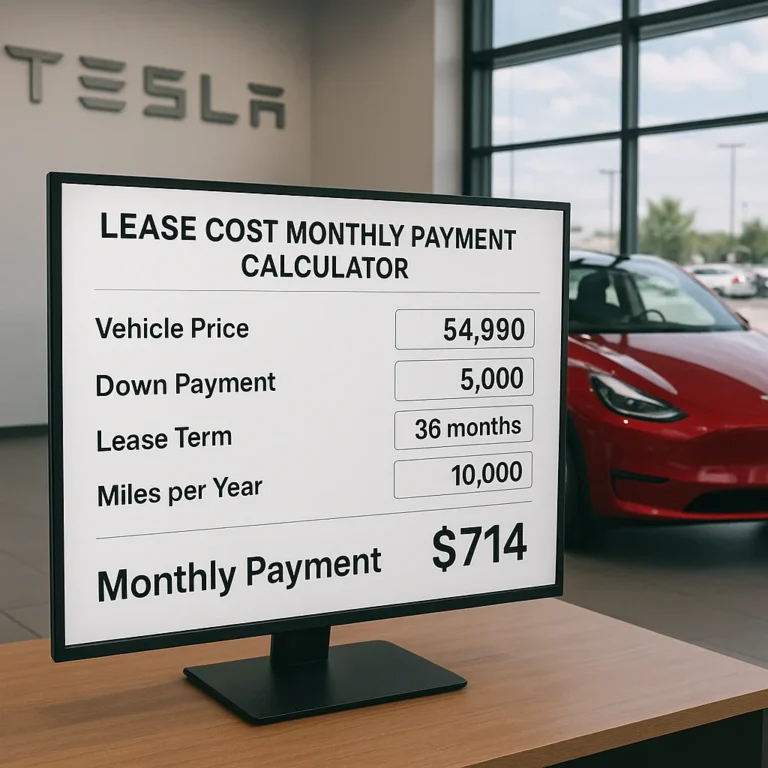
Comparison-only monthly cost = (total scheduled payments + drive-off costs + required fees not already included) ÷ lease months
This is not a legal payment calculation and doesn’t replace the contract. It is a way to expose how much an upfront amount changes the apparent monthly figure. Keep refundable deposits separate unless they’re actually applied to the lease cost.
Also list costs that may sit outside the lease payment:
- Insurance
- Home charging equipment and installation, if needed
- Public charging
- Tires and ordinary maintenance
- Registration and local taxes
- Potential excess-mileage or wear charges
Compare trims, wheels, upgrades, and delivery configurations
The cheapest configuration may be the right answer—or the wrong one if range, wheels, or equipment don’t match your life. Compare the actual build, not a generic “Model 3” label.
| Detail | Why to check it |
|---|---|
| Trim and drivetrain | Changes the vehicle’s capabilities and potentially the lease calculation |
| Wheels and tires | Can affect range, ride, replacement costs, and winter suitability |
| Paint and interior | Options may change the vehicle value and payment |
| Delivery location | Can affect taxes, fees, and availability |
| Included software or subscriptions | Confirm what is included, how long it lasts, and whether renewal is optional |
| Vehicle status | New, demo, or inventory cars can have different mileage and warranty details |
The official Tesla Model 3 configurator is the best place to confirm the build. Don’t pay for an upgrade because it looks tidy on the screen unless you’ll appreciate it every day.
Lease quote comparison checklist
Put each written offer into the same comparison grid:
| Quote detail | Offer A | Offer B |
|---|---|---|
| Model year and trim | ||
| New, inventory, or demo | ||
| Lease term | ||
| Miles per year | ||
| Due at signing | ||
| Monthly payment, including tax | ||
| Fees not included in payment | ||
| Incentives and eligibility | ||
| Excess-mileage terms | ||
| Purchase option and lease-end rules |
If a salesperson or online listing can’t provide the relevant information, the payment isn’t ready for a fair comparison.
✅ Who Should Lease a Tesla Model 3?
The Model 3 can make sense for drivers who want an electric sedan, can charge conveniently, and are comfortable with lease limits. It isn’t an automatic fit for every household. We’d begin with your commute, charging access, insurance quote, and expected mileage—not the colour configurator. (It’s a dangerously pleasant rabbit hole.)
Best fit: predictable driving and frequent vehicle upgrades
Leasing may suit you if:
- Your annual mileage is predictable and fits an available allowance.
- You prefer replacing vehicles every few years.
- You have dependable home or workplace charging.
- You want to avoid selling a used vehicle yourself.
- You’re comfortable returning the car under contract-defined condition rules.
If you’re exploring electric cars more broadly, browse our electric vehicle leases for other comparisons.
When buying may make more sense
Consider financing or buying if you:
- Drive unusually high or unpredictable mileage.
- Want to keep the vehicle beyond the lease term.
- Prefer more freedom to modify the car.
- Can accept responsibility for resale value.
- Want to avoid lease-return inspections and mileage charges.
A lease’s lower advertised payment does not prove it is the cheaper long-term option. Compare the lease total with the financed amount, interest, expected ownership period, and realistic resale value. For broader choices, see auto financing options.
⚠️ Common Tesla Model 3 Leasing Mistakes to Avoid
- ❌ Choosing by monthly payment alone: Check the drive-off amount and total payments.
- ❌ Underestimating mileage: Review your odometer habits before selecting an allowance.
- ❌ Assuming an incentive stacks: Get written confirmation from the provider.
- ❌ Confusing lease offers with finance offers: APR and lease terms describe different transactions.
- ❌ Relying on an expired article: Confirm the current market, date, and order window.
- ❌ Ignoring insurance: Get a quote for the exact trim before signing.
- ❌ Assuming you can buy the car later: Verify the purchase option in your lease contract.
- ❌ Treating a demo discount as free value: Check mileage, condition, warranty start, and delivery terms.
- ❌ Ordering before checking rebates: Some programs require approval before purchase or delivery.
- ❌ Ignoring charging access: A home-charging plan can change the day-to-day convenience and cost of an EV.
If credit approval is part of your planning, our guide to credit scores and car leasing explains what to review before applying.
🔌 Ownership Costs That Affect the Lease Decision
Your monthly lease payment is only one part of the cost of driving an EV. Charging, insurance, tires, and your local electricity rates all influence whether the Model 3 fits your budget and routine.
Home charging, public charging, and Supercharging
Home charging is convenient when you have suitable parking and permission to install or use charging equipment. Public charging may be necessary for renters, apartment residents, and frequent travellers. Check your electricity tariff and charging access before assuming an EV will be cheaper to run.
Tesla’s Supercharger network page explains its network and charging experience. A promotion for free Supercharging miles, if available, has its own eligibility and expiry rules; it does not necessarily cover every charging session or every vehicle.
| Charging option | Good to know |
|---|---|
| Home charging | Check electrical capacity, installation needs, landlord or strata approval, and electricity rates |
| Workplace charging | Confirm access, payment, and whether availability is dependable |
| Public charging | Check station coverage, connector compatibility, and current charging fees |
| Tesla Superchargers | Verify access, billing, location coverage, and any promotion’s conditions |
Insurance, tires, maintenance, and repairs
Insurance varies by driver, trim, region, and insurer. Get an actual quote before signing, and compare equivalent coverage. Tires also deserve attention: vehicle weight, wheel choice, driving style, and road conditions can influence wear. Follow Tesla’s official maintenance guidance and ask the lease provider how tire condition is assessed at return.
A lease may reduce some long-term ownership uncertainty, but it doesn’t make ordinary operating costs disappear. Budget for insurance, charging, tires, and any contract exclusions.
Battery range, winter driving, and real-world efficiency
Cold weather, high speeds, hills, climate use, and wheel configuration can affect real-world range. If you live somewhere with harsh winters, test your regular route and think about how often you’ll charge. Check Tesla’s vehicle manual and range information and use the EPA’s fuel economy and EV comparison resources as reference points—not promises about every trip.
Before leasing, ask yourself: Can I comfortably cover my usual drive while keeping a sensible charging buffer? If the answer depends on perfect weather and a tailwind, the longer-range configuration may be worth comparing.
🔄 Tesla Model 3 Lease End: Return, Extend, or Get Another Tesla
Your lease contract determines what happens at the end. Contact the leasing company early enough to understand inspection timing, return locations, purchase options, and any fees. Confirm the procedure directly rather than relying on a forum post from someone with a different contract and model year.
Common paths may include:
- Return the vehicle: Follow inspection and mileage rules.
- Purchase the vehicle: Only if the contract and current provider policy permit it.
- Lease another car: Compare a new Model 3 with other Tesla models and non-Tesla EVs.
- Ask about an extension: Availability depends on the provider; don’t assume it will be approved.
The FTC’s lease guidance explains general end-of-lease considerations. Your lease agreement and provider’s current written instructions take precedence.
🛠️ Negotiation Tips for a Better Tesla Lease
Tesla’s pricing and offer structure may differ from traditional dealership negotiations, and not every element is negotiable. Still, you can shop carefully and challenge assumptions in the quote.
- Request the complete lease quote. Get the term, mileage, fees, due-at-signing amount, and monthly payment.
- Compare inventory and custom orders. Check whether a ready-to-deliver vehicle has a different configuration or offer.
- Ask about demo vehicles. Confirm mileage, condition, warranty, and any adjustment.
- Verify every incentive. Ask who qualifies and whether it combines with other offers.
- Compare the mileage allowance. Don’t choose a low limit solely to reduce the payment.
- Ask for a fresh quote. A stale screenshot may reflect different inventory or program terms.
- Check the contract before sending funds. Confirm that the written agreement matches the quote.
A third-party tracker cites a $500 benefit for certain eligible groups, and its eligibility categories may differ from another source’s “Everyday Heroes” description. Treat those names and qualification rules as separate until Tesla or the program provider confirms the current offer. The RealCarTips Model 3 deals page also warns that discounts may vary by region and can be less accurate for low-volume trims.
What the competing offer summaries do—and don’t—tell us
The supplied summary from My Tesla Incentives reports: “Lease from $439/mo with $3,000 down” for 36 months and 10,000 annual miles. That’s a concrete example, but it is not a universal payment: the summary doesn’t settle every shopper’s taxes, fees, location, credit approval, vehicle configuration, or actual amount due.
By contrast, the supplied summaries of RealCarTips’ Model 3 deals page and Tesla incentives page do not provide a specific Model 3 lease payment to compare. They describe offer windows and general deal assessments, while noting that regional offers vary.
That apparent conflict has a simple explanation: the sites are reporting different levels of detail and may update on different schedules. Use a third-party page to find possible offers; trust the current Tesla quote, official program rules, and signed lease contract to establish what you can actually get.
Video perspective: lease rates, financing, and promotions
The featured video compares promotional lease and loan rates across Tesla models and argues that a lease can appeal to drivers who want lower payments or plan to change cars later. It also points viewers toward demo inventory, a trade-in charging promotion, and special-customer offers.
That perspective is helpful, but rate comparisons need context: APR on a loan and the financing component of a lease are not directly interchangeable, and the lowest payment may involve different upfront costs, mileage, or term assumptions. The video’s quoted rates and promotion details should be treated as time-sensitive commentary. Verify current terms on Tesla’s official site and compare written offers using the same Model 3, mileage, and lease period.
📊 Quick Tips and Facts
- ✅ Best first move: Get a live, written quote from Tesla for the exact trim and delivery location.
- ✅ Best comparison habit: Match term, mileage, upfront amount, taxes, and incentives before comparing payments.
- ✅ Best incentive source: The administering government agency or program provider.
- ✅ Best lease-end protection: Read your own contract, especially mileage, wear, early termination, and purchase-option terms.
- ❌ Don’t count every online promotion as stackable. Ask for written confirmation.
- ❌ Don’t treat an old monthly-payment example as a current offer. Availability and eligibility can change.
- 🔗 Explore more electric vehicle lease guides and best lease term advice.