Support our educational content for free when you purchase through links on our site. Learn more
Lease vs. Buy: The Tesla Model 3 Showdown (2026) 🚗⚡️


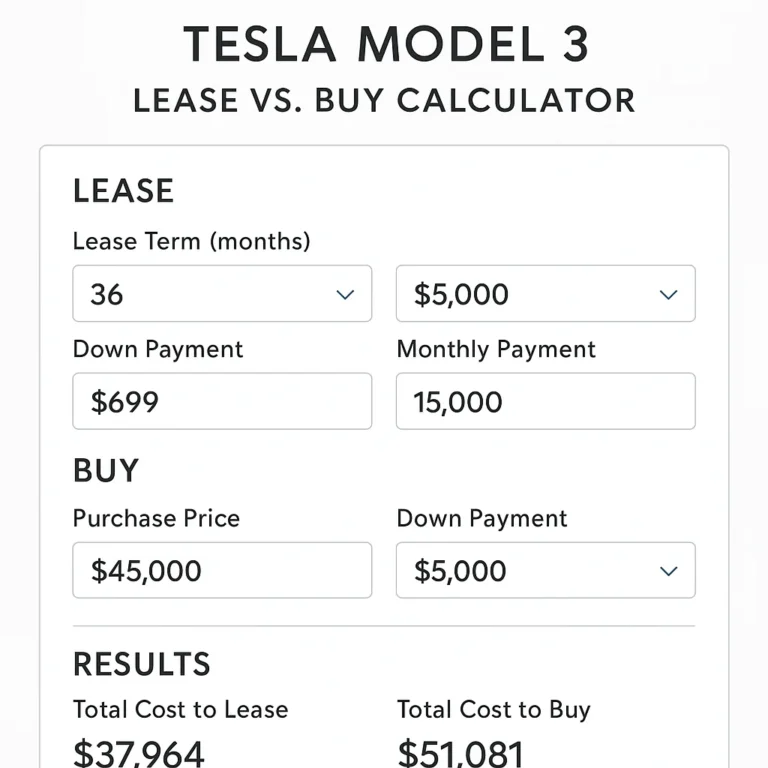
Leasing a Tesla Model 3 wins on flexibility and lower monthly payments, while buying outright is the clear financial champion if you plan to keep the car for five years or more. When you ask how does leasing a Tesla Model 3 compare to buying one outright, the answer isn’t about which is “better,” but which fits your driving habits and wallet best.
We recently watched a friend return a pristine 3-year-old Model 3, walk away with zero debt, and immediately lease a refreshed version with better range. He never worried about a battery replacement or a sudden drop in resale value.
Conversely, another client bought a Model 3, drove it for eight years, and finally paid it off to enjoy a car with zero monthly payments while everyone else was stuck in a new lease cycle.
The choice comes down to whether you value the thrill of the new or the stability of ownership.
Key Takeaways
- Leasing offers lower monthly payments and protects you from depreciation risk, making it ideal for drivers who want a new car every 3 years.
- Buying builds equity and eliminates mileage limits, proving cheaper over the long term if you keep the vehicle for 5+ years.
- Maintenance is minimal for both, but leses face strict wear-and-tear standards and potential end-of-lease fees.
- Tax incentives are handled differently: buyers claim the credit (or get it at the point of sale), while leses benefit from the leasing company passing the credit savings through lower rates.
Table of Contents
- ⚡️ Quick Tips and Facts
- 📜 The Electric Evolution: A Brief History of Tesla Leasing vs. Buying
- 🤔 The Big Dilemma: Leasing a Tesla Model 3 vs. Buying Outright
- 💸 The Financial Breakdown: Upfront Costs, Monthly Payments, and Long-Term Value
- 📉 Depreciation Drama: Who Takes the Hit When the Model 3 Value Drops?
- 🛠️ Maintenance, Repairs, and Warranty: What’s Covered in a Lease vs. Ownership?
- 🚗 Mileage Limits and Wear-and-Tear: The Hidden Traps of Leasing
- 🔋 Battery Health and Longevity: Will You Own a Dead Battery or a Fresh One?
- 🔄 Flexibility Factor: Upgrading to a New Model 3 or Model Y Every Few Years
- 🏦 Tax Implications and Incentives: How Leasing Affects Your Bottom Line
- 📊 7 Key Scenarios Where Leasing Beats Buying (and 3 Where Buying Wins)
- 🧮 The Break-Even Point: Calculating Total Cost of Ownership for the Model 3
- 🛡️ Insurance Costs: Does Leasing Change Your Premiums?
- 🌍 Environmental Impact: Is Leasing Grener Than Buying?
- 💡 Quick Tips and Facts for the Aspiring Tesla Owner
- 🏁 Conclusion: Which Path Leads to Your Dream Drive?
- 🔗 Recommended Links
- ❓ Frequently Asked Questions (FAQ)
- 📚 Reference Links
⚡️ Quick Tips and Facts
Before we dive into the nitty-gritty of spreadsheets and residual values, let’s hit the fast lane with some golden nugets of wisdom from our team at Car Leases™. We’ve seen thousands of leases, and the Tesla Model 3 always sparks a debate that’s hotter than a supercharger in July.
- ✅ The “No Buy-Out” Reality: Unlike many luxury brands, Tesla generally does not offer a buy-out program for leased vehicles at the end of the term. You can’t just walk into a Tesla store and say, “I’ll take this one off your hands.” You have to go through a third-party financing route or buy it from the dealer who holds the lease.
- ✅ Maintenance is a Breeze: As one of our favorite enthusiasts put it, “It’s very simple, the maintenance has been nothing at all, so it’s been very simple.” With no oil changes, transmission fluid, or spark plugs, your wallet breathes easier.
- ✅ The Wear-and-Tear Trap: Leasing isn’t a free pass to treat the car like a rental. Scraped wheels and bumper scrapes can cost you hundreds of dollars at lease-end. We’ve seen a single scraped wheel cost $25 and rear fascia damage hit $54, totaling nearly $80 in unexpected fees!
- ✅ Credit Score Matters: Leasing often requires a higher credit score than buying. If your credit is shaky, you might find the monthly payments inflated or the application denied. Check out our guide on Credit Score and Car Leasing to see where you stand.
- ✅ The Upgrade Cycle: If you love having the latest tech, leasing is your best friend. You can swap your Model 3 for a refreshed version every 3 years without the headache of selling a used car.
Ready to see how the numbers stack up? Let’s get into the history of this electric revolution.
📜 The Electric Evolution: A Brief History of Tesla Leasing vs. Buying

The story of the Tesla Model 3 isn’t just about a car; it’s about a shift in how we think about ownership. When the Model 3 first hit the streets, it was a disruptor. Before Tesla, leasing was often a “rich person’s game” reserved for BMWs and Mercedes, while the average Joe bought a sedan and kept it until the wheels fell off.
Tesla changed the game by making the electric vehicle (EV) accessible. Initially, the focus was on buying outright to capture the full value of the federal tax credit (which, historically, went to the buyer). However, as production ramped up and the market matured, leasing options became more sophisticated.
We’ve watched the landscape evolve from “Will they ever make a Model 3?” to “Should I lease or buy?” The shift mirrors the broader automotive industry’s move toward subscription models and flexible ownership. In the early days, leasing a Tesla was a novelty; today, it’s a strategic financial move for many.
Did you know? The first Model 3 deliveries in 2017 were met with a frenzy that made the internet crash. Fast forward today, and the conversation has shifted from “How do I get one?” to “How do I keep my costs down?”
For a deeper dive into the mechanics of these deals, check out our guide on Car Lease Basics.
🤔 The Big Dilemma: Leasing a Tesla Model 3 vs. Buying Outright
So, you’re staring at the configurator. The sleek lines of the Model 3 are calling your name. But then the question hits you: Lease or Buy?
It’s the ultimate automotive tug-of-war. On one side, you have the fredom of ownership. You can drive it into the ground, paint it neon green, and sell it whenever you want. On the other side, you have the predictability of a lease. Lower monthly payments, no worry about depreciation, and a new car every few years.
The Emotional vs. The Logical
- The Emotional Buyer: “I want to own this car! I want to feel the pride of the title in my name!”
- The Logical Leaser: “I want to drive a new car with the latest autopilot features every 3 years without worrying about the resale value crashing.”
At Car Leases™, we’ve seen clients fall in love with the idea of ownership, only to realize they hate the hassle of selling a 5-year-old car. Conversely, we’ve seen “buyers” get stuck with a car they can’t afford to fix because they didn’t account for battery degradation or tire costs.
The Verdict? It depends on your lifestyle and your financial goals. If you plan to keep the car for 10 years, buying usually wins. If you want to upgrade every 3-4 years, leasing is your golden ticket.
For more on the nuances of these decisions, explore our Electric Vehicle Leases category.
💸 The Financial Breakdown: Upfront Costs, Monthly Payments, and Long-Term Value
Let’s talk money. This is where the rubber meets the road. The financial breakdown of leasing vs. buying a Tesla Model 3 is complex, but we’ll break it down so you don’t need a degree in economics.
Upfront Costs: The “Due at Signing” Battle
- Leasing: Typically requires a down payment (or “due at signing”) that includes the first month’s payment, a security deposit, and acquisition fees. While the monthly payment is lower, the upfront cash outlay can be significant.
- Buying: You can finance the entire amount with $0 down (though this increases your monthly payment), or put a chunk down to lower the interest rate.
Monthly Payments: The Cash Flow Factor
- Leasing: You are paying for the depreciation of the car during the lease term, plus interest (money factor) and fees. This results in significantly lower monthly payments.
- Buying: You are paying for the entire value of the car plus interest. The monthly payment is higher, but you are building equity with every payment.
Long-Term Value: The 5-Year Horizon
- Leasing: After 3 years, you have $0 equity. You walk away (or pay to buy it) and start over.
- Buying: After 5 years, you own a car that still has value. You can sell it, trade it in, or drive it for another 5 years with zero monthly payments.
| Feature | Leasing a Model 3 | Buying a Model 3 |
|---|---|---|
| Monthly Payment | Lower | Higher |
| Upfront Cost | Moderate to High | Flexible ($0 to Full) |
| Equity Build-up | None (unless you buy at end) | Yes |
| Long-Term Cost | Higher (if you keep leasing) | Lower (if kept long-term) |
| Flexibility | High (easy to swap) | Low (hard to sell quickly) |
Pro Tip: Always calculate the Total Cost of Ownership (TCO) over 5 years, not just the monthly payment. A low lease payment can add up to more than a loan payment if you lease two or three cars in that timeframe.
📉 Depreciation Drama: Who Takes the Hit When the Model 3 Value Drops?
Here’s the dirty secret of the car world: Depreciation. It’s the silent killer of your net worth. When you buy a car, it loses value the moment you drive it off the lot.
The Leasing Advantage
When you lease, the leasing company (the bank) takes the hit. They bet on what the car will be worth in 3 years. If the Tesla Model 3 holds its value better than expected, the bank wins. If it crashes in value, the bank eats the loss. You are protected from depreciation risk.
The Buying Risk
When you buy, you are the one holding the bag. If the market shifts, or if Tesla releases a new model that makes your 2024 Model 3 look obsolete, your car’s value drops. You might owe more on your loan than the car is worth (being upside down).
Real Talk: Tesla’s depreciation has been a rollercoaster. Price cuts on new models can instantly devalue existing ones. If you buy, you need to be okay with your asset losing value. If you lease, you don’t care.
For more on how market trends affect your decision, check out our Latest Car Lease Deals section.
🛠️ Maintenance, Repairs, and Warranty: What’s Covered in a Lease vs. Ownership?
One of the biggest selling points of the Tesla Model 3 is its low maintenance. But how does that play out in a lease vs. buy scenario?
The Warranty Shield
- Leasing: Most leases run for 3 years, which aligns perfectly with Tesla’s Basic Vehicle Limited Warranty (4 years/50,0 miles). You are covered for almost the entire lease term.
- Buying: You get the same warranty, but once it expires (after 4 years), you are on your own.
What’s Covered?
- Battery and Drive Unit: Covered for 8 years/10,0 miles (or 120,0 for Long Range/Performance). This is huge!
- Wear and Tear: Not covered by the warranty. Tires, brake pads (though regenerative braking helps), and wiper blades are your responsibility.
The “Scraped Wheel” Nightmare
Remember the story from the video? A driver scraped a wheel and the rear fascia.
- Lease: You pay for the repairs or face a wear-and-tear charge at the end of the lease.
- Buy: You pay for the repairs, but you own the car, so you can fix it yourself or find a cheaper shop.
Key Insight: Leasing forces you to keep the car in pristine condition. If you are a rough driver, buying might be more forgiving.
🚗 Mileage Limits and Wear-and-Tear: The Hidden Traps of Leasing
Ah, the mileage limit. The bane of every lesee’s existence.
The Mileage Trap
- Leasing: You sign up for 10,0, 12,0, or 15,0 miles per year. If you go over, you pay a fee per mile (often $0.20 to $0.30). Drive 20,0 miles a year? That’s a $1,0+ penalty at the end of the lease.
- Buying: Drive 50,0 miles a year? No problem. You own the car.
Wear and Tear Standards
Leasing companies have strict standards for what constitutes “excessive wear.”
- Tires: Must have at least 4/32″ of tread.
- Dents/Scratches: Must be within a certain size limit.
- Interior: No stains, tears, or pet hair.
Our Advice: If you have a long commute or love road trips, buying is safer. If you drive less than 12,0 miles a year, leasing is a great option.
🔋 Battery Health and Longevity: Will You Own a Dead Battery or a Fresh One?
The battery is the heart of the Tesla Model 3. It’s also the most expensive part.
The Lease Perspective
With a lease, you get a fresh battery every 3 years. You never have to worry about degradation because you hand the car back before the battery really starts to lose capacity. It’s like renting a house; you don’t worry about the roof leaking in 10 years.
The Ownership Perspective
When you buy, you are in it for the long haul. Tesla batteries are incredibly durable, often retaining 90%+ capacity after 20,0 miles. However, if you keep the car for 15 years, you might face a battery replacement cost (though it’s rare).
The Verdict: If you plan to keep the car for 10+ years, buying is fine. If you want to avoid any battery anxiety, leasing is the way to go.
🔄 Flexibility Factor: Upgrading to a New Model 3 or Model Y Every Few Years
This is where leasing shines. The automotive world moves fast. New features, better range, and improved autopilot come out every year.
- Leasing: You can return your Model 3 and lease a new one with the latest tech. It’s the ultimate upgrade cycle.
- Buying: You are stuck with your car until you sell it. Selling a used Tesla can be a hassle, and you might not get the best price.
Personal Story: One of our team members leased a Model 3 for 3 years. When the lease ended, they traded it for a new Model Y with the updated interior and longer range. They never felt “stuck” with old tech.
🏦 Tax Implications and Incentives: How Leasing Affects Your Bottom Line
Tax time is a headache, but it can also be a savings opportunity.
The Federal Tax Credit
- Buying: Historically, the buyer claimed the $7,50 federal tax credit. However, rules have changed. Now, the credit can be transferred to the dealer at the point of sale, effectively lowering the purchase price.
- Leasing: The leasing company (the bank) claims the tax credit. They often pass this savings on to you in the form of a lower money factor or reduced monthly payments.
State Incentives
Some states offer rebates for EVs. These can apply to both leasing and buying, but the rules vary. Always check your state’s specific regulations.
Note: If you use the car for business, leasing can offer deductible lease payments, whereas buying allows you to deduct depreciation and interest. Consult a tax professional!
📊 7 Key Scenarios Where Leasing Beats Buying (and 3 Where Buying Wins)
Let’s get specific. Here are the scenarios where one option clearly trumps the other.
✅ 7 Scenarios Where Leasing Wins
- You love new tech: You want the latest Autopilot updates and interior refreshes every 3 years.
- You have a low mileage: You drive less than 12,0 miles a year.
- You want lower monthly payments: You need to keep your cash flow tight.
- You hate maintenance: You want to hand the car back and never worry about repairs.
- You are a business owner: You can deduct lease payments as a business expense.
- You want to avoid depreciation risk: You don’t want to worry about the car’s resale value.
- You have a high credit score: You qualify for the best lease rates.
❌ 3 Scenarios Where Buying Wins
- You drive a lot: You exceed 15,0 miles a year.
- You want to customize: You want to add aftermarket parts or change the color.
- You plan to keep the car for 10+ years: You want to eventually have a car with zero monthly payments.
🧮 The Break-Even Point: Calculating Total Cost of Ownership for the Model 3
How do you know when you’ve hit the break-even point? It’s the moment where the cost of leasing equals the cost of buying.
The Formula:
- Lease Cost: (Monthly Payment x 36) + Down Payment + Fees + Excess Mileage Charges + Wear-and-Tear Fees.
- Buy Cost: (Monthly Payment x 60) + Down Payment + Interest + Maintenance + Depreciation (Resale Value).
The Reality: For most people, buying is cheaper over a 5-7 year period. Leasing is more expensive in the long run if you keep leasing forever. However, if you value the flexibility and lower monthly payments, the extra cost might be worth it.
🛡️ Insurance Costs: Does Leasing Change Your Premiums?
Insurance is a necessary evil. But does leasing change the game?
- Leasing: Leasing companies often require higher coverage limits (e.g., gap insurance, higher liability). This can increase your premium.
- Buying: You can choose your coverage level. If you own the car outright, you can drop collision and comprehensive if you want (though we don’t recommend it).
Tip: Shop around for insurance quotes before you sign the lease. Some insurers offer discounts for EVs.
🌍 Environmental Impact: Is Leasing Grener Than Buying?
This is a tricky one.
- Leasing: You drive a new car every 3 years. Manufacturing a new car has a high carbon footprint.
- Buying: You keep the car longer, spreading the manufacturing impact over more years.
The Counter-Argument: Newer EVs are often more efficient and have better battery technology. If you lease, you might be driving a more efficient car, which offsets the manufacturing cost.
Verdict: It’s a wash. The best environmental choice is to drive whatever you have for as long as possible.
💡 Quick Tips and Facts for the Aspiring Tesla Owner
Before we wrap up, here are a few final thoughts from the Car Leases™ team:
- Check the “Money Factor”: This is the lease equivalent of an interest rate. A lower money factor means lower payments.
- Negotiate the “Cap Cost”: Just like the price of a car, the capitalized cost of a lease can be negotiated.
- Read the Fine Print: Look for early termination fees and disposition fees.
- Consider Gap Insurance: If you lease, gap insurance is often included, but double-check!
For more tips, visit our Auto Financing Options page.
🏁 Conclusion: Which Path Leads to Your Dream Drive?

So, we’ve taken you on a journey from the history of Tesla to the nitty-gritty of depreciation, mileage limits, and tax credits. The question remains: Lease or Buy?
If you are the type of person who loves the thrill of the new, wants to avoid the headache of selling a used car, and doesn’t mind paying a premium for flexibility, leasing the Tesla Model 3 is your golden ticket. You get to enjoy the latest tech, low maintenance, and predictable costs.
However, if you are a long-term thinker, drive a lot, or want to eventually own a car with zero monthly payments, buying outright (or financing) is the smarter financial move. You build equity, avoid mileage traps, and have the freedom to customize.
Our Final Recommendation:
- Lease if you plan to keep the car for 3 years or less and drive under 12,0 miles/year.
- Buy if you plan to keep the car for 5+ years or drive over 15,0 miles/year.
Remember, the best car is the one that fits your life, not just your budget. Whether you choose the lease or the buy, the Tesla Model 3 is an incredible machine that will change the way you drive.
🔗 Recommended Links
Ready to take the next step? Here are the best places to find your Tesla Model 3:
-
👉 Shop Tesla Model 3 on:
-
Explore Lease Deals:
❓ Frequently Asked Questions (FAQ)

How does leasing affect Tesla Model 3 maintenance and warranty coverage?
Leasing a Tesla Model 3 typically aligns with the Basic Vehicle Limited Warranty (4 years/50,0 miles), meaning you are covered for almost the entire lease term. However, wear and tear items like tires and wiper blades are not covered. You are responsible for keeping the car in good condition to avoid end-of-lease fees.
Are there tax incentives available for leasing a Tesla Model 3?
Yes, but the structure is different. The leasing company claims the federal tax credit and often passes the savings to you via a lower money factor or reduced monthly payments. You cannot claim the credit directly as a lesee.
Read more about “🚗 Tesla Model 3 Lease Prices & Options: The 2026 Truth”
What happens at the end of a Tesla Model 3 lease term?
At the end of the lease, you have three options:
- Return the car: Pay any excess mileage or wear-and-tear fees and walk away.
- Buy the car: You can purchase the car from the leasing company, but Tesla does not offer a direct buy-out program, so you may need third-party financing.
- Lease a new car: Start a new lease on a newer model.
Read more about “Closed vs. Open Lease: The $10k Mistake to Avoid (2026) 🚗💸”
Can you customize a Tesla Model 3 if you lease instead of buy?
No. Leasing companies generally prohibit modifications. You cannot change the wheels, paint, or add aftermarket parts. If you do, you will be charged for restoring the car to its original condition.
What are the mileage limits when leasing a Tesla Model 3 compared to owning one?
Leases typically come with limits of 10,0, 12,0, or 15,0 miles per year. Exceeding these limits results in fees (often $0.20-$0.30 per mile). When you own the car, there are no mileage limits.
Read more about “💸 How Much is a Tesla Model 3 Per Month? (2026 Cost Breakdown)”
How do monthly payments differ between leasing and buying a Tesla Model 3?
Leasing payments are lower because you are only paying for the car’s depreciation during the lease term. Buying payments are higher because you are paying for the entire value of the car plus interest.
What are the financial benefits of leasing a Tesla Model 3 versus buying?
The main benefit of leasing is lower monthly payments and protection from depreciation. You also avoid the hassle of selling the car. Buying offers equity build-up and no mileage restrictions.
Read more about “🚨 7 Hidden Fees That Will Ruin Your Car Lease (2026)”
Are there any tax benefits or incentives to leasing a Tesla Model 3 versus buying one outright, and how do they impact my overall cost of ownership?
Leasing allows the dealer to pass on the federal tax credit as a discount, lowering your monthly cost. Buying allows you to claim the credit (or have the dealer apply it) to lower the purchase price. The impact depends on your tax situation and how long you keep the car.
What are the insurance implications of leasing versus buying a Tesla Model 3, and are there any differences in coverage requirements?
Leasing companies often require higher liability limits and gap insurance, which can increase your premium. When you own the car, you have more flexibility in choosing your coverage levels.
How does leasing a Tesla Model 3 affect my ability to customize or modify the vehicle?
Leasing restricts customization. You cannot make permanent changes to the vehicle. Any modifications must be reversed before returning the car, or you will be charged.
Can I purchase my leased Tesla Model 3 at the end of the lease, and if so, how does that work?
Yes, you can purchase the car, but Tesla does not have a direct buy-out program. You must arrange financing through a third-party lender or buy it from the leasing dealer. The price is usually the residual value set at the start of the lease.
What are the mileage limitations and excess mileage fees associated with leasing a Tesla Model 3?
Standard limits are 10,0 to 15,0 miles per year. Excess mileage fees typically range from $0.20 to $0.30 per mile.
How do the overall costs of leasing versus buying a Tesla Model 3 compare over a 3-year period?
Over 3 years, leasing often has a lower total cost if you factor in the lower monthly payments and no maintenance costs. However, buying may be cheaper if you keep the car for 5+ years, as you avoid the “reset” cost of a new lease.
What are the monthly payment differences between leasing and buying a Tesla Model 3?
Lease payments are typically 30-50% lower than loan payments for the same vehicle, as you are not paying for the full value of the car.
📚 Reference Links