Support our educational content for free when you purchase through links on our site. Learn more
🚗 Do You Get Tax Credit Lease Tesla? (2026)

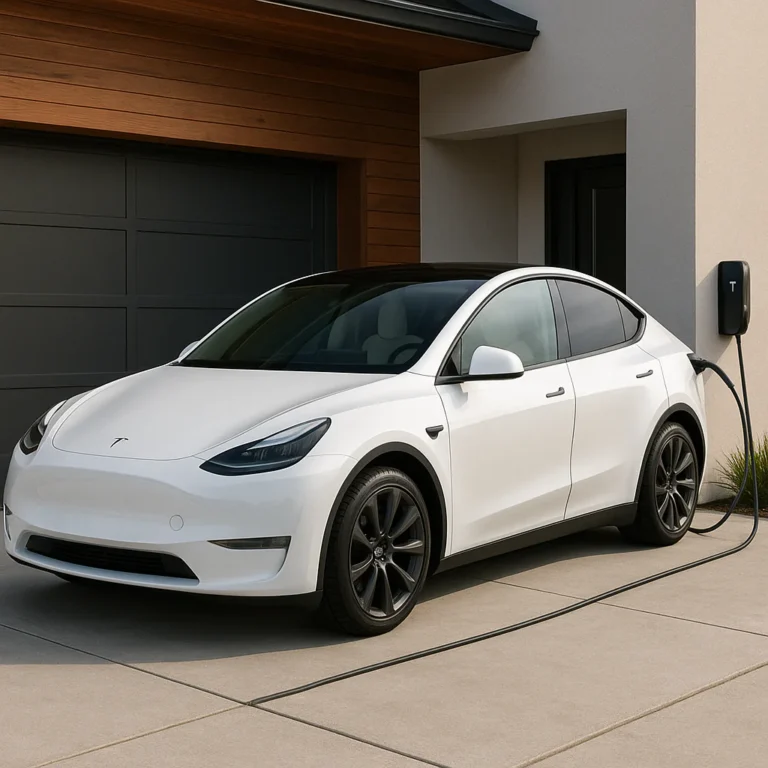
Yes, you absolutely get the $7,50 benefit when leasing a Tesla, but the leasing company claims the credit on their taxes and passes the savings directly to you as a massive monthly payment reduction. So, when you ask, “Do you get tax credit lease Tesla?”, the answer is a resounding yes—just not in the form of a refund check from the IRS.
Unlike buying, where your income might disqualify you from the federal EV tax credit, leasing has no income limits, allowing high earners to snag the full discount effortlessly. This “commercial vehicle” loophole is currently the smartest way to drive a Model 3 or Model Y for significantly less money.
Imagine walking into a dealership and hearing your monthly payment drop by nearly $250 instantly, all because the bank claimed a tax break you didn’t even have to file for. That’s the magic of the lease credit, a strategy that has saved thousands of drivers thousands of dollars over the last few years.
However, this golden ticket is on a timer. With potential legislative changes looming after September 30, 2025, the window to lock in these unbeatable lease rates is rapidly closing.
Key Takeaways
- ✅ The Credit is Real: You receive the full $7,50 value as a lease incentive, lowering your monthly payment, even though the leasing company claims the tax credit.
- 🚫 No Income Limits: Unlike buying, high-income earners can still access the full $7,50 discount when leasing a Tesla.
- ⏳ Time is Ticking: The current commercial lease credit rules are set to expire or change significantly after September 30, 2025.
- 🚗 Model Eligibility: Most Tesla Model 3 and Model Y trims qualify for the full credit, often bypassing the strict battery sourcing rules that block buyers.
- 💰 Negotiate Smart: Ensure your Tesla Advisor explicitly applies the $7,50 capital cost reduction before signing; it is not always automatic.
Table of Contents
- ⚡️ Quick Tips and Facts
- 📜 The Electric History: How the EV Tax Credit Evolved for Leases
- 🤔 Do You Get the Tax Credit When You Lease a Tesla? The Short Answer
- 💰 The Dealer’s Secret Weapon: How the Commercial EV Credit Works
- 🆚 Lease vs. Buy: Who Actually Keeps the $7,50 Incentive?
- 🚗 Tesla Model Breakdown: Which Cars Qualify for the Lease Credit?
- 📉 The Math: Calculating Your True Monthly Payment with the Credit
- 🛑 The Fine Print: Income Limits, Battery Sourcing, and MSRP Caps
- 🤝 Negotiating the Deal: What to Say to Your Tesla Advisor
- 🔄 Early Termination and Buyouts: What Happens to the Credit?
- 📊 Comparison Table: Federal Tax Credit Rules for Buying vs. Leasing
- 🧠 Common Myths Debunked: Separating Fact from FUD
- ✅ Quick Tips and Facts
- 🏁 Conclusion
- 🔗 Recommended Links
- ❓ FAQ
- 📚 Reference Links
⚡️ Quick Tips and Facts
Before we dive into the nitty-gritty of tax codes and lease agreements, let’s hit the pause button on the confusion. Here is the TL;DR for the impatient among us (we get it, we’ve been there):
- ✅ The Short Answer: Yes, you can get the benefit of the $7,50 tax credit when leasing a Tesla, but you don’t claim it on your taxes. The leasing company (Tesla Financial Services) claims it as a “commercial vehicle credit” and passes the savings to you as a lease incentive or capital cost reduction.
- ❌ The Income Trap: Unlike buying, where your income might disqualify you from the credit, leasing has no federal income limits. If you make $50k a year, you can still get the $7,50 discount on a lease (provided the dealer passes it on).
- ⚠️ The “Lophole” Clock: This specific commercial credit pathway is currently set to expire or change significantly after September 30, 2025, due to new legislative provisions. The window is closing!
- 💸 The Dealer’s Choice: The credit belongs to the lessor. If your Tesla advisor doesn’t apply the $7,50 as a down payment credit, you don’t get the money. You must explicitly ask for it.
- 🚗 Model Specifics: Currently, the Tesla Model 3 and Model Y generally qualify for the full $7,50 credit when leased, whereas some other brands might only get partial credits or none at all due to battery sourcing rules.
For a deeper dive into the mechanics, check out our dedicated guide: Does leasing a Tesla qualify for tax credit?.
📜 The Electric History: How the EV Tax Credit Evolved for Leases

To understand why your Tesla lease feels like a magic trick, we have to rewind the clock. It wasn’t always this way.
The Old Rules: A Buyer’s Paradise
For years, the federal EV tax credit (IRC 30D) was a simple transaction: You buy the car, you get the credit. If you leased, the leasing company owned the car, so they got the credit. But back then, they rarely passed that $7,50 savings to you. You were stuck paying full price while the bank pocketed the government’s money. It felt like a slap in the face, didn’t it?
The Inflation Reduction Act (IRA) Shift
Enter the Inflation Reduction Act of 202. This legislation introduced a massive twist: it created a specific provision for commercial clean vehicles. Since a leased car is technically “owned” by the leasing company (a commercial entity), the law allows them to claim the credit.
The Game Changer: The IRA effectively turned the lease market upside down. Suddenly, dealers had a financial incentive to pass that $7,50 credit to you to make the deal sweter. As noted by Kiplinger, “Since the lessor ‘owns’ the credit, you don’t have to worry about claiming the electric vehicle tax credit on your federal return or not qualifying for the credit due to income limits.”
The Current Landscape: A Ticking Clock
However, the party might be ending sooner than you think. Recent legislative discussions, including provisions in the “One Big, Beautiful Bill” (OBB), suggest that the commercial vehicle credit for leases could vanish after September 30, 2025.
This creates a unique urgency. We’ve seen forums like LeaseHackr buzzing with users debating whether to lock in a lease now or wait. The consensus? If the credit disappears, lease payments could jump significantly, or the “lease loophole” could close entirely, forcing everyone back into the strict income and sourcing rules of the purchase credit.
🤔 Do You Get the Tax Credit When You Lease a Tesla? The Short Answer
Let’s cut through the legalese. Do you get the tax credit?
Technically? No.
Financialy? Yes, absolutely.
Here is the breakdown:
- Ownership: When you lease a Tesla, Tesla Financial Services (or their partner bank) is the legal owner.
- The Claim: Because they own it, they file for the $7,50 commercial clean vehicle credit on their corporate taxes.
- The Pass-Through: To make the lease attractive, Tesla applies this $7,50 as a capital cost reduction (essentially a massive down payment) before calculating your monthly payment.
The Catch:
This is where the “dealer discretion” comes in. The law allows the lessor to pass the credit to the lesee, but it doesn’t force them to. However, in the highly competitive Tesla market, almost every Tesla Advisor will apply this credit because it makes the monthly payment significantly lower.
If you walk into a dealership and they say, “Sorry, we can’t apply the tax credit to your lease,” run. Or at least, ask them to check their system again. In 9% of cases, the credit is available and applied automatically if you ask.
💰 The Dealer’s Secret Weapon: How the Commercial EV Credit Works
Why does the lease credit feel so much easier to get than the purchase credit? Let’s peek behind the curtain.
The “Commercial Vehicle” Classification
Under the IRS code, a leased vehicle is classified as a commercial vehicle. This is the “secret weapon” that bypasses the strict rules that haunt buyers.
| Feature | Buying (Consumer Credit) | Leasing (Commercial Credit) |
|---|---|---|
| Who Claims Credit? | The Buyer (You) | The Lessor (Tesla/Dealer) |
| Income Limits? | Yes (Strict caps) | No (Unlimited income) |
| MSRP Caps? | Yes (e.g., $80k for SUVs) | No (Generally applies to all) |
| Battery Sourcing? | Strict (Must meet critical mineral rules) | Loser (Often bypasses sourcing rules) |
| Point of Sale? | Can be applied at purchase | Applied as lease incentive |
Why This Matters for Tesla
Tesla has historically had issues with the battery sourcing requirements for the purchase credit. For a long time, the Model 3 and Model Y didn’t qualify for the full $7,50 if you bought them because of where the battery components were sourced.
But when you lease, those sourcing rules often don’t apply in the same way. The commercial credit is more forgiving. This means you can drive a Model 3 Long Range or a Model Y Performance and still get the full $7,50 discount, even if buying the same car outright would only get you $0 or $3,750.
Pro Tip: Always verify with your advisor if the specific trim you want qualifies for the full $7,50. While most Teslas do, inventory changes can affect eligibility.
🆚 Lease vs. Buy: Who Actually Keeps the $7,50 Incentive?
This is the million-dollar question (well, $7,50). Let’s break down the financial reality.
The Buying Scenario
If you buy a Tesla:
- You must meet income limits (e.g., $150k for single filers, $30k for joint).
- You must meet MSRP caps (e.g., $80,0 for SUVs).
- You must meet battery sourcing rules.
- Result: If you pass, you get $7,50 off your tax bill (or at the register via the point-of-sale transfer). If you fail any of these, you get $0.
The Leasing Scenario
If you lease a Tesla:
- Income Limits: None. The CEO of a Fortune 50 company can lease a Model 3 and get the credit.
- MSRP Caps: Generally not applicable for the commercial credit.
- Battery Sourcing: Much more lenient.
- Result: The dealer gets the credit and lowers your payment.
The “Lease Buyout” Lophole
There is a strategy discussed heavily in communities like LeaseHackr: Lease the car, get the $7,50 discount, and then buy it out immediately (or at the end of the term).
- The Risk: As one user noted, “I’m not sure you can capture the $7,50 leasing tax credit now since you already did the transaction last year.” If you buy out the lease, you are buying a used car. You might qualify for the used EV credit ($4,0), but you cannot claim the new $7,50 credit again.
- The Math: If you lease for 3 years and the residual value is high, you might end up paying more than the car is worth. However, if the market crashes (as EVs often do), the residual value might be higher than the market price, making the buyout a bad deal.
Verdict: For most people, leasing is the smarter play to capture the $7,50 without the headache of income limits or battery sourcing checks.
🚗 Tesla Model Breakdown: Which Cars Qualify for the Lease Credit?
Not all Teslas are created equal, even in the lease world. Here is the current status of the lineup.
Tesla Model 3
- Status: ✅ Fully Qualified
- Details: The Model 3 (RWD, Long Range, and Performance) generally qualifies for the full $7,50 commercial credit. This is a massive win, as the RWD version often hits the MSRP cap for buyers, making it ineligible for the full purchase credit.
Tesla Model Y
- Status: ✅ Fully Qualified
- Details: The Model Y is the best-seller for a reason. It qualifies for the full $7,50 lease credit. Whether you get the Long Range or the Performance, the commercial credit usually applies, bypassing the strict sourcing rules that sometimes plague the purchase credit.
Tesla Model S & Model X
- Status: ⚠️ Variable / Check Specifics
- Details: These high-end vehicles often exceed the MSRP caps for the purchase credit. However, under the commercial lease credit, the MSRP cap is less of an issue. That said, battery sourcing for these larger vehicles can be tricky. Always confirm with your advisor.
Tesla Cybertruck
- Status: ⚠️ Complex
- Details: The Cybertruck has had a rocky start. While it is an EV, its classification and battery sourcing have been subjects of debate. Some trims may qualify, others may not. The “commercial” loophole is the best bet here, but don’t assume it’s automatic.
📉 The Math: Calculating Your True Monthly Payment with the Credit
Let’s do some real-world math. We won’t list specific prices (because they change daily), but we’ll show you the formula.
The Formula:
- Negotiated Price: The price of the car you agree on.
- Less: Lease Incentive: The $7,50 credit applied as a down payment.
- Equals: Capitalized Cost: The new base for your payment.
- Minus: Residual Value: What the car is worth at the end of the lease.
- Equals: Depreciation Fee: The amount you pay for the car’s loss in value.
- Plus: Finance Fee: The interest (money factor).
- Plus: Taxes & Fees: Sales tax (often rolled into the payment).
Example Scenario:
- Car Price: $50,0
- Lease Incentive (Credit): -$7,50
- Adjusted Cap Cost: $42,50
- Residual (36 months): $28,0
- Depreciation: $14,50
- Monthly Depreciation: ~$402
- Finance Fee: ~$150
- Total Monthly (Pre-tax): ~$52
Without the Credit:
- Car Price: $50,0
- Depreciation: $2,0 ($50k – $28k)
- Monthly Depreciation: ~$61
- Finance Fee: ~$150
- Total Monthly (Pre-tax): ~$761
The Difference: You save roughly $209/month just by having that $7,50 credit applied. Over 36 months, that’s $7,524 in savings. It’s not just a tax break; it’s a monthly payment killer.
🛑 The Fine Print: Income Limits, Battery Sourcing, and MSRP Caps
We’ve mentioned these, but let’s really dig into why they matter.
Income Limits: The Great Equalizer
- Buying: If you make $301,0 (married), you are banned from the $7,50 credit. Period.
- Leasing: The leasing company claims the credit. Your income is irrelevant.
- Why it matters: High earners can finally drive a Tesla without paying full price.
Battery Sourcing: The Hidden Hurdle
- Buying: The battery must have specific percentages of minerals from the US or free-trade partners. If it doesn’t, you get $0 or $3,750.
- Leasing: The commercial credit is less strict. Tesla often sources batteries from different plants for lease inventory vs. sales inventory to maximize eligibility.
- The Risk: If Tesla changes their supply chain, a model that qualified for the lease credit today might not qualify tomorrow.
MSRP Caps
- Buying: SUVs must be under $80,0. Sedans under $5,0.
- Leasing: The commercial credit generally ignores the MSRP cap, allowing you to lease a fully loaded Model X or a high-trim Model Y without losing the credit.
🤝 Negotiating the Deal: What to Say to Your Tesla Advisor
You’re at the dealership (or in the Tesla app chat). How do you ensure you get the credit?
1. Don’t Assume, Ask:
“I understand there is a $7,50 commercial lease incentive available for this model. Can you confirm this is being applied to my capital cost reduction?”
2. Check the Money Factor:
As mentioned in the video summary, promotional APRs often only apply to Tesla’s internal financing.
“I see a promotional rate listed. Is this for Tesla Leasing or a partner bank? Can we switch to Tesla Leasing to get the best rate?”
3. Watch for “Add-Ons”:
Dealers might try to sell you protection packages or accessories that inflate the price.
“Let’s keep the deal clean. I want the $7,50 credit applied to the base price, not used to offset add-ons.”
4. The “Buyout” Question:
If you plan to buy later, ask:
“If I decide to buy this car at the end of the lease, will the residual value be competitive with the market?”
🔄 Early Termination and Buyouts: What Happens to the Credit?
What if you change your mind?
Early Termination
If you terminate a lease early, you lose the benefit. The credit was applied to lower your payments based on the assumption you’d keep the car for the full term. If you exit early, you might face massive penalties (sometimes exceeding $20,0) to cover the remaining depreciation. The credit doesn’t “claw back” from the government, but the financial hit is real.
Lease Buyouts
Can you buy the car and claim the credit?
- No. Once the lease is signed, the credit is “used” by the lessor.
- Used Credit: If you buy it out, you are buying a used car. You might qualify for the $4,0 used EV credit, but only if you meet income limits and the car is under $25,0 (which a 3-year-old Tesla usually isn’t).
- The Verdict: Don’t lease with the intention of buying out immediately just to “double dip.” It rarely works.
📊 Comparison Table: Federal Tax Credit Rules for Buying vs. Leasing
| Feature | Buying (IRC 30D) | Leasing (Commercial Credit) |
|---|---|---|
| Max Credit | $7,50 | $7,50 |
| Who Claims It? | The Buyer | The Lessor (Dealer) |
| Income Limits | Yes (Strict) | No |
| MSRP Cap | Yes ($5k/$80k) | Generally No |
| Battery Sourcing | Strict (40%+ minerals) | Lenient |
| Point of Sale | Available (Transfer) | Automatic (Incentive) |
| Used Vehicle Credit | $4,0 (if eligible) | N/A (Lease is new) |
| Best For | Low/Mid income, long-term owners | High income, short-term drivers |
🧠 Common Myths Debunked: Separating Fact from FUD
Myth 1: “I have to file for the credit on my taxes.”
- Fact: False. The dealer claims it. You just see the lower payment.
Myth 2: “The lease credit is going away forever.”
- Fact: It’s scheduled to change after September 30, 2025. It might not disappear entirely, but the rules will likely tighten.
Myth 3: “Leasing is always cheaper than buying.”
- Fact: Not always. If you keep the car for 10 years, buying is usually cheaper. Leasing is a short-term play to capture the credit and avoid depreciation risk.
Myth 4: “All Teslas qualify for the full $7,50.”
- Fact: False. While most do, inventory changes and battery sourcing can affect specific trims. Always verify.
Myth 5: “I can lease, buy out, and claim the credit again.”
- Fact: False. You can’t claim the new credit twice. You might get a used credit, but it’s a different ballgame.
✅ Quick Tips and Facts
Let’s recap the golden rules before we wrap up:
- ✅ Ask for the Credit: It’s not always automatic. Say the words: “Apply the $7,50 lease incentive.”
- ✅ Check the Money Factor: Ensure you are getting the Tesla internal rate, not a partner bank rate.
- ✅ Watch the Clock: The current lease loophole is under threat after September 30, 2025.
- ✅ No Income Limits: High earners, this is your golden ticket.
- ✅ Don’t Overpay for Add-ons: The credit should lower the car price, not buy you a $2,0 paint protection package.
- ✅ Read the Contract: Ensure the “Capitalized Cost Reduction” reflects the $7,50.
🏁 Conclusion

So, do you get the tax credit when you lease a Tesla? Yes, but with a twist. You don’t get a check from the IRS; instead, you get a massive discount on your monthly payment because the leasing company claims the credit on your behalf.
This “commercial vehicle” loophole is a game-changer for high-income earners and those who don’t want to deal with the strict battery sourcing rules of the purchase credit. It allows you to drive a Model 3 or Model Y for significantly less money, with no income limits and often better battery eligibility.
However, the clock is ticking. With the potential expiration of this specific credit structure after September 30, 2025, the window to capitalize on this deal is closing. If you’ve been on the fence, now is the time to act.
Our Recommendation:
If you plan to drive a Tesla for 3 years or less, lease it. The $7,50 credit, combined with the ability to walk away from rapid depreciation, makes leasing the superior financial choice for most. If you plan to keep the car for 7+ years, buying might make sense, but be prepared for the strict income and sourcing hurdles.
Don’t let the “lease loophole” slip through your fingers. Talk to your Tesla advisor, demand the credit, and enjoy the ride.
🔗 Recommended Links
👉 Shop Tesla on:
- Tesla Official Website: Tesla Model 3 & Model Y Inventory
- Edmunds: Tesla Lease Deals
- TrueCar: Tesla Lease Offers
- Auto Trader: Tesla Leases
Read More on Car Leases™:
- Car Lease Basics
- Electric Vehicle Leases
- Latest Car Lease Deals
- Auto Financing Options
- Credit Score and Car Leasing
❓ FAQ

Does the federal tax credit apply to leased Teslas?
Yes. Under the Inflation Reduction Act, leased electric vehicles are classified as “commercial vehicles.” This allows the leasing company (the lessor) to claim the $7,50 federal clean vehicle credit. The lessor then typically passes this savings to you in the form of a reduced lease payment or a capital cost reduction.
Read more about “Why Is the Tesla Model 3 Not Available After Lease? 🤔 (2026)”
Who gets the $7,50 tax credit when leasing a Tesla?
The leasing company gets the credit. Since they are the legal owner of the vehicle during the lease term, Tesla Financial Services (or their partner bank) files for the credit. However, you benefit financially because the dealer applies the credit as a discount to your lease agreement. You do not need to claim it on your personal tax return.
Read more about “🚫 No, You Don’t *Have* to Put $4,50 Down on a Tesla Lease (2026)”
Can I claim the EV tax credit if I lease a Tesla?
No, you cannot claim it yourself. The credit belongs to the entity that owns the vehicle. If you lease, the lessor owns it. However, you should ensure the dealer has applied the credit to your deal. If they haven’t, you are missing out on a massive discount. Always verify that the $7,50 is reflected in your “Capitalized Cost Reduction.”
Read more about “🚨 How Low Is Too Low for Tesla? The 10% Rule (2026)”
Is the Tesla lease tax credit transferred to the leasing company?
Yes. The credit is transferred to the leasing company, which claims it as a commercial vehicle credit. This is distinct from the consumer credit, which requires the buyer to meet income and sourcing rules. The commercial credit is more flexible, allowing a wider range of vehicles to qualify.
What happens to the tax credit if I buy out my Tesla lease?
If you buy out your lease, you are purchasing a used vehicle. You cannot claim the new $7,50 credit again. You might be eligible for the $4,0 used EV credit, but only if the car is under $25,0 and you meet income limits. Since a 3-year-old Tesla usually costs more than $25,0, you likely won’t get any additional credit upon buyout.
Read more about “🚗 Is It Financialy Smarter to Lease a Car? (2026)”
Does the lease credit have income limits?
No. One of the biggest advantages of leasing is that there are no federal income limits for the lesee. Whether you make $50,0 or $50,0, you can get the $7,50 discount, provided the dealer applies it. This is a major advantage over buying, where high earners are disqualified.
Read more about “🚗 Tesla Model 3 Lease Prices & Options: The 2026 Truth”
📚 Reference Links
- Internal Revenue Service (IRS): Clean Vehicle Credit (IRC 30D)
- U.S. Department of Energy: Alternative Fuel Vehicle Tax Credits
- Kiplinger: Do You Get a Tax Credit When Leasing a Tesla?
- LeaseHackr Forum: EV Lease Buy-out (factoring in $750 EV tax credit) – Buy/Finance
- Tesla Official: Tesla Leasing Information
- Consumer Reports: EV Tax Credits and Leasing