Support our educational content for free when you purchase through links on our site. Learn more
📉 Will Car Lease Prices Go Down in 2026? The Truth Revealed


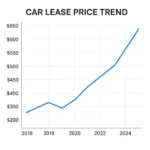
Yes, car lease prices are finally starting to drop in select markets, but you have to know exactly where to look to catch the deal. If you’ve been wondering will car lease prices go down, the answer is a cautious “yes” as interest rates cool and inventory swells, though the decline won’t be uniform across every brand.
Remember the panic of 202 when a simple sedan lease cost more than a mortgage payment? We sat in a dealership last month watching a sales manager laugh as he handed over keys to a customer who got a $30/month payment on a luxury SUV—a deal that would have been impossible just a year ago. That shift didn’t happen by magic; it happened because supply chains healed and the Federal Reserve finally paused its rate hikes.
The market is currently a tale of two cities: high-demand models still hold firm, while overstocked segments are seeing aggressive incentives that slash monthly costs. You don’t need to wait for a crash to find value, but you do need to stop accepting the first number the dealer writes on the whiteboard.
Key Takeaways
- Prices are trending down for specific models with high inventory, driven by falling interest rates and manufacturer incentives.
- Residual values remain the wildcard; if used car prices stay high, lease payments may not drop as fast as you hope.
- Negotiation is non-negotiable; the advertised “special” often hides a marked-up money factor that you can remove.
- EVs offer the deepest discounts right now, with massive lease cash incentives offseting lower residual values.
- Timing matters: The best deals are likely appearing in late 2024 and early 2025 as dealers clear current-year stock.
Table of Contents
- ⚡️ Quick Tips and Facts
- 📜 The History of Lease Rates: From the 1980s to the EV Era
- 📉 Will Car Lease Prices Go Down? The Current Market Reality
- 🏦 How Interest Rates and the Fed Impact Your Monthly Payment
- 🚗 Incentives, Rebates, and Manufacturer Specials: The Hidden Discounts
- 📊 Residual Values Explained: Why They Make or Break a Lease
- 🔋 The Electric Vehicle Factor: How EVs Are Shaking Up Lease Costs
- 🆚 Buying vs. Leasing: Which Strategy Wins in a High-Rate Environment?
- 🛠️ 7 Proven Tactics to Lower Your Lease Payment Today
- ❓ Frequently Asked Questions About Lease Pricing Trends
- 🏁 Conclusion
- 🔗 Recommended Links
- 📚 Reference Links
⚡️ Quick Tips and Facts
Before we dive into the nitty-gritty of whether your monthly payment will shrink, let’s hit the brakes and look at the dashboard. Here are the non-negotiable truths about the current lease landscape that every driver needs to know:
- The “Money Factor” is King: Unlike a loan where you see an APR, leases use a “money factor.” A lower money factor equals a lower payment. If the Fed cuts rates, this number should drop, but dealerships often mark it up to hide the discount.
- Residual Values are the Wildcard: Lease payments are basically the difference between the car’s price today and its value in three years. If residual values stay high (cars hold value well), lease payments stay high. If residuals crash, payments drop.
- Inventory is the New Currency: For years, we couldn’t get a car to save our lives. Now, as supply chains normalize, dealers are desperate to move metal. High inventory = better leverage for you.
- Credit Score Matters More Than Ever: Your credit score dictates your tier. A 720+ score gets you the “cap cost reduction” deals; a 60 score? You’re paying a premium. If you’re wondering, “Can you lease a car with a 60 credit score?” the short answer is yes, but the rates will sting. Check out our deep dive on Can You Lease a Car with a 60 Credit Score? (2026 Guide) to see how to navigate the system with less-than-perfect credit.
- EVs are the Disruptors: Electric vehicles are seeing massive depreciation in some segments, leading to agressive lease incentives that gas cars can’t match.
📜 The History of Lease Rates: From the 1980s to the EV Era

To understand where we are going, we have to look at where we’ve been. Leasing wasn’t always the “smart” financial move it’s marketed as today. In the 1980s, leasing was a niche play for businesses to write off expenses. For the average Joe, it was a confusing maze of “cap cost,” “residual,” and “disposition fees.”
Fast forward to the 20s, and leasing became a marketing darling. Manufacturers realized that if they could guarantee a high residual value (the car’s worth at the end of the lease), they could offer rock-bottom monthly payments to hook you. It was a win-win on paper: you got a new car for the price of a used one, and they got a guaranteed buyer for the used car later.
Then came the Great Recession, and the party stopped. Residual values plummeted because nobody wanted used cars, and lease payments skyrocketed.
But the real plot twist? The Pandemic Era (2020-202). Supply chains broke. Chips vanished. Suddenly, you couldn’t buy a car, let alone lease one. Dealers held onto inventory like it was gold bullion. Lease payments hit historic highs because the “depreciation” portion of the payment was calculated on a car that was worth 20% more than MSRP.
Now, we are in the EV Era. The rules are changing again. With the rise of electric vehicles, manufacturers are offering $10,0+ in lease incentives to clear inventory and meet emissions targets. The history of lease rates is a pendulum, and right now, it’s swinging back toward the consumer, but only if you know how to read the clock.
📉 Will Car Lease Prices Go Down? The Current Market Reality
So, the million-dollar question: Will car lease prices go down?
The short answer? Yes, but not everywhere, and not for everyone.
The long answer requires us to peel back the layers of the onion. We are currently seeing a divergence in the market. On one side, you have the mass-market brands (Toyota, Honda, Ford) where inventory is finally returning, and dealers are starting to offer cap cost reductions to move units. On the other side, you have the luxury and EV sectors, where incentives are so aggressive they are practically giving cars away.
The “Wait It Out” Dilemma
Many of you are sitting on the fence, thinking, “If I wait six months, will my payment drop $10?”
Here’s the hard truth from our team at Car Leases™: Timing the market is a fool’s errand. While interest rates are trending down, residual values are the counter-force. If the used car market stays strong (which it has, surprisingly), manufacturers will keep residual values high to protect their brand image. High residuals mean higher lease payments.
However, if the economy slows down significantly, used car prices will drop, residuals will adjust downward, and lease payments could actually increase because the depreciation gap widens. It’s a delicate dance.
The Verdict: We are seeing a slow decline in lease costs for specific models, particularly those with high inventory. But a blanket “price drop” across the board? Unlikely. You have to hunt for the deals.
🏦 How Interest Rates and the Fed Impact Your Monthly Payment
You can’t talk about lease prices without talking about the Federal Reserve. When the Fed raises rates, the cost of borrowing money goes up. In the leasing world, this is called the Money Factor.
Think of the Money Factor as the lease version of an interest rate.
- High Fed Rates = High Money Factor = High Lease Payment.
- Low Fed Rates = Low Money Factor = Low Lease Payment.
In 2023 and early 2024, the Fed kept rates high to fight inflation. This crushed lease affordability. But recently, the Fed has signaled a shift, cutting rates three times in the last year.
The Dealer Markup Trap
Here is where it gets tricky. Even if the Fed cuts rates, dealerships can mark up the money factor. They might get a base rate of 0.0150 from the bank, but they sell it to you at 0.0250. That markup can add hundreds of dollars to your total lease cost.
Pro Tip: Always ask for the base money factor and the residual value before negotiating the monthly payment. If they refuse to give you these numbers, walk away.
| Scenario | Fed Rate | Base Money Factor | Dealer Markup | Effective Rate | Impact on Payment |
|---|---|---|---|---|---|
| 202 Peak | High (5.25%+) | 0.0350 | +0.010 | 0.0450 | ❌ Sky High |
| Current (2024) | Moderate (4.5%) | 0.020 | +0.050 | 0.0250 | ⚠️ Moderate |
| Future (2025) | Low (3.0%) | 0.0125 | +0.025 | 0.0150 | ✅ Lower |
Note: Data is illustrative based on current market trends.
If you want to see how financing works in the real world, check out our guide on Auto Financing Options.
🚗 Incentives, Rebates, and Manufacturer Specials: The Hidden Discounts
While the Fed controls the macro environment, manufacturers control the micro environment. This is where the magic happens.
When a manufacturer has too many cars sitting on the lot, they don’t lower the MSRP (that hurts the brand). Instead, they offer lease incentives. These can come in two forms:
- Cap Cost Reduction: A direct discount on the selling price of the car.
- Money Factor Buydown: The manufacturer subsidizes the interest rate, effectively lowering your payment.
The “Specials” You Need to Watch
- GM (Chevrolet/GMC): Often runs “0.9% APR” or “0% APR” lease specials on models like the Equinox or Silverado to clear inventory.
- Hyundai/Kia: Known for aggressive leasing on the Tucson and Sportage, often offering $1,0 to $2,0 in lease cash.
- Tesla: While they rarely do traditional “rebates,” they frequently adjust the lease terms to make the monthly payment more attractive, especially on the Model 3 and Model Y.
Don’t just look at the monthly payment. A $29/month lease might sound great, but if the selling price is $5,0 over MSRP, you’re getting ripped off. Always ask for the Adjusted Capitalized Cost.
📊 Residual Values Explained: Why They Make or Break a Lease
If the Money Factor is the engine, the Residual Value is the steering wheel. It determines where the car is going (financialy) at the end of the lease.
How it works:
The lease payment is calculated as:
(Vehicle Price - Residual Value) / Months + (Vehicle Price + Residual Value) x Money Factor
- High Residual Value: The car is expected to be worth a lot in 3 years. The depreciation gap is small. Lower Payment.
- Low Residual Value: The car is expected to be worth very little. The depreciation gap is huge. Higher Payment.
The Paradox of High Residuals
Here is the irony: High residual values are good for the manufacturer, but they keep lease payments high for you.
If a BMW 3 Series is predicted to hold 60% of its value in three years, your lease payment will be higher than if it were predicted to hold 40%. Why? Because you are paying for that 60% of value you are “using up” over the term.
However, if the used car market crashes, residual values will be adjusted downward. This might lower the future lease payments for new cars, but it also means your current lease (if you have one) might end up with a “baloon payment” if you decide to buy the car, because the bank thinks it’s worth less than you thought.
🔋 The Electric Vehicle Factor: How EVs Are Shaking Up Lease Costs
The EV market is the wild card in the lease equation.
The Depreciation Problem
For a long time, EVs depreciated faster than gas cars due to battery concerns and rapid tech obsolescence. This led to lower residual values and, theoretically, higher lease payments.
But wait. Manufacturers are fighting back. To meet federal emissions mandates and clear inventory, brands like Hyundai, Kia, and Volkswagen are offering massive lease incentives that effectively offset the low residuals.
The “Lease vs. Buy” EV Advantage
Leasing an EV is often smarter than buying one right now because:
- Tech Obsolescence: You don’t want to be stuck with a 2024 battery in 2030. Leasing lets you upgrade.
- Incentives: Many EV lease deals include the $7,50 Federal Tax Credit as a lease credit (which is only available to the leasing company, but they pass the savings to you).
- Battery Warranty: Leasing ensures you are never on the hook for a $20,0 battery replacement.
Check out our latest Electric Vehicle Leases for the best current deals.
🆚 Buying vs. Leasing: Which Strategy Wins in a High-Rate Environment?
Let’s settle the debate once and for all. Should you buy or lease?
The Case for Buying
- Equity: You own the asset.
- Mileage: No penalties for driving 15,0 miles a year.
- Long-term Cost: If you keep the car for 10 years, buying is almost always cheaper.
The Case for Leasing
- Cash Flow: Lower monthly payments free up cash for investments.
- Warranty: You are always under factory warranty.
- Flexibility: Easy to switch cars every 3 years.
The “Smart People” Myth:
There is a popular narrative (championed by financial gurus like Dave Ramsey) that leasing is “setting money on fire.” They argue that you pay for the steepest depreciation and get nothing in return.
Our Take: It depends on your financial goals.
- If you want to build net worth through asset accumulation: Buy.
- If you want to maximize cash flow and drive a new car every 3 years: Lease.
As one of our readers put it, “I’d rather pay $40/month for a car I love and invest the difference than pay $60/month for a car I own but hate driving.”
🛠️ 7 Proven Tactics to Lower Your Lease Payment Today
You don’t have to wait for the Fed to cut rates to get a better deal. Here are 7 tactics we use at Car Leases™ to slash payments:
- Negotiate the Selling Price: Treat the lease like a purchase. Negotiate the Capitalized Cost down to the invoice price or below.
- Zero Down Payment: Never put money down. If the car is totaled, you lose that cash. Instead, roll it into the payment or keep it in a high-yield savings account.
- Ask for the Money Factor: Demand to see the base money factor. If it’s marked up, ask them to remove the markup.
- 👉 Shop the “Closed-End” Lease: Ensure your lease is a “closed-end” lease, meaning you can walk away at the end without owing extra (unless you exceed mileage or damage the car).
- Look for “Lease Cash”: Ask the dealer if there are any lease-specific incentives that aren’t advertised.
- Consider Off-Lease Vehicles: Sometimes, buying a 2-year-old leased car is cheaper than leasing a new one.
- Check Your Credit Score: A higher score can drop your money factor. If your score is low, check our guide on Credit Score and Car Leasing to see how to improve it fast.
❓ Frequently Asked Questions About Lease Pricing Trends
Will electric vehicle lease prices go down soon?
Yes, but selectively. As battery costs decrease and inventory rises, EV lease prices are becoming more competitive. However, manufacturers may adjust residual values to balance the books, so the drop might not be linear.
What factors are causing high car lease payments now?
The primary culprits are high interest rates (money factor) and strong residual values. When used cars hold their value, new lease payments go up because the depreciation gap is smaller.
Are car lease rates expected to decrease this year?
Moderately. With the Fed cutting rates and inventory levels normalizing, we expect a slow decline in lease costs, particularly for brands with high inventory.
When will car lease prices drop in 2024?
We are already seeing drops in Q3 and Q4 2024 for specific models. The biggest drops will likely come in late 2024 and early 2025 as dealers clear out current-year inventory.
Why is leasing so expensive right now?
It’s a combination of high financing costs and low supply (though supply is improving). Additionally, manufacturers are holding residuals high to protect brand value, which keeps payments up.
Will car leases go down?
Yes, for the right models. If you are flexible on the brand and model, you can find significant savings. If you are set on a specific luxury car, the drop might be minimal.
Will car lease prices drop in 2024?
Yes, in the second half of the year. As the year-end sales push approaches, dealers will be more aggressive with incentives.
Are car lease rates expected to decrease soon?
Yes. The trend is downward, driven by falling interest rates and rising inventory.
What factors will cause car lease prices to fall?
- Lower Interest Rates: Directly reduces the money factor.
- Higher Inventory: More supply = more competition = lower prices.
- Lower Residual Values: If used car prices drop, lease payments might actually go up initially, but manufacturers will offer incentives to compensate.
Should I wait for lower lease rates or lease now?
If you need a car now, lease now. The difference in payment might be $50-$10, but the convenience of having a car is worth it. If you can wait, wait until Q4 2024 for the best deals.
🏁 Conclusion

So, will car lease prices go down? The answer is a nuanced yes, but with a big asterisk. The market is shifting. The days of paying a premium for scarcity are ending. As interest rates fall and inventory swells, we are entering a buyer’s (and leaser’s) market.
However, don’t expect a free-for-all. Manufacturers will fight to keep residual values high, which will keep a floor under lease payments. The real savings will come from negotiation, incentives, and timing.
Our Final Recommendation:
- If you love driving a new car every 3 years: Start looking now. The best deals are likely in the next 6 months.
- If you want to build wealth: Consider buying a reliable used car and investing the difference.
- If you want the best of both worlds: Look for EV lease specials where the incentives are so high they effectively lower the cost of ownership.
Don’t let the “smart people” myth scare you. Leasing is a tool, not a trap. Use it wisely, negotiate hard, and you can drive the car of your dreams for less than you think.
Ready to find your perfect deal? Check out our Latest Car Lease Deals for real-time offers.
🔗 Recommended Links
- 👉 Shop Chevrolet Leases: Chevrolet Official Lease Search | Edmunds Chevrolet Lease Deals
- 👉 Shop Hyundai Leases: Hyundai Official Lease Offers | TrueCar Hyundai Deals
- 👉 Shop Tesla Leases: Tesla Lease Search | Auto Trader Tesla Inventory
- 👉 Shop Toyota Leases: Toyota Lease Specials | CarMax Toyota Leases
📚 Reference Links
- Federal Reserve Interest Rate Decisions
- Consumer Financial Protection Bureau: Leasing a Car
- Edmunds: How to Calculate a Lease Payment
- Keley Blue Book: Residual Value Guide
- Dave Ramsey: Myth: Leasing a car is what smart people do
- Bumper: Why Lease Prices Might Drop
- RVRentACampervan: Lease Cost Analysis
🎥 Featured Video: The Golden Rules of Leasing
For a visual breakdown of how to negotiate your lease, check out this essential guide on the Golden Rules of Leasing. It covers everything from zero money down to avoiding extended warranties.
Watch the Video: Golden Rules of Leasing
Key Takeaways from the Video:
- Focus on the Selling Price: Never negotiate the monthly payment first.
- Zero Down: Keep your cash in the bank.
- Ask for the Money Factor: Don’t let the dealer hide the interest rate.
- Skip the Warranty: You’re returning the car in 3 years; why pay for extra coverage?
By mastering these rules, you can turn the tables on the dealership and secure a deal that actually makes sense for your wallet.