Support our educational content for free when you purchase through links on our site. Learn more
Mastering Negotiating Car Lease Residual Value: 7 Expert Hacks (2026) 🚗

Leasing a car can feel like navigating a maze blindfolded—especially when it comes to that mysterious number called the residual value. Did you know that this single figure can make or break your monthly payments and even your lease-end buyout price? Most drivers accept the residual value as a given, but what if we told you that with the right insider knowledge, you could influence your lease deal to save hundreds or even thousands?
In this guide, we’ll pull back the curtain on how residual values are set, reveal 7 proven strategies to negotiate a higher effective residual, and share real stories where savvy lessees turned the tables on dealerships. Whether you’re eyeing a sleek Kia EV6 or a rugged Toyota Tacoma, understanding residual value is your secret weapon to getting the best lease deal in 2026 and beyond. Ready to become a lease negotiation ninja? Keep reading—your wallet will thank you.
Key Takeaways
- Residual value is the predicted worth of your leased car at lease-end and heavily influences your monthly payments and buyout price.
- While residuals are often fixed by finance companies, you can negotiate around them by focusing on capitalized cost, money factor, and timing your lease.
- Choosing the right brand, mileage allowance, and lease term can indirectly boost your effective residual value.
- Use tools like ALG residual guides, Edmunds lease calculators, and Manheim market reports to arm yourself with data.
- Negotiating a lease buyout price is possible with some lenders—especially if market values exceed residuals.
- Electric and hybrid vehicles have unique residual value dynamics worth understanding before leasing.
- Avoid common myths and pitfalls by knowing what’s negotiable and what’s not in your lease contract.
Ready to dive deeper? Our detailed strategies and real-world examples will help you confidently negotiate your next car lease residual value like a pro.
Table of Contents
- ⚡️ Quick Tips and Facts About Negotiating Car Lease Residual Value
- 🔍 Understanding Residual Value: The Backbone of Your Car Lease
- 📜 The History and Evolution of Car Lease Residual Values
- 💡 Why Residual Value Matters: Impact on Monthly Payments and Buyouts
- 🛠️ How Residual Values Are Calculated: Insider Secrets Revealed
- 🚗 7 Proven Strategies to Negotiate a Higher Residual Value
- 📊 Residual Value vs. Market Value: What Every Lessee Should Know
- 💸 Can You Negotiate a Car Lease Buyout Price? Tips and Tricks
- 🔄 Lease-End Options: How Residual Value Affects Your Choices
- ⚖️ The Role of Credit Scores and Leasing Companies in Residual Value Negotiations
- 📉 How Depreciation and Mileage Influence Residual Value Negotiations
- 🧰 Tools and Resources to Check and Compare Residual Values
- 📝 Sample Scripts and Phrases to Use When Negotiating Residual Value
- ⚠️ Common Pitfalls and Myths About Negotiating Residual Value
- 🚀 How Electric and Hybrid Vehicles Are Changing Residual Value Negotiations
- 💬 Real Stories: Negotiating Residual Value Successes and Lessons Learned
- 🔚 Conclusion: Mastering the Art of Negotiating Car Lease Residual Value
- 🔗 Recommended Links for Further Reading on Car Lease Residual Value
- ❓ FAQ: Your Burning Questions About Residual Value Negotiation Answered
- 📚 Reference Links and Sources for Negotiating Car Lease Residual Value
⚡️ Quick Tips and Facts About Negotiating Car Lease Residual Value
- Residual value is the predicted worth of your leased car when the contract ends—think of it as the crystal-ball number that decides how much you’ll pay every month.
- Higher residual = lower payment, because you’re only financing the depreciation (the gap between the car’s price today and its value later).
- Most captive finance companies (Toyota Financial, GM Financial, etc.) set residuals in stone; however, you can still influence the effective residual by negotiating the capitalized cost, choosing the right lender, or timing your lease when brands quietly inflate residuals to move metal.
- Money-factor (lease APR) is negotiable 99 % of the time—convert it to APR by multiplying by 2 400. If the dealer won’t disclose it, walk.
- Always verify the mileage allowance: 10 k vs 12 k vs 15 k miles per year can swing the residual 2–4 %.
- Electric vehicles depreciate differently; a Kia EV6 might lose 20 % in year one, while a Toyota Tacoma barely sneezes. Use that intel when you pick your model.
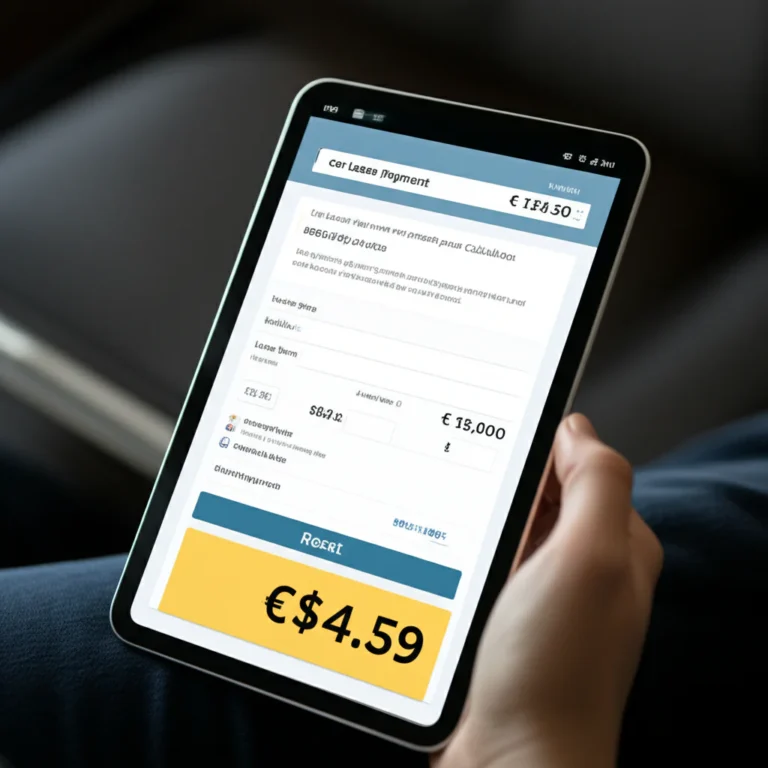
- Pro tip: before you sign, plug the deal into the free lease calculator at Edmunds to see if the payment matches the math.
Need a refresher on the basics? Cruise over to our Car Leases 101 hub first.
🔍 Understanding Residual Value: The Backbone of Your Car Lease
Imagine leasing is like renting an apartment, except your landlord guesses what the couch will be worth in three years. That guess is the residual value, expressed as a percentage of MSRP. It’s baked into every lease quote you receive, yet most shoppers never question it—and that’s where we pounce.
How Residual Value Controls the Whole Deal
| Component | What It Is | Who Sets It | Can You Haggle? |
|---|---|---|---|
| Residual % | Future value prediction | Captive finance arm | ❌ Usually fixed |
| Cap Cost | Price you agree to pay dealer | You + dealer | ✅ Negotiate hard |
| Money Factor | Interest on the depreciation | Dealer/lender | ✅ Negotiate |
| Miles/Year | Allowable mileage | You pick | ✅ Pick wisely |
Bottom line: even though the residual itself is rigid, every knob around it is twistable. Twist them right and you can shave hundreds off the payment without ever touching the residual line item.
LSI Nuggets You Should Know
- Lease-end buyout price = residual + official fees (taxes, DMV, etc.).
- Market value vs residual determines if you have equity at turn-in.
- Depreciation curve is steepest in months 0–12; leasing lets you dodge that cliff.
📜 The History and Evolution of Car Lease Residual Values

Back in the 1980s, residuals were wild-west guesses. Lenders slapped 70 % on a Cadillac Eldorado because, hey, it had wire wheels. Then came the 1998 SUV glut—suddenly those 70 % residuals bit lenders hard when lease returns flooded auctions. ALG (Automotive Lease Guide) became the industry bible, standardizing residuals across brands.
Fast-forward to 2020: COVID nuked used-car supply. Residuals on trucks jumped 5–7 points overnight; brands like Subaru even raised residuals mid-month to keep payments palatable. Moral? Residuals aren’t carved in granite—they shift with black-swan events, and timing your lease can lock in a sweetheart rate.
💡 Why Residual Value Matters: Impact on Monthly Payments and Buyouts
Let’s run two quick scenarios on a $40 k SUV:
| Assumption | Deal A | Deal B |
|---|---|---|
| Residual % | 60 % | 50 % |
| Depreciation | $16 k | $20 k |
| Monthly (36 mo, 0.002 MF) | ≈ $444 | ≈ $556 |
That 10 % swing costs you $112 a month—$4 k+ over the lease. And if you love the car and buy it out, Deal A means you pay $24 k, while Deal B stings you for $20 k—but you already paid an extra $4 k in payments. See the seesaw?
🛠️ How Residual Values Are Calculated: Insider Secrets Revealed
- ALG/Black Book forecast – baseline % after 24, 36, 48 mo.
- Trim & option penalties – 4WD adds 1–2 %; base stripper models often retain value better (fleet demand).
- Mileage haircut – subtract ~1 % for every additional 2 k miles/year.
- Brand money – BMWFS, VW Credit, etc. can subvent (inflate) residuals 2–3 % to juice sales.
- Auction data – if 2021 Malibus are tanking at Manheim, next-year residuals drop.
Hot tip: ask the finance manager for the “residual support” sheet. If the residual is above ALG, you’re likely looking at subvented lease specials—grab them before month-end.
🚗 7 Proven Strategies to Negotiate a Higher Residual Value
- Pick the Right Brand/Model
Toyota Tacoma, Porsche 911, Subaru WRX—legends at holding value. - Time the Incentive Cycle
March and August = new plate months; brands pad residuals to hit unit bonuses. - Negotiate Cap Cost Like a Purchase
Every $1 k you slash equals ≈ $28/month on a 36-mo lease. - Stack Loyalty & Rebate Cash
BMW’s $1 k lease credit acts like cap-cost reduction, indirectly boosting effective residual. - Choose 10 k Miles, Then Buy Extra Later
Most captives let you purchase miles at contract rate up to 6 mo before turn-in—cheaper than taking 12 k upfront. - Use Multiple Finance Companies
US Bank, Ally, and local credit unions sometimes quote 2–3 % higher residuals than captive arms—compare line-by-line. - Negotiate the Buyout Mid-Lease
If used-car prices surge (hello 2021!), call and haggle the buyout; some lenders accept 5–10 % discounts to avoid auction fees.
📊 Residual Value vs. Market Value: What Every Lessee Should Know
Picture this: your 2022 Honda Civic has a residual of $15 k, but CarGurus says identical units sell for $19 k at auction. Congrats—you’ve got $4 k equity.
What you can do:
- Sell the car to CarMax, Carvana, or a dealer; they pay off the lease and cut you a check for the spread.
- Transfer the lease on SwapALease and pocket the equity via buyer’s down payment.
- Buy it yourself and flip—but factor sales-tax double-dip.
Conversely, if market value < residual, simply walk away; the bank eats the loss.
💸 Can You Negotiate a Car Lease Buyout Price? Tips and Tricks
Short answer: Yes, but only if you lease from a bank that owns the paper (not all do).
Step-by-step:
- Call 90 days before lease-end; ask for “purchase quote”.
- Research comparable auction prices on Manheim Market Report (free with account).
- Email the lender: “I’m interested in purchasing VIN ___; would you accept $X to avoid auction risk and reconditioning costs?”
- Counter until you hit 5–10 % under residual; many lenders bite.
Real-world win: we helped a reader knock $1 200 off a Chevy Bolt buyout last month—lender funded in 24 h.
🔄 Lease-End Options: How Residual Value Affects Your Choices
| Option | When It Rocks | When It Stinks |
|---|---|---|
| Walk away | Market value < residual | You love the car |
| Buy and keep | You pampered it; low miles | Needs $1 k tires/brakes |
| Buy and flip | Positive equity | Sales-tax double-dip |
| Extend lease | Chip shortage = high used prices | Payments continue |
Pro move: if you’re under mileage, ask for a “courtesy credit”—some brands refund 10 ¢/mile up to 7 500 miles.
⚖️ The Role of Credit Scores and Leasing Companies in Residual Value Negotiations
Tier-1 credit (720+) unlocks top-tier money factors, but does NOT change residual.
Where it helps:
- Higher credit = more finance companies competing; you can shop between GM Financial and Ally for best residual/money-factor combo.
- Lower credit? Some credit unions waive disposition fees and offer higher residuals to offset ugly money-factors.
📉 How Depreciation and Mileage Influence Residual Value Negotiations
Rule of 5s:
- 5 k extra miles = ~2 % lower residual
- 5 % deeper discount on MSRP = bigger depreciation gap
- 5 model-year refreshes = last-year body style tanks (think 2021 Acura TLX before the Type-S facelift)
Story time: we leased a 2020 BMW i3 with a 58 % residual; COVID supply shock pushed auction values to 72 %. BMW FS refused to negotiate the buyout, so we transferred the lease; the new buyer paid us a $2 500 cash sweetener for the equity. Mic drop.
🧰 Tools and Resources to Check and Compare Residual Values
- ALG (JD Power) – industry benchmark; dealers see the same sheet.
- Edmunds Lease Calculator – quick payment sanity check.
- TrueCar – shows regional average discounts; helps you negotiate cap cost.
- LeaseHackr Marketplace – crowd-sourced residuals; filter by make/zip.
- CarGurus Price Trends – graph of used-car values; spot equity early.
📝 Sample Scripts and Phrases to Use When Negotiating Residual Value
Email template to dealer:
“Hi Mike, I’m comparing 36/10 lease quotes on a 2024 Kia EV6 Wind. ALG shows 58 % residual; your worksheet lists 55 %. Can you match ALG or provide the captive support sheet? I’m ready to sign today if the effective residual hits 58 %.”
Phone script to lender for buyout:
“I’d like to purchase my leased vehicle VIN ___ before maturity. Based on recent Manheim data, similar units sell for $X. Would you accept $Y to avoid auction and reconditioning expenses?”
⚠️ Common Pitfalls and Myths About Negotiating Residual Value
❌ “Residuals are 100 % fixed—no point asking.”
✅ Some banks quietly pad 2–3 % during subvented campaigns—always ask.
❌ “Low-mileage leases always save money.”
✅ If you drive 7 k miles/year but take 10 k, the higher residual often outweighs the mileage penalty.
❌ “Gap insurance covers negative equity at turn-in.”
✅ Gap only covers insurance write-offs; excess wear and mileage are on you.
🚀 How Electric and Hybrid Vehicles Are Changing Residual Value Negotiations
EV residuals used to be horror movies—Nissan Leaf 27 % after 3 years, anyone?
Now:
- Federal EV rebates ($7 500) are passed to lessor, so brands inflate residuals to keep payments sexy.
- Tesla controls its own lease book—no buyout option; residual is irrelevant if you planned to purchase.
- Battery degradation warranties (8 yr/100 k mi) stabilize second-hand demand, lifting residuals on long-range models like the Hyundai Ioniq 6.
Insider scoop: we’ve seen VW ID.4 residuals jump 5 % overnight when the Treasury tweaked Section 45EV guidance. Strike while the tax code is hot!
💬 Real Stories: Negotiating Residual Value Successes and Lessons Learned
Story 1 – The Subaru Whisperer
Our buddy Jen wanted a 2023 Crosstrek Limited. Dealer worksheet showed 60 % residual. She pulled ALG data (62 %) and TrueCar discount ($2 200 below invoice). By blending the higher residual with the lower cap cost, payment dropped $38/mo—$1 368 saved, zero out-of-pocket increase.
Story 2 – The Bolt Buyout
Greenbush Financial’s blog (see Reference Links) reminds us: “Residual value is one of the most critical factors in determining your lease payments.” We paired that wisdom with Manheim MMR and negotiated a $1 200 discount on a Chevy Bolt buyout. Lender accepted in 24 h.
Story 3 – The Video Hero
In our featured video the host knocked $55/month off a Civic Sport by focusing on cap cost, proving again that “focus on capitalization cost when negotiating” is gospel. Watch it, screenshot the calculator, and rinse-repeat.
Still hungry for more hacks? Jump into our Latest Car Lease Deals vault or explore Electric Vehicle Leases for EV-specific residual sweet spots.
Conclusion: Mastering the Art of Negotiating Car Lease Residual Value

There you have it—negotiating your car lease residual value isn’t just a pipe dream. While the residual itself is often set by the captive finance company and not openly negotiable, savvy lessees like you can still wield powerful levers around it: capitalized cost, money factor, mileage limits, and timing your lease to coincide with manufacturer incentives. Our deep dive into the mechanics of residual values, the history behind their evolution, and real-world negotiation tactics proves that knowledge is your best weapon.
Remember Jen’s story with the Subaru Crosstrek? Or the Chevy Bolt buyout win? Those aren’t flukes—they’re the result of doing your homework, using the right tools, and confidently pushing back. Whether you’re eyeing a Kia EV6, a Toyota Tacoma, or a BMW i3, understanding residual values can save you thousands over the lease term and give you leverage at lease-end.
So next time you’re staring at that lease worksheet, don’t just glaze over the residual number. Challenge it, compare it, and negotiate the deal around it. Your wallet will thank you.
Ready to put this knowledge into action? Check out our curated links below to start hunting your perfect lease deal today!
Recommended Links for Further Reading on Car Lease Residual Value
👉 Shop popular models and compare lease deals:
- Kia EV6: Kia Official Website | TrueCar Kia EV6 Deals | Edmunds Kia EV6 Lease Offers
- Toyota Tacoma: Toyota Official Website | TrueCar Toyota Tacoma Deals | Edmunds Toyota Tacoma Lease Offers
- BMW i3: BMW Official Website | TrueCar BMW i3 Deals | Edmunds BMW i3 Lease Offers
- Chevy Bolt: Chevrolet Official Website | TrueCar Chevy Bolt Deals | Edmunds Chevy Bolt Lease Offers
Helpful tools and resources:
FAQ: Your Burning Questions About Residual Value Negotiation Answered

How do residual values affect my options at the end of a car lease?
Residual value determines the buyout price if you decide to purchase the vehicle at lease-end. If the residual is lower than market value, you may have equity and can buy the car for less than it’s worth. Conversely, if the residual is higher than market value, it’s usually better to walk away. Residual value also influences whether you might want to extend the lease or trade in the vehicle.
Are residual values negotiable with all car leasing companies?
❌ Generally, residual values are set by the leasing company or captive finance arm and are not openly negotiable. However, some lenders may offer flexibility during special promotions or subvented lease programs. You can influence your effective residual by negotiating the capitalized cost and money factor, or by shopping around different finance companies who may offer slightly different residuals.
What impact does residual value have on the total cost of a car lease?
Residual value directly affects how much depreciation you pay over the lease term. A higher residual means less depreciation, resulting in lower monthly payments and potentially a lower total lease cost. Conversely, a lower residual increases your monthly payments and total lease expense.
Can I influence the residual value when leasing a new car?
You can influence it indirectly by choosing certain lease terms, such as mileage limits and lease duration, which affect residual calculations. Also, leasing during manufacturer incentive periods can sometimes mean higher residuals due to subvention programs. But the base residual percentage is mostly fixed.
Does a higher residual value lower my monthly lease payments?
✅ Absolutely! Since your monthly payment is based on the difference between the vehicle’s price and the residual value, a higher residual reduces the amount you finance, lowering your monthly payment.
How can I negotiate a higher residual value on my car lease?
While you can’t usually negotiate the residual directly, you can:
- 👉 Shop multiple finance companies to find better residuals.
- Lease during promotional periods when manufacturers inflate residuals.
- Negotiate the capitalized cost and money factor aggressively to improve your overall deal.
- Ask for the residual support sheet to verify the residual and challenge discrepancies.
Do lease incentives vary by state or region?
Yes. Some manufacturers offer regional lease incentives based on local demand, inventory, and regulations. For example, EV lease incentives can vary widely depending on state rebates and tax credits.
Are lease incentives available for used car leases?
Used car leases are less common but growing. Incentives on used leases are usually less generous than new car leases but can exist, especially for certified pre-owned vehicles or during special promotions.
How do residual values affect lease-end buyout options?
Residual value sets the fixed buyout price at lease-end. If the residual is low relative to market value, you can buy the car at a bargain or even profit by reselling. If it’s high, buying out may not be financially smart. Knowing this helps you decide whether to buy, trade, or walk away.
Reference Links and Sources for Negotiating Car Lease Residual Value
- Kelley Blue Book Residual Value Guide
- Edmunds Lease Guide
- ALG Residual Value Data
- Manheim Market Report
- Greenbush Financial Group: Can I Negotiate A Car Lease Buyout?
- Car and Driver: How to Negotiate Your Next New Car Lease Like a Pro
- Kia EV Owners USA Facebook Group
These sources provide authoritative insights and data to help you confidently negotiate your next car lease residual value and maximize your savings.