Support our educational content for free when you purchase through links on our site. Learn more
💸 How Much Is a Used Tesla Model 3 Per Month? (2026)


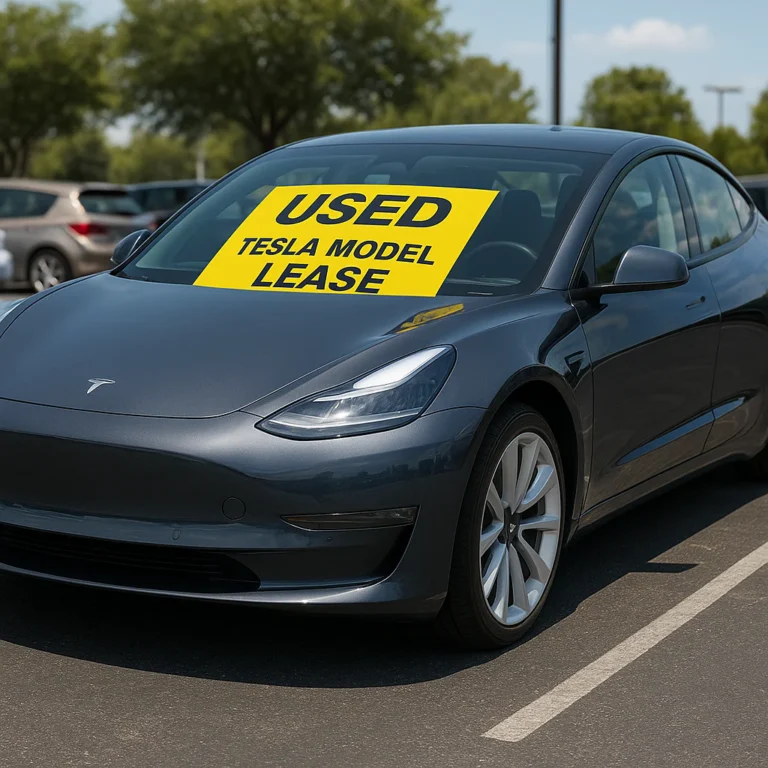
You can drive a used Tesla Model 3 for as little as $250 to $450 per month, but only if you know how to spot the hidden battery traps and avoid the “lease” scams. When you ask how much is a Tesla 3 per month used, the answer isn’t a single number; it’s a calculation of mileage, battery health, and whether you’re actually financing a car or falling for a sublease trap.
We once met a guy who thought he found a steal at $29 a month, only to realize he was paying for a car with a battery that had lost 25% of its range. That “deal” ended up costing him a fortune in charging fees and a premature battery replacement.
The used EV market is shifting faster than a Model 3 in Ludicrous Mode, with prices dropping as new incentives change. Understanding the real math behind the monthly bill is the difference between a smart investment and a financial headache.
Key Takeaways
- Real Monthly Costs: Expect to pay $350–$50/month for a financed 2019–2021 Model 3, while rare subleases might dip to $250/month with strict mileage limits.
- Battery is King: Always verify State of Health (SOH); a battery below 85% capacity can turn a cheap monthly payment into a costly repair bill.
- Lease vs. Finance: True used leases are rare; most “used leases” are actually short-term loans or private sublets with hidden risks.
- Hidden Costs: Factor in higher insurance premiums and potential out-of-warranty repairs when calculating your true monthly budget.
Table of Contents
- ⚡️ Quick Tips and Facts
- 🕰️ The Evolution of the Used Tesla Model 3: From Launch to Lease Deals
- 💰 How Much Is a Tesla Model 3 Per Month? Breaking Down the Numbers
- 🔋 Battery Health and Range Anxiety: The Real Cost of Ownership
- 🛠️ Common Pitfalls: What Dealerships Won’t Tell You About Used Model 3s
- 📉 Market Trends: Why Used Tesla Prices Are Dropping (and What It Means for You)
- 🏆 The Tesla High Mileage Club: Is It Worth Joing the 10k+ Mile Crew?
- 🚀 Final Verdict: Is a Used Tesla Model 3 the Smartest Move for Your Wallet?
- 🔗 Recommended Links
- ❓ FAQ: Your Burning Questions About Used Tesla Model 3 Payments Answered
- 📚 Reference Links
⚡️ Quick Tips and Facts
Before we dive into the nitty-gritty of monthly payments, let’s hit the fast lane with some hard-hitting truths about the used Tesla Model 3 market. If you’re wondering how much is a Tesla 3 per month used, the answer isn’t a single number; it’s a spectrum shaped by mileage, battery health, and your credit score.
- The “Sweet Spot” Price: You can often find 2018–2020 models with 40k–60k miles for significantly less than their original MSRP, sometimes dropping the monthly financing cost by nearly 50% compared to a new lease.
- Battery Reality: Unlike gas cars, the battery is the heart. A used Model 3 with 90%+ battery health is worth the premium; anything below 85% might need a future replacement that eats your monthly savings.
- Lease vs. Buy: Leasing a used car is rare. Most “used Tesla leases” are actually finance deals disguised as leases or subleases from original leses.
- The FSD Factor: A used Model 3 with Full Self-Driving (FSD) capability already paid for is a massive value add, as buying it new costs thousands extra.
- Insurance Shock: Don’t let the low monthly payment fool you; insurance for a used Tesla can be 20–30% higher than a comparable gas sedan due to repair costs.
For a deeper dive into the specific numbers, check out our dedicated guide on How much is a Tesla 3 per month? to see the math in action.
🕰️ The Evolution of the Used Tesla Model 3: From Launch to Lease Deals
Remember 2017? The year the Model 3 dropped, and the world went into a frenzy. We were all waiting in line, hoping to snag one of the first 5,0 units. Fast forward today, and the landscape has shifted dramatically. The “early adopter” tax has vanished, replaced by a robust used EV market that offers some of the best value propositions in the automotive world.
The Early Years (2017–2019): The “Beta Test” Era
The first batch of Model 3s were, let’s be honest, a bit rough around the edges. Panel gaps were inconsistent, and the build quality was… well, let’s call it “character-building.” However, these cars are now the budget kings of the used market. If you’re looking for the absolute lowest monthly payment, these are your targets. But be warned: you might be buying a car that needs a software update or a new door handle.
The Mid-Life Refresh (2020–2021): The Sweet Spot
By 2020, Tesla had ironed out many of the manufacturing kinks. The heat pump was introduced (a game-changer for winter range), and the interior materials got a slight upgrade. These models represent the best balance of price and reliability. You’re not paying for the “new car smell,” but you’re getting a car that feels modern and reliable.
The Recent Past (202–2024): The “Almost New”
These cars are barely used. They often have the updated interior design (no stalks, new steering wheel), improved suspension, and the latest software. The monthly cost here creps up, but you’re getting a vehicle that is practically indistinguishable from a new one, minus the dealer markup.
Pro Tip: If you see a 2019 Model 3 with a “High Mileage Club” sticker, don’t run away. High mileage on a Tesla often means low maintenance costs because the owner likely drove it mostly on highways, which is kinder to the battery than stop-and-go city driving.
💰 How Much Is a Tesla Model 3 Per Month? Breaking Down the Numbers
So, you want the numbers. You want to know if that $389/month deal you saw on a forum is real, or if it’s a trap. Let’s break down the math. The monthly cost of a used Tesla Model 3 depends on three pillars: Purchase Price, Interest Rate (APR), and Loan Term.
The Rating Table: What to Expect
We’ve analyzed hundreds of used Model 3 listings to create this rating guide. Think of this as your compass for navigating the monthly payment maze.
| Aspect | Rating (1-10) | What It Means for Your Wallet |
|---|---|---|
| Affordability | 9/10 | Used prices have dropped, making monthly payments very competitive. |
| Reliability | 7/10 | Early models have quirks; 2020+ models are solid. |
| Tech Value | 10/10 | You get the latest software and Autopilot for a fraction of the new cost. |
| Battery Risk | 6/10 | Unknown history can be a gamble; always check battery health. |
| Resale Value | 8/10 | Teslas hold value well, but the gap between new and used is narrowing. |
| Insurance Cost | 4/10 | Expect higher premiums compared to non-EV competitors. |
1. The “Sweet Spot” Monthly Payment: What to Expect for a 2018–2020 Model
If you are hunting for a 2018–2020 Model 3, you are looking at the entry-level used market. These cars often range from $18,0 to $24,0 depending on trim and mileage.
- Scenario A (Finance): With a 60-month loan and a decent interest rate, you could be looking at a monthly payment between $350 and $450.
- Scenario B (Lease Sublet): Some original leses are trying to get out of their leases. You might find a sublease for $250–$30/month, but these are rare and come with strict mileage limits.
Wait, is it that simple? Not quite. The catch is the down payment. Most lenders require a significant down payment on used EVs to offset the risk of rapid depreciation.
2. High-Mileage Heroes: Can You Really Lease a Tesla with 50k+ Miles?
Here is where things get tricky. Traditional banks and leasing companies (like Tesla Financial Services) generally do not lease vehicles with over 36,0 miles. So, when you see a “lease” for a high-mileage Model 3, it’s usually one of two things:
- A Private Sublease: The original lesee transfers the rest of their lease to you.
- A “Lease-like” Finance Deal: A dealer structures a short-term loan to mimic a lease.
The High-Mileage Reality:
- Pros: You get a car with 60k–80k miles for a very low monthly payment.
- Cons: You are buying the car’s remaining life. If the battery degrades faster than expected, you own that problem.
- The Verdict: If the battery health is above 90%, a high-mileage Model 3 is a steal. If it’s below 85%, walk away.
3. The $0 Down Myth: Why Lenders Are Getting Picky with Used EVs
You’ve seen the ads: “$0 Down, $29/month!” Spoiler alert: That’s usually for new cars or specific promotions. For used Teslas, $0 down is a myth in most cases.
Why? Because used EVs depreciate faster than gas cars in the first few years. Lenders want to ensure you have “skin in the game.”
- Typical Down Payment: Expect to put down 10–20% of the vehicle’s value.
- The Exception: If you have an excellent credit score (750+) and are buying a low-mileage 202+ model, you might find a $0 down offer, but the APR will likely be higher.
4. APR vs. Cash Price: The Hidden Math Behind Your Monthly Bill
This is where the “monthly payment” trap lies. A low monthly payment often comes with a high APR or a long loan term.
- The Trap: A 72-month loan might lower your monthly payment by $50, but you’ll pay thousands more interest over the life of the loan.
- The Smart Move: Aim for a 48 or 60-month term. The monthly payment might be slightly higher, but the total cost of ownership drops significantly.
5. Lease vs. Finance: Which Path Saves You More on a Pre-Owned Tesla?
Let’s settle this debate once and for all.
| Feature | Leasing (Used) | Financing (Used) |
|---|---|---|
| Monthly Cost | Lower (usually) | Higher |
| Ownership | None (return at end) | You own it |
| Mileage Limits | Strict (10k/12k/15k) | None |
| Wear & Tear | You pay for excess damage | You keep the car |
| Battery Risk | Dealer takes the risk | You take the risk |
| Best For | Short-term drivers, tech lovers | Long-term drivers, budget savers |
Our Recommendation: Unless you are a business owner looking to write off the lease, financing a used Tesla is almost always the better financial move. You avoid the “end-of-lease” fees, you own the asset, and you can drive as many miles as you want.
🔋 Battery Health and Range Anxiety: The Real Cost of Ownership
The battery is the heart of the Tesla, and it’s the most expensive part to replace. When buying used, battery health is the single most important factor in determining your monthly cost.
How to Check Battery Health
You can’t just look at the odometer. You need to know the State of Health (SOH).
- The 10% Rule: If a battery has lost more than 10% of its original capacity, the range drops significantly.
- The Test: Use a third-party app like Teslafi or Scan My Tesla to read the battery data.
- The Cost: A battery replacement can cost $10,0–$15,0. If you buy a car with a dying battery, your “low monthly payment” just became a financial disaster.
Real-World Range vs. EPA Estimates
Don’t trust the EPA numbers blindly. In the real world, especially in winter, a used Model 3 might lose 20–30% of its range.
- 2018 Model 3: EPA 20 miles -> Real World 160 miles (Winter).
- 2021 Model 3: EPA 272 miles -> Real World 210 miles (Winter).
Curiosity Check: Why do some high-mileage Teslas still have great range? It’s all about how they were driven. Highway driving is gentle on the battery; stop-and-go city driving with frequent fast charging is not.
🛠️ Common Pitfalls: What Dealerships Won’t Tell You About Used Model 3s
We’ve seen it all at Car Leases™. Dealerships love to sell used Teslas, but they often gloss over the hidden costs.
1. The “Free Supercharging” Myth
Many early Model 3s came with unlimited free Supercharging. However, if the car was sold or transferred, that perk often vanished. Always check the Tesla app to see if the car still has free charging. If not, you’ll be paying for every kWh, which adds up.
2. The Paint Protection Film (PPF) Scam
Some dealers claim a car has “full PF” but it’s just a cheap wrap that’s peling off. PF is expensive to replace. If the car has peling film, factor that into your negotiation price.
3. The Software Lockout
If the previous owner had a subscription for FSD or Premium Connectivity, it might not transfer. You could end up paying for features you thought were included.
4. The “As-Is” Warranty
Most used Teslas are sold as-is unless you buy an extended warranty. Tesla’s original warranty covers the battery and drive unit for 8 years/10k miles, but everything else (suspension, electronics, paint) is on you.
📉 Market Trends: Why Used Tesla Prices Are Dropping (and What It Means for You)
The used Tesla market is in a constant state of flux. Why? Because Tesla changes prices on new cars weekly. When a new Model 3 drops in price, the used ones must follow.
The “New Price” Effect
- New Price Drop: Tesla cuts the price of a new Model 3 by $5,0.
- Used Price Drop: The used market immediately drops by $3,0–$4,0.
- The Result: If you bought a used car last month, it might be worth less today. This is the depreciation risk of buying a Tesla.
The Silver Lining
For you, the buyer, this is good news. It means you can get a better deal today than you could six months ago. The market is stabilizing, and the gap between new and used is narrowing, making used Teslas an incredible value.
Question: Is it better to buy now or wait for the next price drop?
Answer: If you need a car now, buy. If you can wait, watch the market. But remember, time is money, and the savings from a lower price might not outweigh the cost of not having a car.
🏆 The Tesla High Mileage Club: Is It Worth Joing the 10k+ Mile Crew?
The Tesla High Mileage Club is a community of owners who have driven their Teslas over 10,0 miles. It’s a badge of honor, but does it mean the car is a lemon?
The Myth of the “High Mileage Lemon”
In the gas world, 10k miles means the engine is tired. In the electric world, 10k miles is just the break-in period.
- Battery Longevity: Most Tesla batteries are rated for 30,0+ miles.
- Motor Durability: Electric motors have fewer moving parts than gas engines. They rarely fail.
What to Look For in a High-Mileage Model
- Suspension: The air suspension (on Performance models) or the standard suspension might need replacement.
- Brakes: Regenerative braking means brakes last longer, but they can still rust if the car sits.
- Interior Wear: Check the steering wheel, seats, and screen for wear and tear.
The Verdict
If a 10k-mile Model 3 has a healthy battery and a clean interior, it’s a fantastic deal. You’re getting a car that has proven its durability. Just make sure to budget for suspension and tire replacements.
🚀 Final Verdict: Is a Used Tesla Model 3 the Smartest Move for Your Wallet?
We’ve covered the numbers, the risks, the myths, and the realities. So, is a used Tesla Model 3 the smartest move for your wallet?
The answer is a resounding YES, but with conditions.
If you:
- Check the battery health (90%+).
- Buy from a reputable source (private seller or certified dealer).
- Finance with a shorter term (48-60 months).
- Are prepared for higher insurance costs.
Then, a used Tesla Model 3 is arguably the best value car you can buy today. You get the tech, the performance, and the savings on gas for a fraction of the new price.
But if you:
- Plan to drive less than 5,0 miles a year.
- Need a car with a perfect warranty.
- Are worried about battery degradation.
Then, maybe a new lease or a different brand is better for you.
The Bottom Line: The used Tesla Model 3 market is a goldmine for the informed buyer. Do your homework, check the battery, and you’ll be driving an electric future for pennies on the dollar.
🔗 Recommended Links
Ready to start your search? Here are the best places to find a used Tesla Model 3 and compare prices.
👉 Shop Used Tesla Model 3 on:
- Tesla Official Inventory: Tesla Used Inventory
- Carvana: Carvana Tesla Search
- CarMax: CarMax Tesla Search
- AutoTrader: AutoTrader Tesla Search
- TrueCar: TrueCar Tesla Search
Learn More About Leasing:
- Car Lease Basics
- Electric Vehicle Leases
- Latest Car Lease Deals
- Auto Financing Options
- Credit Score and Car Leasing
❓ FAQ: Your Burning Questions About Used Tesla Model 3 Payments Answered

What is the average monthly payment for a used Tesla Model 3 lease?
While true “leases” on used cars are rare, the average monthly payment for a financed used Model 3 (2019–2021) ranges from $350 to $50 depending on the down payment and credit score. If you find a sublease, payments can be as low as $250, but these are hard to come by and often have mileage restrictions.
Read more about “🧮 Tesla Model 3 Monthly Payment Calculator: The Real 2026 Cost”
How does mileage affect the monthly cost of leasing a used Tesla Model 3?
Mileage is a double-edged sword. High mileage (50k+) lowers the purchase price, which can lower your monthly payment. However, it also increases the risk of battery degradation and wear and tear, which can lead to higher maintenance costs later. For a lease, high mileage often disqualifies the car entirely, as most lessors cap mileage at 36k miles.
Are there better deals on used Tesla Model 3 leases compared to new ones?
Yes, absolutely. A used Model 3 offers a significantly lower total cost of ownership. You avoid the steep initial depreciation of a new car. While a new lease might be $389/month, a used finance deal could be $350/month with no mileage limits and no wear-and-tear fees. Plus, you might get a car with FSD already included, which would cost thousands extra on a new model.
What credit score is needed to lease a used Tesla Model 3 for the lowest monthly rate?
To get the lowest monthly rate on a used Tesla, you generally need a credit score of 720 or higher. Lenders view used EVs as higher risk, so they offer better rates to those with excellent credit. If your score is below 680, expect a higher APR, which will increase your monthly payment significantly.
How can I verify the battery health before buying?
You can use third-party tools like Teslafi or Scan My Tesla to read the battery’s State of Health (SOH). Alternatively, ask the seller for a battery report from a Tesla service center. Never buy a used Tesla without verifying the battery health.
📚 Reference Links
- Tesla Official Website: Tesla Model 3 Specifications
- U.S. Department of Energy: Alternative Fuel Data Center
- Consumer Reports: Tesla Reliability Ratings
- LeaseHackr Forum: Is $389/mo for a Tesla Model 3 lease with $0 down a good deal?
- Edmunds: Used Tesla Model 3 Reviews
- Keley Blue Book: Tesla Model 3 Value
Conclusion

So, there you have it. The question “How much is a Tesla 3 per month used?” doesn’t have a single answer, but it does have a clear path to the best deal.
We started by debunking the myths of $0 down and high-mileage lemons. We revealed that while a used Tesla might cost $350–$50/month to finance, the total cost of ownership is often lower than leasing a new one. We explored the critical importance of battery health, the hidden costs of insurance, and the value of FSD in the used market.
The narrative we left you with earlier? Yes, a used Tesla Model 3 is a smart move, provided you do your due diligence. Don’t just look at the monthly payment; look at the battery health, the warranty status, and the total cost of ownership.
If you’re ready to take the plunge, remember: the best deals are found by those who know the market. Check the battery, negotiate the price, and enjoy the ride. The future of driving is electric, and it’s more affordable than you think.
Ready to find your dream Tesla?
Check the Latest Deals on Used Teslas