Support our educational content for free when you purchase through links on our site. Learn more
🚨 How Low Is Too Low for Tesla? The 10% Rule (2026)

Never let your Tesla drop below 10% for daily driving, and treat 0% as a chemical disaster you must avoid at all costs. If you are wondering how low is too low for Tesla, the answer is simple: any time you dip below that 10% threshold, you are flirting with permanent battery degradation and expensive roadside assistance.
We once watched a friend push his Model 3 to 1% on a freezing January morning, thinking the “ghost miles” on the dashboard were real. Within ten minutes, the car entered “turtle mode,” crawling at 15 mph while the heater died, leaving him stranded in a snowbank with a battery that would never fully recover its capacity.
That hidden buffer your car uses to prevent total shutdown is shrinking every time you drain it dry. Modern lithium-ion chemistry is tough, but it hates being starved of energy, especially when the temperature drops.
Key Takeaways
- The 10% Hard Stop: Treat 10% as your absolute floor for daily driving to preserve long-term battery health.
- The 0% Danger Zone: Hitting 0% can cause irreversible cell damage and copper shunting inside the pack.
- Winter Warning: Cold weather drastically reduces usable range, meaning 20% in winter might act like 10% in summer.
- Storage Sweet Spot: If parking for weeks, keep the battery between 40% and 60% to prevent deep discharge.
Table of Contents
- ⚡️ Quick Tips and Facts
- 📜 The Electric Odyssey: A Brief History of Tesla Battery Chemistry
- 📉 Decoding the Dashboard: What “Low Battery” Really Means
- 🚨 The Danger Zone: How Low is Too Low for Tesla Batteries?
- 1. The 1% Cliff: Why You Should Never Hit Zero
- 2. The 5% Warning: When Panic Sets In
- 3. The 10% Sweet Spot: The New Rule of Thumb
- 4. The 20% Buffer: Why We Always Leave a Safety Margin
- 5. The 50% Myth: Debunking the “Full Charge” Obsession
- 🔋 Deep Dive: Long-Term Health Impacts of Low State of Charge (SoC)
- 🌡️ Cold Weather vs. Low Battery: The Double Whamy Effect
- 🔌 Charging Strategies: Recovering from a Deep Discharge
- 🛠️ Real-World Anecdotes: Tales from the Roadside
- 💡 Quick Tips and Facts
- 🏁 Conclusion
- 🔗 Recommended Links
- ❓ FAQ
- 📚 Reference Links
Before we dive into the deep end of the battery pool, let’s hit the high notes so you don’t drown in the details. If you’re reading this, you’re probably staring at a range estimate that’s making your heart race, or you’re just curious about the limits of your electric sted. Here’s the TL;DR from the Car Leases™ garage:
- ✅ The 10% Rule: Never let your battery drop below 10% for daily driving. It’s your safety net.
- ✅ The 5% Panic Line: Once you hit 5%, the car starts whispering (and then screaming) that you need a charger now.
- ❌ The 0% Myth: Hitting 0% isn’t just “running out of gas”; it’s a chemical nightmare for your battery cells.
- ✅ Storage Sweet Spot: If you’re parking for weeks, keep it between 40% and 60%.
- ✅ Cold Weather Warning: In freezing temps, “low” is even lower. A 20% battery in winter might act like a 10% battery in summer.
Curious about the financial side of things? Many of our readers ask, “Do you have to put $4,50 down on a Tesla?” The answer isn’t a simple yes or no, and it often depends on your credit score and the specific lease structure. You can read our deep dive on Tesla down payment requirements to see how cash flow affects your lease terms.
To understand how low is too low, we have to look at where we came from. Tesla didn’t just wake up one day and decide to build a car with a lithium-ion battery; they evolved.
In the early days of the Roadster (208), the battery management system (BMS) was a bit more… liberal. It allowed for deeper discharges because the chemistry was different, and the stakes felt lower. But as we moved to the Model S and Model 3, the chemistry shifted toward Lithium Iron Phosphate (LFP) for standard range models and Nickel Cobalt Aluminum (NCA) or Nickel Manganese Cobalt (NMC) for long-range versions.
Why does this matter? Because LFP batteries are generally more tolerant of being charged to 10% regularly, but they are less forgiving of sitting at 0% for long periods. Conversely, NCA/NMC batteries hate sitting at 10% but also hate sitting at 0%.
Fun Fact: The BMS in modern Teslas is sophisticated it can estimate your range within a few miles, but it still relies on “buffer zones” that you can’t see on the dashboard.
If you’re looking to get behind the wheel of these marvels of engineering, check out our guide on Electric Vehicle Leases to see how leasing can mitigate the risk of battery depreciation.
You see 15 miles left. You panic. But is that 15 miles of real driving, or is it a ghost?
The Tesla dashboard is a master of optimism and pessimism. When you are at 20%, the car is usually showing you “usable” energy. However, there is a hidden buffer below 0% that the car will never let you touch. This is the reserve buffer.
The Hidden Buffer Zone
Think of your battery like a gas tank with a false bottom. Even when the gauge says “Empty,” there’s still a little bit of fuel left to get you to a safe stop. But here’s the kicker: that buffer is shrinking if you abuse the battery.
| Battery Displayed % | Actual State of Charge (SoC) | Risk Level | What Happens |
|---|---|---|---|
| 20% | ~2% | 🟢 Low | Normal driving, no issues. |
| 10% | ~12% | 🟡 Caution | Regenerative braking may limit. |
| 5% | ~7% | 🟠 Danger | Car may enter “Sprint Mode” (limited power). |
| 1% | ~3% | 🔴 Critical | Car will limp to a stop. |
| 0% | ~1% | 💀 Catastrophic | Battery Deep Discharge. |
Note: The exact buffer varies by model year and battery chemistry.
If you’re new to the EV world, you might be wondering how this affects your Car Lease Basics. Leasing a Tesla often comes with mileage caps, but it also protects you from the long-term degradation risks of a dead battery.
This is the million-dollar question. We’ve all been there: you’re on a road trip, the charger is 20 miles away, and your range estimate is dropping faster than a stock market crash.
1. The 1% Cliff: Why You Should Never Hit Zero
Hitting 0% on the display is the equivalent of driving a gas car until the engine sputers and dies, but with a much more expensive consequence. When you hit 0%, the car enters a “turtle mode,” limiting your speed to a crawl (often under 15 mph) to preserve enough energy to get you to the side of the road.
The Risk: If you drain the battery completely, you risk cell imbalance. The BMS might think one cell is dead when it’s just drained, causing the whole pack to underperform.
2. The 5% Warning: When Panic Sets In
At 5%, the car starts sending you notifications that are hard to ignore. “Low Battery” warnings become frequent. The regenerative braking might be disabled to save energy.
- Real Talk: We had a friend who hit 4% on a cold morning in Minnesota. The range estimate dropped from 12 miles to 4 miles in the time it took to merge onto the highway. The cold ate the buffer for breakfast.
3. The 10% Sweet Spot: The New Rule of Thumb
Most experts, including us at Car Leases™, recommend treating 10% as your hard stop. This gives you enough buffer to find a charger, deal with traffic, or handle a detour.
4. The 20% Buffer: Why We Always Leave a Safety Margin
If you are in an area with sparse charging infrastructure, we recommend keeping a 20% buffer. Why? Because range estimates are not guarantees. They are based on your recent driving habits. If you suddenly hit a steep hill or turn on the heater, that 10% estimate could vanish instantly.
5. The 50% Myth: Debunking the “Full Charge” Obsession
Wait, we’re talking about low, not high. But here’s the connection: Sitting at 0% is as bad as sitting at 10% for long periods. Many owners think they need to keep their battery at 50% to be safe. While 50% is great for storage, for daily driving, you don’t need to obsess over staying above 50%. Just don’t let it dip below 10%.
For more on how battery health affects your Auto Financing Options, check out our analysis on residual values.
Let’s get technical for a second. What actually happens inside the battery when you run it low?
The Chemistry of Despair
Lithium-ion batteries operate by moving lithium ions between the anode and cathode. When the battery is deeply discharged, the voltage drops below a critical threshold.
- Copper Shunting: If the voltage gets too low, the copper current collector can start to dissolve. When you recharge, that copper can plate back onto the anode, creating a short circuit. This is permanent damage.
- SEI Layer Breakdown: The Solid Electrolyte Interphase (SEI) layer protects the anode. Deep discharges can destabilize this layer, leading to faster degradation.
- Cell Imbalance: Not all cells in a pack are identical. If you drain the pack to 0%, the weakest cell hits 0% first, while others still have juice. The BMS has to balance them, but if the imbalance is too great, the pack capacity is permanently reduced.
Expert Insight: According to data from Tesla’s Battery Day, the degradation curve is relatively flat if you stay between 20% and 80%. But once you dip below 10% regularly, the curve steepens.
If you think running low is bad in summer, try it in winter. Cold weather is the arch-nemesis of Tesla batteries.
Thermal Buffer
When it’s freezing, the battery needs energy to heat itself up just to function. This means your usable range shrinks. A battery at 20% in 30°F weather might behave like a 10% battery in 70°F weather.
- The Preconditioning Hack: Always use the Scheduled Departure feature to precondition your battery while it’s still plugged in. This warms the battery using grid power, not battery power.
- The “Ghost” Range: In extreme cold, the range estimate can drop by 30-40%. If you see 15 miles left in a snowstorm, assume you have 10.
For more tips on winter driving, check out our Latest Car Lease Deals which often include winter tire packages.
So, you’ve hit the red line. You’re at 2%. What do you do?
Step-by-Step Recovery
- Don’t Panic: Turn off the heater, AC, and heated seats. Every watt counts.
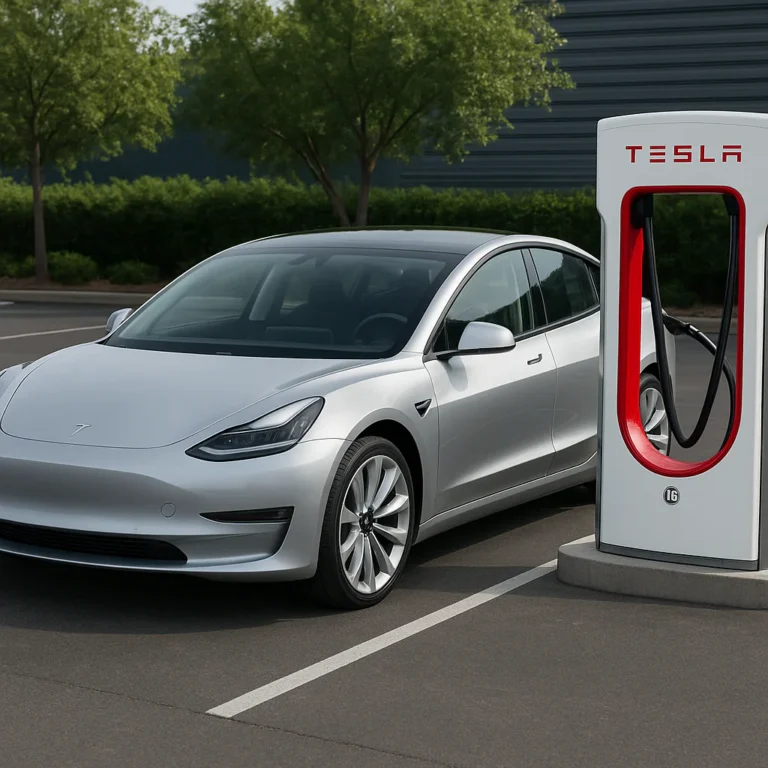
- Find the Nearest Supercharger: Use the in-car navigation. It will route you to the closest charger and precondition the battery for optimal charging speed.
- Charge to 20%: Once you get there, charge to at least 20% before driving again.
- Avoid Fast Charging Immediately: If the battery is extremely cold and low, fast charging might be slow. Let the car warm up first.
The “Trickle” Method
If you are stuck at home with a low battery and no Supercharger nearby, use a Level 1 charger (the standard 120V outlet). It’s slow, but it’s better than nothing. It allows the BMS to balance the cells gently.
We love a good story, especially when it involves a little bit of “I told you so.”
The Tale of the Model 3 in the Rockies
One of our team members, let’s call him Dave, decided to take his Model 3 Long Range through the Rockies. He was confident. “I have 30 miles of range,” he said. “I’ll make it.”
He drove aggressively, ignoring the range estimate. By the time he hit the pass, he was at 8%. The temperature dropped to 15°F. The range estimate plummeted to 4 miles. The nearest charger was 12 miles away.
Dave had to drive in “Sprint Mode” (turtle mode), crawling at 15 mph, with the heater off, windows down to save power. It took him 45 minutes to cover 4 miles. He made it to the charger with 0.5% left.
The Lesson: Range estimates are not guarantees. They are suggestions based on your driving. If you drive like a maniac, the car will tell you have less range.
The “Overconfident” Model Y Owner
Another story involves a Model Y owner who left their car at 5% for three days while on vacation. When they returned, the car wouldn’t start. The battery had self-discharged below the critical threshold. They had to call roadside assistance to jump-start the 12V system and then charge the main pack.
The Fix: Always charge to at least 20% before leaving your car for more than 24 hours.
Let’s recap the golden rules of Tesla battery management:
- ✅ Daily Driving: Keep between 20% and 80%.
- ✅ Long Trips: Charge to 10% only if necessary, and unplug immediately after.
- ✅ Storage: Keep at 50% for long-term parking.
- ✅ Winter: Precondition your battery before driving.
- ✅ Low Battery: Never let it drop below 10% unless absolutely necessary.
- ❌ Don’t: Leave the car at 0% or 10% for extended periods.
If you’re considering a lease, remember that Credit Score and Car Leasing can impact your ability to get the best rates, especially for high-demand EVs like the Tesla.
So, how low is too low for a Tesla? The answer is simple: Too low is any time you let it drop below 10% regularly.
While Teslas are incredibly resilient machines, designed with a hidden buffer to prevent you from bricking your battery, relying on that buffer is a recipe for disaster. The chemical degradation caused by deep discharges is real, and it can shorten the life of your battery pack, which is the most expensive component of the car.
Our Verdict:
- Pros: Teslas have excellent BMS, large buffers, and robust charging networks.
- Cons: Deep discharges can cause permanent cell damage, and cold weather exacerbates range anxiety.
- Recommendation: Treat your Tesla like a high-performance athlete. Don’t push it to the limit every day. Keep it in the 20-80% zone for daily driving, and only dip lower when you have a plan.
If you’re thinking about getting into the EV game, don’t let range anxiety hold you back. With proper planning and a good understanding of your battery, a Tesla is a joy to drive. And if you’re worried about the upfront costs, check out our Auto Financing Options to see how leasing can make it more affordable.
Ready to get behind the wheel? Here are the best places to find your next Tesla:
- 👉 Shop Tesla on: Tesla Official Website | Edmunds | TrueCar
- Compare Lease Deals: Car Leases™ Latest Deals
- Understand Your Options: Electric Vehicle Leases Guide
What is the lowest lease payment for a Tesla Model 3?
Lease payments vary wildly based on your credit score, down payment, and current incentives. Generally, the lowest payments are found during promotional periods or when leasing a “Standard Range” model. However, be wary of “teaser” rates that require a massive down payment.
How does the down payment affect the lease?
A higher down payment lowers your monthly payment but increases your risk if the car is totaled. For a detailed breakdown, read our article on Do you have to put $4,50 down on a Tesla?.
How does Tesla’s low lease rate affect the residual value?
Tesla’s residual values have historically been strong, but they can fluctuate based on battery technology updates and market demand. A low lease rate often indicates a high residual value assumption by the leasing company. If the actual market value drops, you might face a “gap” at the end of the lease.
Are Tesla lease deals with low monthly payments worth it?
It depends. If the low payment comes with a high money factor (interest rate) or excessive mileage fees, it might not be worth it. Always calculate the total cost of the lease, including fees and taxes.
What credit score is needed for the lowest Tesla lease offers?
To get the best rates, you typically need a credit score of 720 or higher. Scores below 680 might still get you approved, but the interest rates will be significantly higher. Check out our guide on Credit Score and Car Leasing for more tips.
- Tesla Battery Chemistry: Tesla Battery Day Presentation
- Battery Degradation Data: Tesla Owner’s Manual – Battery Care
- Community Discussion: Is a voltage of 216V too low for charging a Tesla in Australia?
- Independent Testing: Edmunds EV Range Testing
- Technical Analysis: InsideEVs Battery Health Reports