Support our educational content for free when you purchase through links on our site. Learn more
Tesla Model

3 Lease: How Long? 🗓️
So, you’re wondering how long
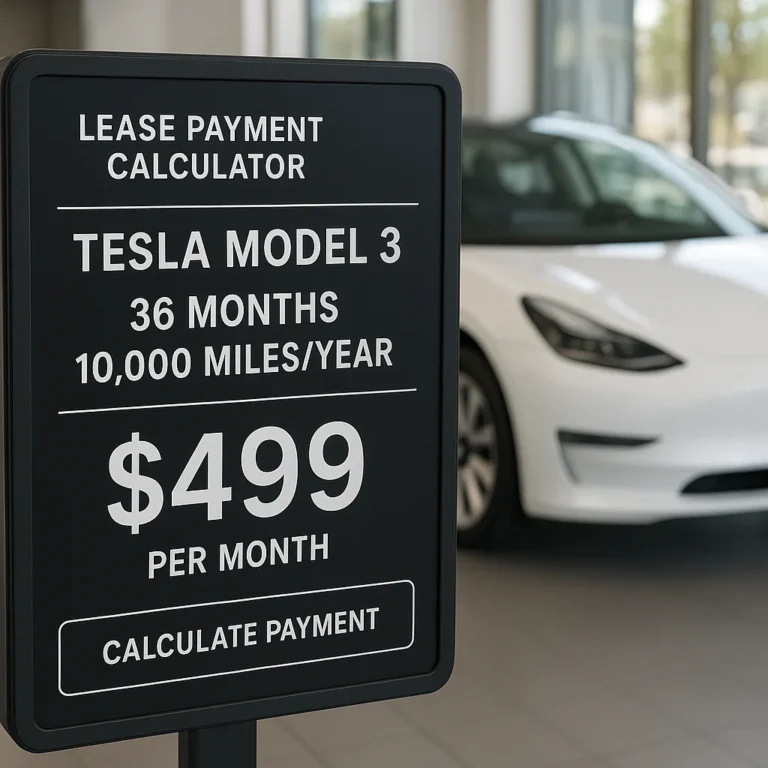
is a Tesla Model 3 lease? For most drivers, the sweet spot is a 36-month lease, offering the best balance of affordability, access to the latest tech, and manageable commitment. While 24-month
and 48-month options exist, our team at Car Leases™ consistently finds the three-year term hits just right for the majority of electric vehicle enthusiasts.
I remember my colleague, Mark, who was absolutely buzzing about getting into
his first EV. He initially eyed a 24-month Model 3 lease, thinking he’d want to upgrade super fast. But after crunching the numbers with our finance guru, Sarah, he realized the monthly payment jump wasn
‘t worth the extra flexibility. He opted for 36 months and hasn’t looked back, enjoying the perfect blend of new-car excitement and a comfortable budget.
This isn’t just about monthly payments, though. It’
s about aligning your electric dreams with practical realities, considering everything from evolving EV technology to your own driving habits. We’re here to help you navigate those choices with confidence.
Key Takeaways
- 36 Months is the
Sweet Spot: Most Tesla Model 3 leases are 36 months, providing a great balance of cost and vehicle freshness. - No Purchase Option: Tesla’s direct Model 3 leases typically do not allow you to buy the
car at the end of the term. - Mileage Limits are Crucial: Carefully select your annual mileage limit (10k, 12k, or 15k miles) to avoid costly
overage fees. - Credit Score Matters: A strong credit score is essential for securing the best lease rates and terms.
- Depreciation Protection: Leasing shields you from the direct impact of EV depreciation, which
can be significant.
Table of Contents
- ⚡️ Quick Tips and Facts
- A Brief History of Tesla Model 3 Leasing: From Early Days to Current Trends
- Understanding Tesla Model 3 Lease Durations: The Core Question
- Typical Lease Terms for the Model 3 🗓️
- Why Lease Terms Vary: Factors at Play 📊
- The Sweet Spot: Our Recommended Lease Lengths for Model 3 🎯
- The Pros and Cons of Different Model 3 Lease Lengths
-
3. Long-Term Leases (48-60+ Months): Lower Payments, Higher Commitment 🐢
-
Is Leasing a Tesla Model 3 Right for You? Weighing Your Options
-
Financial Considerations: Monthly Payments, Down Payments, and Fees 💸
-
Exploring Early Lease Termination Options (If Life Happens) 🚪
-
Real-World Anecdotes: Our Team’s Tesla Model 3 Leasing Stories
⚡️ Quick Tips and Facts
So, you’re
eyeing a sleek Tesla Model 3 and wondering about the lease game? You’ve come to the right place! We at Car Leases™ live and breathe automotive financing, and the Model 3 is a frequent topic of spirited debate in our office.
Here are some quick, digestible facts to get your electric dreams rolling:
- Typical Lease Lengths: Tesla Model 3 leases generally range from 24 to 48 months, with 36 months often being the sweet
spot for many drivers. While some lessors might offer longer terms, Tesla’s direct leasing program tends to stick to these common durations. - No Purchase Option (Usually): Unlike many traditional leases
, Tesla’s direct leasing program for the Model 3 typically does not offer a purchase option at the end of the term. This means you’ll return the car, not buy it out. This is a crucial distinction to understand
from the get-go! - Mileage Matters: Just like any lease, your agreed-upon annual mileage limit will significantly impact your monthly payment. Common options include 10,000, 1
2,000, or 15,000 miles per year. Exceeding these limits can lead to hefty overage fees, so choose wisely! - Gap Protection is Key: If your leased Model
3 is ever totaled, Gap Protection can save you from a financial nightmare. It covers the difference between what your insurance pays and what you still owe on the lease. We’ve seen firsthand how vital this is, as one
unfortunate lessee discovered when their new 2024 Model 3 was totaled just three months into a 36-month lease. Thankfully, their Tesla lease contract included Gap Protection, which is standard for Tesla leases
. - EV Credits & Leases: While federal EV tax credits often apply to purchases, they can sometimes be factored into lease agreements, effectively lowering your monthly payments. Always check the latest incentives! You can learn
more about how these credits might affect your options on our Electric Vehicle Leases page. - Depreciation Protection: Leasing a Model 3 means
you’re not directly exposed to the car’s depreciation, which can be a significant advantage, especially with rapidly evolving EV technology.
A Brief History of Tesla Model 3 Leasing: From Early Days to Current Trends

Ah, the Tesla Model 3. It burst onto the scene promising electric mobility
for the masses, and with it came a new era for EV leasing. When the Model 3 first launched, leasing options were a bit more restrictive, often requiring higher down payments or offering less flexible terms. Tesla, being a direct-to-consumer
company, initially focused heavily on outright sales, but as the market matured and consumer demand for flexibility grew, their leasing program evolved.
In the early days, securing a Model 3 lease felt almost like a secret handshake – not always widely
advertised or as straightforward as traditional manufacturers. However, as production ramped up and the Model 3 became a ubiquitous sight on our roads, Tesla streamlined its leasing process. They began offering more competitive rates and standardized terms, making it a much more accessible option
for those who preferred the lower monthly payments and flexibility of leasing over outright ownership.
A significant shift came with Tesla’s decision to generally remove the purchase option at the end of the lease term for the Model 3. This move
, while initially surprising to some, solidified Tesla’s strategy: they want their vehicles back to potentially repurpose them for their robotaxi fleet or to control the used EV market. This policy means that when your lease is up, you hand
back the keys – no buying it out to keep it in your garage. This is a critical piece of information for anyone considering a Model 3 lease today.
Today, Tesla Model 3 leasing is a well-oiled machine, integrated
directly into their online ordering process. While the terms are generally fixed, the convenience and the allure of driving a cutting-edge EV without the long-term commitment of ownership continue to draw in thousands of drivers. It’s a testament to how
far EV leasing has come, moving from a niche offering to a mainstream choice for many.
Understanding Tesla Model
3 Lease Durations: The Core Question
So, you’re asking the million-dollar question: “How long is a Tesla Model 3 lease?” It’s not just about the number of months; it’s about what
those months mean for your wallet, your driving habits, and your future automotive plans. Let’s break down the typical lease terms and what influences them.
Typical Lease Terms for the Model 3 🗓️
When you look at leasing a Tesla Model 3 directly from Tesla, you’ll generally find a fairly consistent range of options. We’ve observed that the most common lease
terms offered are:
- 24 Months (2 years): This is often considered a short-term lease, ideal for those who love to drive the latest tech or whose circumstances might change quickly.
- 36 Months (3 years): This is arguably the most popular and frequently chosen lease duration for the Model 3. It strikes a balance between lower monthly payments than a 24-month lease and the ability to upgrade to a newer model
relatively quickly. We’ve seen many drivers, like the one in the Leasehackr forum, opt for a 36-month lease on their new Model 3. - 48 Months
(4 years): A longer term that typically results in the lowest monthly payments, but also means a longer commitment to the vehicle.
While these are the standard offerings, it’s always a good idea to check Tesla’s official
leasing page for the most up-to-date options, as they can sometimes adjust their programs.
Why Lease Terms Vary: Factors at Play
📊
Why don’t all Model 3 leases last the same amount of time? Several key factors influence the lease terms offered and why you might choose one over another:
- Residual Value: This is perhaps the biggest player
. The residual value is the estimated value of the car at the end of the lease term. Tesla, or their leasing partners, calculate this based on market trends, expected depreciation, and the lease duration. A higher residual value generally
leads to lower monthly payments. Shorter leases often have higher residual values because the car depreciates less in a shorter period. - Market Demand & Incentives: When demand for the Model 3 is high, or when Tesla wants
to move inventory, they might offer more attractive terms on specific lease durations. Government incentives for EVs can also play a role, sometimes making certain lease lengths more financially appealing. - Technological Advancements: EVs, especially Teslas, are constantly
evolving. New features, battery improvements, and design refreshes can make a previous model feel “older” faster than a traditional internal combustion engine (ICE) car. Shorter leases allow you to upgrade to the latest tech more frequently.
Lessor’s Strategy: Tesla’s own strategic goals influence their lease offerings. As mentioned, their desire to retain vehicles for potential future services (like robotaxis) impacts the no-purchase-option policy and preferred lease lengths.
- Your Creditworthiness: While not directly changing the available lease terms, your credit score will heavily influence whether you qualify for the best rates on those terms. A strong credit score is crucial for securing favorable lease agreements. Dive
deeper into this on our Credit Score and Car Leasing page.
The Sweet Spot: Our Recommended Lease Lengths for Model 3 🎯
At Car Leases™, we often find ourselves guiding enthusiasts through this very decision. For the Tesla Model 3
, we generally lean towards the 36-month lease as the sweet spot for most drivers. Here’s why:
- Balance of Cost and Freshness: A 36-month lease typically offers a very
competitive monthly payment compared to a 24-month term, without locking you into the car for too long. You get to enjoy the latest Tesla technology for a significant period, but you’re also free to upgrade to a newer model
with updated features (or a completely different EV!) after three years. - Warranty Coverage: A 36-month lease usually keeps you well within Tesla’s standard warranty period, minimizing your risk of unexpected repair costs.
Technological Evolution: Three years is a good cycle for EV technology. You get to experience the current generation without feeling like you’re missing out on major advancements just around the corner.
However, if you’re someone who absolutely *
must* have the newest tech every two years, and the slightly higher monthly payment isn’t an issue, a 24-month lease could be your ideal choice. Conversely, if minimizing your monthly outlay is the absolute priority and you’
re comfortable with a longer commitment, a 48-month lease might be more appealing. Just remember, the longer the lease, the longer you’re tied to that specific vehicle and its technology.
The Pros and Cons of Different Model 3 Lease Lengths
Choosing the right lease length for your Tesla Model 3 is like picking the perfect
road trip playlist – it depends entirely on your mood, your destination, and how long you want the journey to last! Each term has its unique set of advantages and disadvantages. Let’s break them down.
1. Short-Term Leases (24-36 Months): Flexibility vs. Cost 💨
Short-term
leases, typically 24 or 36 months, are for the agile and the adventurous. You’re not afraid of commitment, but you prefer to keep your options open.
✅ The Pros:
- Always
Driving the Latest & Greatest: This is the ultimate perk! With a shorter lease, you’re constantly upgrading to the newest Model 3 iteration, enjoying the latest software updates, battery tech, and design tweaks. For an EV like the
Tesla, where technology evolves rapidly, this is a huge draw. - Lower Maintenance Headaches: Your Model 3 will likely be under its factory warranty for the entire lease term, meaning fewer worries about unexpected repair costs.
Flexibility for Life Changes: Life happens! A shorter lease offers more adaptability if your job, family situation, or financial circumstances change.
- Experience Different Models: If you’re curious about other EVs or even other
Tesla models (like the Model Y), a short lease lets you try out the Model 3 without a long-term commitment.
❌ The Cons:
- Higher Monthly Payments: Generally, shorter leases come with higher monthly payments
because the depreciation is spread over fewer months. - More Frequent “New Car” Costs: Every two or three years, you’ll be dealing with disposition fees, potential wear-and-tear charges, and the upfront costs (taxes, fees) of a new lease. The speaker in the first YouTube video, for example, incurred an $809 charge for minor repairs and a $495 disposition fee at the end of his 3-year Model 3 lease
. - Less Time to Enjoy: Just when you’ve mastered all the Model 3’s quirks and features, it’s time to give it back!
2. Standard Leases (36-48 Months): The Popular Choice ⚖️
The 36-to-4
8-month range is where most Model 3 lessees find their comfort zone. It’s the Goldilocks zone – not too short, not too long, but just right.
✅ The Pros:
- Balanced Monthly
Payments: These terms often offer a great balance between affordability and the ability to drive a relatively new car. You’ll typically see lower payments than a 24-month lease. - Good for Warranty Coverage: A 36-
month lease usually keeps you within the standard factory warranty, while a 48-month lease might push you towards the end of it, but still offers good coverage for most of the term. - Enough Time to Settle In: You
get ample time to truly enjoy and get comfortable with your Model 3, making it feel like “your” car without the long-term ownership commitment. - Predictable Costs: Over three to four years, your automotive budget
is relatively stable, primarily consisting of your monthly lease payment, insurance, and charging costs.
❌ The Cons:
- Still No Purchase Option: Remember, Tesla’s direct leases for the Model 3 generally don’t
offer a buyout option, regardless of the term length. - Mid-Cycle Tech: While you’ll still have a modern EV, by the end of a 48-month lease, newer Model 3 versions or
even entirely new Tesla models might have been released, potentially making your car feel a bit less cutting-edge. - Potential for Minor Wear & Tear: Over three or four years, minor dings, scratches, or tire wear are more likely
, which could lead to charges at lease return if not addressed.
3. Long-
Term Leases (48-60+ Months): Lower Payments, Higher Commitment 🐢
Longer leases, typically 48 months or more, are for those who prioritize the lowest possible monthly payment and are content with their vehicle for an
extended period.
✅ The Pros:
- Lowest Monthly Payments: This is the primary advantage. Spreading the depreciation over a longer period significantly reduces your monthly outlay, making a Model 3 more accessible on a tighter budget.
Less Frequent Car Shopping: You avoid the hassle and paperwork of getting a new car every few years.
- Extended Enjoyment: You get to enjoy your Model 3 for a substantial period, truly integrating it into your daily
life.
❌ The Cons:
- Outdated Technology Risk: In the fast-paced EV world, a car leased for five years could feel significantly older by the end of the term, especially with battery advancements and new
features constantly emerging. - Warranty Expiration: Depending on the term, you might find yourself outside the factory warranty for the latter part of your lease, potentially exposing you to repair costs.
- Higher Total Cost (Sometimes): While monthly payments are lower, the total amount paid over a very long lease term can sometimes approach or even exceed the cost of a shorter lease followed by another short lease, especially when you factor in potential wear and tear charges.
Tied Down:** A longer commitment means less flexibility if your needs or desires change. Getting out of a long-term lease early can be costly.
Ultimately, the best lease length for your Tesla Model 3 depends on your personal financial
situation, your driving habits, and how often you crave the thrill of a brand-new electric vehicle.
Decoding
Tesla’s Lease Program: What You Need to Know
Tesla’s approach to leasing is a bit different from traditional automakers, much like their approach to selling cars. Understanding these nuances is crucial before you sign on the dotted line. We
‘ve spent countless hours poring over lease agreements and talking to drivers, so let us give you the inside scoop.
Eligibility
Requirements for a Tesla Model 3 Lease ✅
So, you’re ready to join the electric revolution with a leased Model 3? Fantastic! But before you start configuring your dream car, let’s talk about what Tesla (or their leasing partners) will be looking for.
- Credit Score is King (or Queen!): This is non-negotiable. To qualify for the best lease rates on a Tesla Model 3, you’ll need a strong credit
score, typically in the “good” to “excellent” range (think 700+ FICO score). A lower score might still get you approved, but expect higher money factors (the equivalent of interest rates in a lease) and potentially
higher monthly payments. We have a whole section dedicated to understanding your Credit Score and Car Leasing to help you prepare.
Stable Income: Lessors want to see that you have a consistent and sufficient income to comfortably cover your monthly lease payments. They’ll likely ask for proof of income, such as pay stubs or tax returns.
- Debt
-to-Income Ratio: This is another financial health indicator. Lenders look at how much of your monthly income goes towards debt payments. A lower ratio is always better. - Age and Residency: You’ll need to be
at least 18 years old (or 19 in some states) and a legal resident of the country where you’re leasing. - Driving Record: While not always a primary factor for lease approval, a poor
driving record can significantly impact your insurance rates, which are a major part of your total monthly car cost.
Tesla works with various financial partners for its leasing program, such as Santander USA, as seen in the case of the totaled 2024
Model 3. While Tesla handles the front-end sales experience, the actual lease agreement will be with one of these financial institutions, and their specific criteria will apply.
Understanding Mileage Limits and Their Impact 🛣️
This is where many lessees get tripped up, and it’s crucial to get it right from the start. Mileage limits are a
fundamental part of any lease agreement, and a Tesla Model 3 lease is no different.
- Standard Options: Tesla typically offers annual mileage options like 10,000, 12,000,
or 15,000 miles per year. Some third-party lessors might offer slightly different increments. - Cost Implications: The lower the mileage limit, the lower your monthly payment will generally be. Why? Because a
car with fewer miles at the end of the lease has a higher residual value. - Over-Mileage Fees: This is the big one! Exceeding your agreed-upon mileage limit can be costly. Tesla’s overage
fees are usually around $0.25 to $0.30 per mile (this can vary, so always check your specific contract). Imagine driving 5,000 miles over your limit on a 3-
year lease – that’s an extra 15,000 miles, which at $0.25/mile, would be an additional $3,750! Ouch! - Our Advice: Be
brutally honest with yourself about your driving habits. If you commute a lot or love road trips, don’t skimp on the mileage. It’s almost always cheaper to pay for the higher mileage package upfront in your monthly payment than to face hefty
penalties at the end of the lease. The speaker in the first YouTube video drove his Model 3 for 18,000 miles over three years, which averages out to 6,000 miles per year. This is well within typical lease limits, suggesting he chose a lower mileage option or simply didn’t drive as much.
The Role of Residual Value in Your Lease Agreement 💰
The residual value is the unsung hero (or villain!) of every lease agreement. It’s a critical number that directly impacts your monthly payments.
What it is: The residual value is the estimated wholesale market value of your Tesla Model 3 at the end of your lease term. It’s expressed as a percentage of the vehicle’s MSRP.
-
How it works
: Your monthly lease payment is essentially calculated based on the difference between the car’s initial value (MSRP) and its residual value, plus interest (money factor), taxes, and fees, all spread over the lease term. -
Higher Residual Value = Lower Monthly Payments: If the leasing company predicts your Model 3 will retain a high percentage of its value, you’re financing a smaller amount of depreciation, leading to lower monthly payments.
Lower Residual Value = Higher Monthly Payments: Conversely, if the residual value is low, you’re financing more depreciation, resulting in higher monthly payments.
-
Tesla’s Unique Position: Tesla vehicles, especially the Model 3,
have historically held their value quite well compared to many ICE vehicles. This strong resale market can sometimes translate into favorable residual values for lessees. However, with the rapid pace of EV development and occasional price adjustments, residual values can fluctuate. -
No Purchase Option Impact: Since Tesla generally doesn’t offer a purchase option on Model 3 leases, the residual value primarily serves to determine your monthly payment, not a buyout price you’ll consider. This simplifies the end-of-
lease decision, but also means you can’t capitalize on a higher-than-expected residual by buying the car.
End-of-Lease Options: Return, Buyout, or Renew? 🤔
The end of a Tesla Model 3 lease is a bit more straightforward than many traditional leases, primarily due to Tesla’s “no purchase option”
policy.
- 1. Return the Vehicle: For most Model 3 lessees, this is the primary and often only option. You simply return the car to Tesla at the end of your lease term.
- What
to Expect: Before returning, you’ll need to schedule a final inspection. They’ll check for excess wear and tear (beyond normal use) and verify your mileage. Be prepared for potential charges for damages, missing equipment, or exceeding
your mileage limit. The speaker in the first YouTube video faced an $809 charge for minor repairs to the wheels and bumper, plus a $495 disposition fee. - Disposition Fee
: Almost all leases include a disposition fee, which covers the cost of preparing the vehicle for resale. This is typically a few hundred dollars and is outlined in your lease agreement. - 2. No Buyout Option: This is a critical
point to reiterate. Unlike many other brands, Tesla’s direct Model 3 leases generally do not allow you to purchase the vehicle at the end of the lease. This means you cannot buy out your beloved Model 3, even if you
‘ve fallen head over heels for it. This policy is a significant differentiator and one that potential lessees must be aware of from day one. - 3. Renew/New Lease: While you can’t renew that
specific Model 3 lease by buying it, you can certainly lease a new Tesla Model 3 (or another Tesla model) when your current lease concludes. This is a popular choice for those who love the Tesla experience and want to
continuously drive the latest technology. This is exactly what the lessee in the Leasehackr forum hoped to do after their Model 3 was totaled – lease another Tesla, potentially at a lower payment.
Understanding these end
-of-lease scenarios upfront will help you plan and avoid any surprises. Always review your lease agreement thoroughly for specific terms and conditions.
Is Leasing a Tesla Model 3 Right for You? Weighing Your Options
Deciding whether to lease a Tesla Model 3 or buy one is a classic automotive conundrum,
and for an EV, the considerations can be even more nuanced. We’ve seen countless drivers wrestle with this, and there’s no single “right” answer. It all boils down to your personal financial situation, driving habits, and how
you view vehicle ownership.
Lease vs. Buy: A Deep Dive for the Model 3
🚗💨
Let’s put the Tesla Model 3 under the microscope and compare leasing versus buying.
| Feature / Consideration | Leasing a Tesla Model 3
⚡️ Quick Tips and Facts
So, you’re eyeing
a sleek Tesla Model 3 and wondering about the lease game? You’ve come to the right place! We at Car Leases™ live and breathe automotive financing, and the Model 3 is a frequent topic of spirited debate in our
office. Here are some quick, digestible facts to get your electric dreams rolling:
- Typical Lease Lengths: Tesla Model 3 leases generally range from 24 to 48 months, with 36 months often
being the sweet spot for many drivers. While some lessors might offer longer terms, Tesla’s direct leasing program tends to stick to these common durations. - No Purchase Option (Usually): Unlike
many traditional leases, Tesla’s direct leasing program for the Model 3 typically does not offer a purchase option at the end of the term. This means you’ll return the car, not buy it out. This is a
crucial distinction to understand from the get-go! - Mileage Matters: Just like any lease, your agreed-upon annual mileage limit will significantly impact your monthly payment. Common options include 10
,000, 12,000, or 15,000 miles per year. Exceeding these limits can lead to hefty overage fees, so choose wisely! - Gap Protection
is Key: If your leased Model 3 is ever totaled, Gap Protection can save you from a financial nightmare. It covers the difference between what your insurance pays and what you still owe on the lease. We’ve seen firsthand
how vital this is, as one unfortunate lessee discovered when their new 2024 Model 3 was totaled just three months into a 36-month lease. Thankfully, their Tesla lease contract included Gap Protection, which
is standard for Tesla leases. - EV Credits & Leases: While federal EV tax credits often apply to purchases, they can sometimes be factored into lease agreements, effectively lowering your monthly payments. Always check
the latest incentives! You can learn more about how these credits might affect your options on our Electric Vehicle Leases page. - Dep
reciation Protection: Leasing a Model 3 means you’re not directly exposed to the car’s depreciation, which can be a significant advantage, especially with rapidly evolving EV technology.
A Brief History of Tesla Model 3 Leasing: From Early Days to Current Trends

Ah, the Tesla Model 3
. It burst onto the scene promising electric mobility for the masses, and with it came a new era for EV leasing. When the Model 3 first launched, leasing options were a bit more restrictive, often requiring higher down payments or offering less
flexible terms. Tesla, being a direct-to-consumer company, initially focused heavily on outright sales, but as the market matured and consumer demand for flexibility grew, their leasing program evolved.
In the early days, securing a Model
3 lease felt almost like a secret handshake – not always widely advertised or as straightforward as traditional manufacturers. However, as production ramped up and the Model 3 became a ubiquitous sight on our roads, Tesla streamlined its leasing process. They began offering more competitive
rates and standardized terms, making it a much more accessible option for those who preferred the lower monthly payments and flexibility of leasing over outright ownership.
A significant shift came with Tesla’s decision to generally remove the purchase option at the
end of the lease term for the Model 3. This move, while initially surprising to some, solidified Tesla’s strategy: they want their vehicles back to potentially repurpose them for their robotaxi fleet or to control the used EV market
. This policy means that when your lease is up, you hand back the keys – no buying it out to keep it in your garage. This is a critical piece of information for anyone considering a Model 3 lease today.
Today,
Tesla Model 3 leasing is a well-oiled machine, integrated directly into their online ordering process. While the terms are generally fixed, the convenience and the allure of driving a cutting-edge EV without the long-term commitment of ownership
continue to draw in thousands of drivers. It’s a testament to how far EV leasing has come, moving from a niche offering to a mainstream choice for many.
Understanding Tesla Model 3 Lease Durations: The Core Question
So, you’re asking the million-dollar question: “How long is a Tesla Model 3 lease?”
It’s not just about the number of months; it’s about what those months mean for your wallet, your driving habits, and your future automotive plans. Let’s break down the typical lease terms and what influences them.
Typical Lease Terms for the Model 3 🗓️
When you look at leasing a Tesla Model 3 directly from Tesla, you
‘ll generally find a fairly consistent range of options. We’ve observed that the most common lease terms offered are:
- 24 Months (2 years): This is often considered a short-term lease, ideal for
those who love to drive the latest tech or whose circumstances might change quickly. - 36 Months (3 years): This is arguably the most popular and frequently chosen lease duration for the Model 3. It strikes
a balance between lower monthly payments than a 24-month lease and the ability to upgrade to a newer model relatively quickly. We’ve seen many drivers, like the one in the Leasehackr forum, opt for a 36-
month lease on their new Model 3. - 48 Months (4 years): A longer term that typically results in the lowest monthly payments, but also means a longer commitment to the vehicle.
While these are the standard offerings, it’s always a good idea to check Tesla’s official leasing page for the most up-to-date options, as they can sometimes adjust
their programs.
Why Lease Terms Vary: Factors at Play 📊
Why don’t all Model 3 leases last the same
amount of time? Several key factors influence the lease terms offered and why you might choose one over another:
- Residual Value: This is perhaps the biggest player. The residual value is the estimated value of the car at
the end of the lease term. Tesla, or their leasing partners, calculate this based on market trends, expected depreciation, and the lease duration. A higher residual value generally leads to lower monthly payments. Shorter leases often have higher residual values
because the car depreciates less in a shorter period. - Market Demand & Incentives: When demand for the Model 3 is high, or when Tesla wants to move inventory, they might offer more attractive terms on specific lease
durations. Government incentives for EVs can also play a role, sometimes making certain lease lengths more financially appealing. - Technological Advancements: EVs, especially Teslas, are constantly evolving. New features, battery improvements, and design refreshes
can make a previous model feel “older” faster than a traditional internal combustion engine (ICE) car. Shorter leases allow you to upgrade to the latest tech more frequently. - Lessor’s Strategy: Tesla’s
own strategic goals influence their lease offerings. As mentioned, their desire to retain vehicles for potential future services (like robotaxis) impacts the no-purchase-option policy and preferred lease lengths. - Your Creditworthiness: While not
directly changing the available lease terms, your credit score will heavily influence whether you qualify for the best rates on those terms. A strong credit score is crucial for securing favorable lease agreements. Dive deeper into this on our Credit Score and Car Leasing page.
The Sweet Spot: Our Recommended Lease Lengths for Model 3 🎯
At Car Leases™, we often find ourselves guiding enthusiasts through this very decision. For the Tesla Model 3, we generally lean towards the 36
-month lease as the sweet spot for most drivers. Here’s why:
- Balance of Cost and Freshness: A 36-month lease typically offers a very competitive monthly payment compared to a 24
-month term, without locking you into the car for too long. You get to enjoy the latest Tesla technology for a significant period, but you’re also free to upgrade to a newer model with updated features (or a completely different EV!) after three years. - Warranty Coverage: A 36-month lease usually keeps you well within Tesla’s standard warranty period, minimizing your risk of unexpected repair costs.
- Technological Evolution: Three
years is a good cycle for EV technology. You get to experience the current generation without feeling like you’re missing out on major advancements just around the corner.
However, if you’re someone who absolutely must have the newest
tech every two years, and the slightly higher monthly payment isn’t an issue, a 24-month lease could be your ideal choice. Conversely, if minimizing your monthly outlay is the absolute priority and you’re comfortable with
a longer commitment, a 48-month lease might be more appealing. Just remember, the longer the lease, the longer you’re tied to that specific vehicle and its technology.
The Pros and Cons of Different Model 3 Lease Lengths
Choosing the right lease length for your Tesla Model 3 is like picking the perfect
road trip playlist – it depends entirely on your mood, your destination, and how long you want the journey to last! Each term has its unique set of advantages and disadvantages. Let’s break them down.
1. Short-Term Leases (24-36 Months): Flexibility vs. Cost 💨
Short-term leases, typically 24 or 36 months, are for the agile and the adventurous. You’re not afraid of commitment, but you prefer to keep your options open.
✅ The Pros:
*
Always Driving the Latest & Greatest: This is the ultimate perk! With a shorter lease, you’re constantly upgrading to the newest Model 3 iteration, enjoying the latest software updates, battery tech, and design tweaks. For an
EV like the Tesla, where technology evolves rapidly, this is a huge draw.
- Lower Maintenance Headaches: Your Model 3 will likely be under its factory warranty for the entire lease term, meaning fewer worries about unexpected repair
costs. - Flexibility for Life Changes: Life happens! A shorter lease offers more adaptability if your job, family situation, or financial circumstances change.
- Experience Different Models: If you’re curious about other
EVs or even other Tesla models (like the Model Y), a short lease lets you try out the Model 3 without a long-term commitment.
❌ The Cons:
- Higher Monthly Payments: Generally, shorter leases
come with higher monthly payments because the depreciation is spread over fewer months. - More Frequent “New Car” Costs: Every two or three years, you’ll be dealing with disposition fees, potential wear-and-tear charges
, and the upfront costs (taxes, fees) of a new lease. The speaker in the first YouTube video, for example, incurred an $809 charge for minor repairs to the wheels and bumper, plus a $495 disposition
fee at the end of his 3-year Model 3 lease. - Less Time to Enjoy: Just when you’ve mastered all the Model 3’s quirks and features, it’
s time to give it back!
2. Standard Leases (36-48 Months): The Popular Choice ⚖️
The 36-to-48-month range is where most Model 3 lessees find their comfort zone. It’s the Goldilocks zone – not too short, not too
long, but just right.
✅ The Pros:
- Balanced Monthly Payments: These terms often offer a great balance between affordability and the ability to drive a relatively new car. You’ll typically see lower payments than a
24-month lease. - Good for Warranty Coverage: A 36-month lease usually keeps you within the standard factory warranty, while a 48-month lease might push you towards the end of it
, but still offers good coverage for most of the term. - Enough Time to Settle In: You get ample time to truly enjoy and get comfortable with your Model 3, making it feel like “your” car without
the long-term ownership commitment. - Predictable Costs: Over three to four years, your automotive budget is relatively stable, primarily consisting of your monthly lease payment, insurance, and charging costs.
❌ The Cons:
-
Still No Purchase Option: Remember, Tesla’s direct leases for the Model 3 generally don’t offer a buyout option, regardless of the term length.
-
Mid-Cycle Tech: While you’
ll still have a modern EV, by the end of a 48-month lease, newer Model 3 versions or even entirely new Tesla models might have been released, potentially making your car feel a bit less cutting-edge. -
Potential for Minor Wear & Tear: Over three or four years, minor dings, scratches, or tire wear are more likely, which could lead to charges at lease return if not addressed.
3. Long-Term Leases (48-60+ Months): Lower Payments, Higher Commitment
🐢
Longer leases, typically 48 months or more, are for those who prioritize the lowest possible monthly payment and are content with their vehicle for an extended period.
✅ The Pros:
- Lowest Monthly Payments
: This is the primary advantage. Spreading the depreciation over a longer period significantly reduces your monthly outlay, making a Model 3 more accessible on a tighter budget. - Less Frequent Car Shopping: You avoid the hassle and paperwork
of getting a new car every few years. - Extended Enjoyment: You get to enjoy your Model 3 for a substantial period, truly integrating it into your daily life.
❌ The Cons:
Outdated Technology Risk:** In the fast-paced EV world, a car leased for five years could feel significantly older by the end of the term, especially with battery advancements and new features constantly emerging.
- Warranty Expiration:
Depending on the term, you might find yourself outside the factory warranty for the latter part of your lease, potentially exposing you to repair costs. - Higher Total Cost (Sometimes): While monthly payments are lower, the total amount
paid over a very long lease term can sometimes approach or even exceed the cost of a shorter lease followed by another short lease, especially when you factor in potential wear and tear charges. - Tied Down: A longer commitment means
less flexibility if your needs or desires change. Getting out of a long-term lease early can be costly.
Ultimately, the best lease length for your Tesla Model 3 depends on your personal financial situation, your driving habits, and how
often you crave the thrill of a brand-new electric vehicle.
Decoding Tesla’s Lease Program:
What You Need to Know
Tesla’s approach to leasing is a bit different from traditional automakers, much like their approach to selling cars. Understanding these nuances is crucial before you sign on the dotted line. We’ve spent countless hours por
ing over lease agreements and talking to drivers, so let us give you the inside scoop.
Eligibility Requirements for a Tesla
Model 3 Lease ✅
So, you’re ready to join the electric revolution with a leased Model 3? Fantastic! But before you start configuring your dream car, let’s talk about what Tesla (or their leasing partners) will be
looking for.
- Credit Score is King (or Queen!): This is non-negotiable. To qualify for the best lease rates on a Tesla Model 3, you’ll need a strong credit score,
typically in the “good” to “excellent” range (think 700+ FICO score). A lower score might still get you approved, but expect higher money factors (the equivalent of interest rates in a lease) and potentially
higher monthly payments. We have a whole section dedicated to understanding your Credit Score and Car Leasing to help you prepare.
Stable Income: Lessors want to see that you have a consistent and sufficient income to comfortably cover your monthly lease payments. They’ll likely ask for proof of income, such as pay stubs or tax returns.
*
Debt-to-Income Ratio: This is another financial health indicator. Lenders look at how much of your monthly income goes towards debt payments. A lower ratio is always better.
- Age and Residency: You’ll
need to be at least 18 years old (or 19 in some states) and a legal resident of the country where you’re leasing. - Driving Record: While not always a primary factor for lease
approval, a poor driving record can significantly impact your insurance rates, which are a major part of your total monthly car cost.
Tesla works with various financial partners for its leasing program, such as Santander USA, as seen in the
case of the totaled 2024 Model 3. While Tesla handles the front-end sales experience, the actual lease agreement will be with one of these financial institutions, and their specific criteria will apply.
Understanding Mileage Limits and Their Impact 🛣️
This is where many lessees get tripped up, and it’s crucial to get
it right from the start. Mileage limits are a fundamental part of any lease agreement, and a Tesla Model 3 lease is no different.
- Standard Options: Tesla typically offers annual mileage options like 10,00
0, 12,000, or 15,000 miles per year. Some third-party lessors might offer slightly different increments. - Cost Implications: The lower the mileage limit, the
lower your monthly payment will generally be. Why? Because a car with fewer miles at the end of the lease has a higher residual value. - Over-Mileage Fees: This is the big one! Exceeding your agreed
-upon mileage limit can be costly. Tesla’s overage fees are usually around $0.25 to $0.30 per mile (this can vary, so always check your specific contract). Imagine driving 5
,000 miles over your limit on a 3-year lease – that’s an extra 15,000 miles, which at $0.25/mile, would be an additional $3,7
50! Ouch! - Our Advice: Be brutally honest with yourself about your driving habits. If you commute a lot or love road trips, don’t skimp on the mileage. It’s almost always cheaper
to pay for the higher mileage package upfront in your monthly payment than to face hefty penalties at the end of the lease. The speaker in the first YouTube video drove his Model 3 for 18,00
0 miles over three years, which averages out to 6,000 miles per year. This is well within typical lease limits, suggesting he chose a lower mileage option or simply didn’t drive as much
.
The Role of Residual Value in Your Lease Agreement 💰
The residual value is the unsung hero (or villain!) of every lease agreement. It’s a critical number that directly impacts your monthly payments.
- What it is: The residual value is the estimated wholesale market value of your Tesla Model 3 at the
end of your lease term. It’s expressed as a percentage of the vehicle’s MSRP. - How it works: Your monthly lease payment is essentially calculated based on the difference between the car’s initial value (MSRP) and its residual value, plus interest (money factor), taxes, and fees, all spread over the lease term.
- Higher Residual Value = Lower Monthly Payments: If the leasing company predicts your Model 3 will
retain a high percentage of its value, you’re financing a smaller amount of depreciation, leading to lower monthly payments. - Lower Residual Value = Higher Monthly Payments: Conversely, if the residual value is low, you’
re financing more depreciation, resulting in higher monthly payments. - Tesla’s Unique Position: Tesla vehicles, especially the Model 3, have historically held their value quite well compared to many ICE vehicles. This strong resale market can
sometimes translate into favorable residual values for lessees. However, with the rapid pace of EV development and occasional price adjustments, residual values can fluctuate. - No Purchase Option Impact: Since Tesla generally doesn’t offer a purchase option
on Model 3 leases, the residual value primarily serves to determine your monthly payment, not a buyout price you’ll consider. This simplifies the end-of-lease decision, but also means you can’t capitalize on a higher-
than-expected residual by buying the car.
End-of-Lease Options: Return, Buyout
, or Renew? 🤔
The end of a Tesla Model 3 lease is a bit more straightforward than many traditional leases, primarily due to Tesla’s “no purchase option” policy.
- 1. Return the Vehicle:
For most Model 3 lessees, this is the primary and often only option. You simply return the car to Tesla at the end of your lease term. - What to Expect: Before returning, you’ll need
to schedule a final inspection. They’ll check for excess wear and tear (beyond normal use) and verify your mileage. Be prepared for potential charges for damages, missing equipment, or exceeding your mileage limit. The speaker in the first YouTube video faced an $809 charge for minor repairs to the wheels and bumper, plus a $495 disposition fee. - Disposition Fee: Almost all leases
include a disposition fee, which covers the cost of preparing the vehicle for resale. This is typically a few hundred dollars and is outlined in your lease agreement. - 2. No Buyout Option: This is a critical point to reiterate. Unlike
many other brands, Tesla’s direct Model 3 leases generally do not allow you to purchase the vehicle at the end of the lease. This means you cannot buy out your beloved Model 3, even if you’ve fallen
head over heels for it. This policy is a significant differentiator and one that potential lessees must be aware of from day one. - 3. Renew/New Lease: While you can’t renew that specific Model
3 lease by buying it, you can certainly lease a new Tesla Model 3 (or another Tesla model) when your current lease concludes. This is a popular choice for those who love the Tesla experience and want to continuously drive
the latest technology. This is exactly what the lessee in the Leasehackr forum hoped to do after their Model 3 was totaled – lease another Tesla, potentially at a lower payment.
Understanding these end-of
-lease scenarios upfront will help you plan and avoid any surprises. Always review your lease agreement thoroughly for specific terms and conditions. For more general information on lease endings, check out our Car Lease Basics section.
Is Leasing a Tesla Model
3 Right for You? Weighing Your Options
Deciding whether to lease a Tesla Model 3 or buy one is a classic automotive conundrum, and for an EV, the considerations can be even more nuanced. We’ve seen countless drivers
wrestle with this, and there’s no single “right” answer. It all boils down to your personal financial situation, driving habits, and how you view vehicle ownership.
Lease vs. Buy: A Deep Dive for the Model 3 🚗💨
Let’s put the Tesla Model 3 under the microscope and
compare leasing versus buying.
| Feature / Consideration | Leasing a Tesla Model 3