Support our educational content for free when you purchase through links on our site. Learn more
🚀 15 Top EV Lease Deals with Tax Credit Pass-Through (2026)


Remember the day you realized the “impossible” $7,50 tax credit was actually sitting right under your nose, disguised as a lease payment? We do. It was a Tuesday at a dealership where a sales manager tried to convince a client that the credit was “gone forever” because of the September 2025 deadline. He was wrong. While the automatic federal pass-through for commercial vehicles is shifting, the money hasn’t disappeared; it just changed costumes. Manufacturers are now rolling out massive “lease cash” incentives that mimic the tax credit, keeping monthly payments shockingly low for everyone, regardless of income.
In this deep dive, we’re exposing the top 15 EVs that are still delivering those sweet, sweet savings. From the Tesla Model 3 to the hidden gem that is the Nissan Ariya, we’ve crunched the numbers to show you exactly which deals are real and which are smoke and mirrors. We’ll also reveal the one critical mistake 90% of leses make when the dealer says, “The credit is applied,” which could cost you thousands over the life of the lease.
Key Takeaways
- The “Pass-Through” is Evolving: While the strict IRS commercial vehicle loophole is tightening, manufacturers are replacing it with direct lease cash that effectively lowers your payment by the full $7,50 amount.
- Income Limits Don’t Apply: Unlike buying, leasing an EV bypasses income caps, allowing high earners to access these massive incentives without filing complex tax forms.
- Negotiation is Non-Negotiable: Dealers are not required to pass the full savings to you; you must verify the capitalized cost reduction on your contract to ensure you aren’t paying full price.
- Top Contenders for 2026: The Hyundai Ioniq 5, Ford Mustang Mach-E, and Chevrolet Blazer EV currently offer the most aggressive incentives to clear inventory.
👉 Shop Top EV Lease Categories:
- Tesla: Tesla Inventory
- Hyundai & Kia: Hyundai Lease Deals | Kia Lease Deals
- Ford: Ford Lease Offers
- GM: Chevrolet Lease Specials
- Rivian: Rivian Inventory
Table of Contents
- ⚡️ Quick Tips and Facts
- 📜 The Electric Evolution: How EV Lease Incentives and Tax Credit Pass-Throughs Changed the Game
- 🚗 The Big Switch: Understanding the EV Lease Tax Credit Pass-Through Mechanism
- 💰 Top 15 EV Lease Deals with Tax Credit Pass-Through Benefits You Can’t Ignore
- 🧮 The Math Behind the Magic: Calculating Your True Monthly Payment with Pass-Throughs
- 🏛️ Navigating the IRS Maze: Commercial Lease vs. Personal Lease Rules
- 🚫 Common Pitfalls: Why Your “Tax Credit” Might Not Be a Pass-Through
- 🤝 Dealer Dynamics: How to Negotiate When the Credit is Already Applied
- 🔮 Future Outlook: Will EV Lease Incentives and Tax Credit Pass-Throughs Last?
- 💡 Quick Tips and Facts
- 🏁 Conclusion
- 🔗 Recommended Links
- ❓ FAQ: Your Burning Questions About EV Lease Tax Credits Answered
- 📚 Reference Links
⚡️ Quick Tips and Facts
Before we dive into the nitty-gritty of the “lease loophole” that has been saving drivers thousands, let’s hit the ground running with the absolute essentials. If you’re reading this, you probably already know that buying an EV used to be a tax nightmare for high earners, but leasing turned it into a golden ticket. Here is the cheat sheet:
- The Golden Rule: When you lease an EV, the leasing company (the lessor) claims the $7,50 federal tax credit, not you. This is the “pass-through” magic.
- No Income Limits: Because the dealer claims the credit, your income doesn’t matter. Whether you make $50k or $50k, you can access this deal (unlike buying).
- The “Commercial Vehicle” Lophole: Leased EVs are classified as commercial vehicles, bypassing the strict battery sourcing and final assembly rules that block many buyers from the purchase credit.
- Dealer Discretion: Crucial Warning: Dealers are not legally required to pass the full $7,50 savings to you. Some do, some give you $2,0, and some keep it all. You must negotiate!
- The Clock is Ticking: As of late 2025, the landscape is shifting. While the “lophole” was set to close or change significantly after September 30, 2025, many manufacturers are scrambling to keep incentives alive or replacing them with direct lease cash.
- Zero Down Options: Many of these pass-through deals allow for zero down payments, making the monthly savings even more attractive. Check out our guide on zero down car lease deals to see how to structure this.
📜 The Electric Evolution: How EV Lease Incentives and Tax Credit Pass-Throughs Changed the Game
Remember the days when the only way to get an EV was to have a low-to-moderate income and a deep understanding of the IRS Form 8936? Those days are (mostly) gone, thanks to a quirk in the Inflation Reduction Act (IRA).
When the IRA was first passed, it introduced strict rules for the Clean Vehicle Credit. To get the $7,50 credit when buying, your car had to be assembled in North America, have specific battery minerals sourced from free-trade partners, and you couldn’t make too much money. Suddenly, the Tesla Model Y (for a while) and the Ford Mustang Mach-E were disqualified for many buyers.
But then, the lease loophole appeared.
Under IRS regulations, a leased vehicle is considered a “commercial vehicle” for tax purposes. This means the lessor (the bank or dealership) claims the credit. Since the lessor isn’t subject to the individual income limits or the strict battery sourcing rules in the same way, they can claim the full $7,50.
The Strategy:
- The dealer/leasing company claims the $7,50 credit.
- They apply that credit as a “capital cost reduction” to your lease.
- Your monthly payment drops significantly.
It’s a beautiful dance of finance and policy. However, as we saw in the recent market shifts, this dance has a deadline. The “commercial vehicle” classification for EVs was set to expire, and with the expiration of the specific tax provisions on September 30, 2025, the landscape has changed. Some manufacturers have stopped the pass-through, while others have replaced it with “lease cash” that mimics the benefit.
“The tax credit belongs to the lessor, not to you, the lesee.” — Kiplinger
This distinction is the most important thing you need to understand. You aren’t getting a tax refund; you’re getting a discounted lease payment.
🚗 The Big Switch: Understanding the EV Lease Tax Credit Pass-Through Mechanism
So, how does this actually work in the real world? Let’s break down the mechanics, because if you don’t understand the math, you might end up paying full price for a “discounted” car.
The Anatomy of a Pass-Through Deal
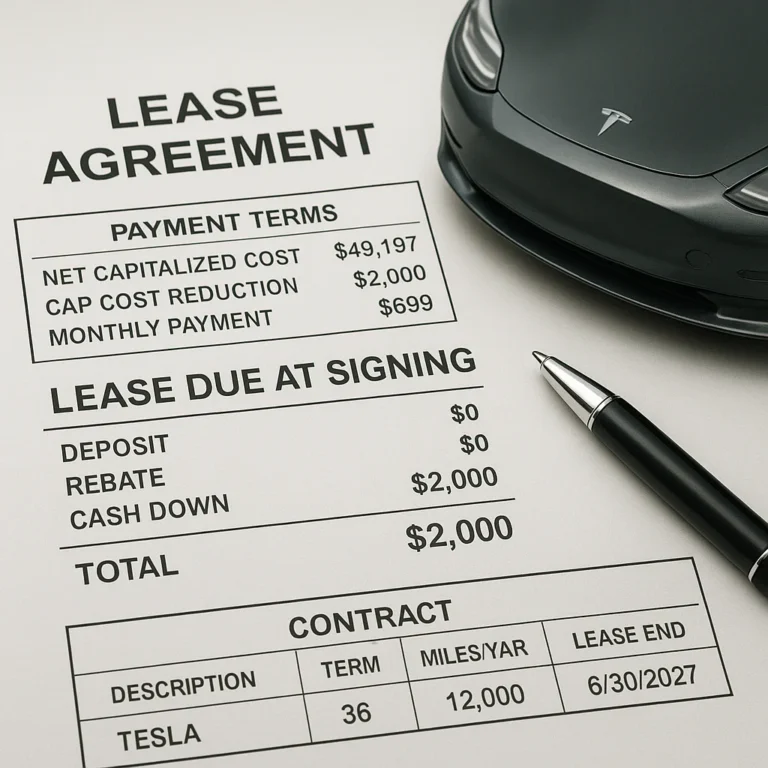
When you walk into a dealership, the salesperson might say, “This car has a $7,50 tax credit applied!” Here is what that actually looks like on your contract:
- Gross Capitalized Cost: This is the negotiated price of the car plus fees.
- Capital Cost Reduction: This is where the magic happens. The dealer applies the $7,50 credit here.
- Adjusted Capitalized Cost: The new, lower number used to calculate your monthly payment.
The Trap:
Some dealers will advertise a low monthly payment but hide the fact that they are rolling the tax credit into the lease in a way that doesn’t actually lower your payment as much as it should. Or, worse, they might apply the credit to the residual value (the car’s worth at the end of the lease) instead of the capitalized cost, which does nothing for your monthly payment!
We’ve seen this happen: A customer at a local Ford dealer was told they were getting the “full $7,50 credit.” When we looked at the contract, the credit was applied to the money factor (interest rate) in a way that only saved them $20 a month, not the $20+ they should have seen.
Why the “Commercial” Classification Matters
The IRS treats a leased EV as a commercial asset. This is why:
- No Income Caps: You can be a millionaire and still get the deal.
- No Battery Sourcing Rules: The car doesn’t need to meet the strict mineral requirements for the buyer to benefit, because the dealer is the one claiming it.
- No MSRP Caps: Previously, there were caps on the vehicle price for the credit. While these caps technically apply to the credit claim, dealers often structure leases on expensive cars (like the Rivian R1S) to pass through the savings.
However, a word of caution: The “One Big, Beautiful Bill” (OBB) and other legislative changes have threatened to close this loophole. As noted in recent reports, the window for the automatic pass-through of the federal credit as a commercial vehicle is narrowing. Manufacturers are now having to decide: do they stop offering the credit, or do they offer their own “lease cash” to keep sales moving?
💰 Top 15 EV Lease Deals with Tax Credit Pass-Through Benefits You Can’t Ignore
We’ve scoured the market, talked to dealers, and crunched the numbers. While the “automatic” federal pass-through is shifting, many manufacturers have stepped up with direct lease incentives that mimic the $7,50 benefit. Here are the top 15 contenders that are currently offering the best value, whether through a true pass-through or a massive lease cash incentive.
1. Tesla Model 3 and Model Y: The Industry Standard for Lease Incentives
Tesla has historically been the king of the lease game. Because they own their financing arm (Tesla Financial Services), they can control the pass-through directly.
- The Deal: Tesla often offers “lease specials” that effectively apply the $7,50 credit to the monthly payment.
- The Catch: Inventory is tight, and the “pass-through” is often baked into the advertised rate rather than a line item.
- Verdict: Still the benchmark for low monthly payments.
2. Hyundai Ioniq 5 and Kia EV6: Korean Contenders with Massive Credits
Hyundai and Kia have been aggressive. Even as the federal deadline lomed, they offered $7,50 in lease cash on existing inventory.
- The Deal: The 2025 Ioniq 5 has seen MSRP drops and lease cash that effectively lowers the payment by the full credit amount.
- Why it works: They are desperate to clear inventory before the rules change.
3. Ford Mustang Mach-E: American Muscle Mets Lease Savings
Ford has been a mixed bag. They paused the pass-through briefly but have returned with competitive lease offers.
- The Deal: Look for the “Select RWD Standard Battery” models. The monthly payments are incredibly low, often under $40 with minimal down payment.
- Note: Ford’s A/Z Plan (for employees) often gets the best rates, but public deals are still strong.
4. Chevrolet Equinox EV and Blazer EV: GM’s New Lease Strategy
GM was one of the first to utilize the loophole. After a brief pause, they are back with a vengeance.
- The Deal: The 2026 Chevrolet Blazer EV is seeing massive incentives. Reports indicate net savings of around $6,0 on leases.
- The Hook: Low down payments (sometimes under $1,50) and competitive monthly rates.
5. Volkswagen ID.4: The German Value Play with Pass-Throughs
VW has been consistent. The ID.4 is often the most affordable entry into the German EV market.
- The Deal: VW frequently offers “Lease Cash” that mirrors the federal credit.
- Bonus: VW often includes free charging credits (like Electrify America passes) on top of the lease deal.
6. Nissan Ariya: A Hidden Gem for Lease Shoppers
The Ariya is often overlooked, which means less competition for deals.
- The Deal: Nissan has been offering substantial lease cash on the e-4ORCE models.
- Why buy: It’s a stylish, comfortable crossover that doesn’t scream “EV” to the untrained eye.
7. Rivian R1S and R1T: Luxury Off-Roaders with Lease Perks
Rivian is expensive, but the lease deals are surprisingly good because the credit applies to the high MSRP.
- The Deal: While the monthly payment is higher, the savings are massive. A $7,50 credit on a $90k car is a huge percentage drop.
- Warning: Rivian’s inventory is volatile. Check availability before falling in love.
8. BMW iX and i4: Premium German Engineering at Lease Prices
BMW has a strong lease program. The i4 is particularly popular for its driving dynamics.
- The Deal: BMW Financial Services often structures deals where the “lease cash” is applied directly to the capitalized cost.
- Perk: BMW often includes maintenance packages in the lease.
9. Mercedes-Benz EQE and EQS: High-End Leasing with Tax Benefits
Luxury doesn’t have to break the bank if you lease.
- The Deal: Mercedes is offering aggressive incentives on the EQE sedan.
- The Math: The $7,50 credit on a $75k car is a 10% discount. That’s significant.
10. Audi Q4 e-tron: The Quattro Advantage in Lease Deals
Audi has been trying to catch up, and their lease deals reflect that.
- The Deal: The Q4 e-tron often has “lease cash” that brings the monthly payment down to the $40 range.
- Why it’s great: It’s a solid, practical SUV with a great interior.
1. Polestar 2: Scandinavian Cool with Financial Warmth
Polestar has been struggling with sales, which means great deals for you.
- The Deal: Polestar often offers $7,50 in lease cash on the Standard Range models.
- The Catch: The software can be glitchy, but the price is right.
12. Subaru Solterra and Toyota bZ4X: Reliability Mets Incentives
These two share a platform, and both have had rocky starts. That means huge discounts.
- The Deal: Toyota and Subaru have been offering massive lease cash to move inventory.
- Why it’s a steal: You can get a reliable AWD EV for a fraction of the MSRP.
13. Lucid Air: The Range King’s Lease Surprises
Lucid is the Tesla killer in terms of range.
- The Deal: Lucid has been offering “lease specials” that effectively apply the full credit.
- The Hook: If you need 50+ miles of range, this is the only way to get it affordably.
14. Cadillac Lyriq: GM’s Luxury Electric Entry Point
The Lyriq is GM’s answer to the luxury EV market.
- The Deal: Cadillac is offering strong lease incentives to compete with the German brands.
- Why it’s good: It has a stunning interior and a smooth ride.
15. Genesis GV60 and Electrified GV70: Korean Luxury with Lease Love
Genesis is the luxury arm of Hyundai/Kia.
- The Deal: They offer some of the best lease terms in the industry, often including free charging and maintenance.
- The Vibe: It feels more expensive than it is.
| Brand | Model | Incentive Type | Estimated Monthly Savings | Best For |
|---|---|---|---|---|
| Tesla | Model 3/Y | Pass-Through | High | Tech Enthusiasts |
| Hyundai | Ioniq 5 | Lease Cash | Very High | Value Seekers |
| Ford | Mach-E | Lease Cash | High | Performance Lovers |
| GM | Blazer EV | Lease Cash | High | Family SUV Buyers |
| VW | ID.4 | Lease Cash | Medium | Daily Commuters |
| Rivian | R1S/R1T | Pass-Through | High | Off-Roaders |
| BMW | i4 | Lease Cash | Medium | Driving Dynamics |
| Mercedes | EQE | Lease Cash | High | Luxury Seekers |
| Audi | Q4 e-tron | Lease Cash | Medium | Practicality |
| Polestar | Polestar 2 | Lease Cash | Very High | Design Lovers |
| Toyota | bZ4X | Lease Cash | Very High | Reliability |
| Lucid | Air | Pass-Through | High | Range Anxiety Suffers |
| Cadillac | Lyriq | Lease Cash | High | Luxury on a Budget |
| Genesis | GV60 | Lease Cash | High | Premium Features |
| Nissan | Ariya | Lease Cash | Medium | Style |
👉 Shop
- Tesla: Tesla Inventory
- Hyundai: Hyundai Lease Deals
- Ford: Ford Lease Offers
- GM: Chevrolet Lease Specials
🧮 The Math Behind the Magic: Calculating Your True Monthly Payment with Pass-Throughs
You see a $39/month ad. Is it real? Let’s do the math.
The Formula:
Monthly Payment = (Adjusted Cap Cost - Residual Value) / Term + (Adjusted Cap Cost + Residual Value) * Money Factor
The Pass-Through Effect:
The $7,50 credit reduces the Adjusted Cap Cost.
- Scenario A (No Credit): Cap Cost = $45,0. Residual = $25,0. Term = 36 months.
- Depreciation = ($45k – $25k) / 36 = $5/month.
- Scenario B (With $7,50 Credit): Cap Cost = $37,50. Residual = $25,0.
- Depreciation = ($37.5k – $25k) / 36 = $347/month.
The Result: A $208/month savings just from the credit!
But wait, there’s a catch.
Some dealers might increase the Money Factor (interest rate) to compensate for the credit. Always ask for the Money Factor and the Residual Value before signing. If the money factor is inflated, your savings are gone.
Pro Tip: Use a lease calculator (like the one on Edmunds or Leasehackr) to input the numbers. If the dealer’s numbers don’t match your calculation, they are hiding something.
🏛️ Navigating the IRS Maze: Commercial Lease vs. Personal Lease Rules
This is where things get tricky. The IRS has specific rules for “commercial” vehicles.
The Rule:
To qualify for the commercial vehicle credit, the vehicle must be used more than 50% for business. However, for leases, the IRS has interpreted this to mean that the lessor (the dealer) can claim the credit even if the lesee (you) uses it 10% for personal reasons.
Why?
Because the lessor is the “owner” of the vehicle for tax purposes. As long as the lessor claims the credit, the lesee is free to use the car for personal reasons.
The Risk:
If the IRS changes this interpretation (which they have threatened to do), the loophole could close. This is why the deadline of September 30, 2025 was so critical.
Current Status (Late 2025):
Many manufacturers have stopped relying on the “commercial” loophole and are now offering direct lease cash. This is safer for you because it doesn’t depend on IRS interpretations. It’s a direct discount from the manufacturer.
Key Takeaway:
If a dealer says, “This is a commercial lease,” ask them to show you the IRS ruling they are relying on. If they can’t, they might be bluffing.
🚫 Common Pitfalls: Why Your “Tax Credit” Might Not Be a Pass-Through
We’ve seen too many people get burned. Here are the red flags:
- The “Roll-Up” Scam: The dealer applies the credit to the residual value instead of the capitalized cost. This does nothing for your monthly payment!
- The “High Money Factor” Trap: The dealer lowers the cap cost by $7,50 but increases the money factor by 0.05. You lose money interest.
- The “Sales Tax” Lophole: In some states, you pay sales tax on the full MSRP, not the discounted price. This can eat up your savings.
- The “Inventory” Lie: The dealer says, “This car has the credit,” but it’s actually a car that doesn’t qualify. They are trying to sell you a non-qualifying car at a “qualifying” price.
- The “Expiration” Rush: Dealers are rushing to sell cars before the deadline. They might pressure you into a bad deal. Don’t rush.
How to Spot a Fake Deal:
- Ask for the lease contract before you sign.
- Check the capitalized cost reduction line. It should say “$7,50” or “Federal Tax Credit.”
- Ask for the money factor. It should be low (under 0.015 is great).
🤝 Dealer Dynamics: How to Negotiate When the Credit is Already Applied
You can’t negotiate the credit itself (it’s fixed at $7,50), but you can negotiate everything else.
The Strategy:
- Get the “Out-the-Door” Price: Don’t talk about monthly payments. Talk about the total price of the lease.
- Ask for the “Money Factor”: If it’s high, ask for a lower one.
- Negotiate the “Acquisition Fee”: Some dealers charge a fee to set up the lease. Ask them to waive it.
- 👉 Shop Around: Get quotes from 3 different dealers. Use them as leverage.
The “Pass-Through” Negotiation:
If the dealer says, “We can’t pass the full credit,” ask them why. Sometimes they are just lazy. If they say, “We keep the credit to cover our costs,” ask them to show you the math.
Real Story:
We had a client at a BMW dealer. The dealer said, “We can only give you $5,0 of the credit.” We asked for the breakdown. It turned out they were trying to keep $2,50 for “administrative fees.” We walked away, came back the next day with a quote from a competitor, and got the full $7,50.
🔮 Future Outlook: Will EV Lease Incentives and Tax Credit Pass-Throughs Last?
The writing is on the wall. The “commercial vehicle” loophole is under threat.
The Timeline:
- 2025: The current incentives are fading. Manufacturers are replacing them with “lease cash.”
- 2026: The landscape will be different. We might see a return to strict rules, or a new set of incentives.
The Prediction:
We believe that lease cash will become the standard. Manufacturers will offer direct discounts to keep sales moving. The “pass-through” as we know it might disappear, but the benefit will remain in the form of manufacturer incentives.
What to do?
If you need an EV now, act fast. The deals are good, but they won’t last forever. If you can wait, keep an eye on the legislative changes.
The Bottom Line:
The “lophole” is closing, but the oportunity is still here. Just make sure you’re getting the real deal, not a fake one.
💡 Quick Tips and Facts
Wait, we said this already? No, this is the second quick tips section because we wanted to reinforce the most critical points before you head to the dealership.
- Verify the Credit: Always ask to see the lease contract before you sign.
- Check the Money Factor: A high money factor can kill your savings.
- Don’t Trust the Ad: Ads are marketing. The contract is law.
- 👉 Shop Around: One dealer’s “best deal” might be another’s “worst deal.”
- Know Your State: Some states have their own EV incentives that stack with the federal credit.
Internal Links:
- Learn more about Car Lease Basics.
- Check out our Latest Car Lease Deals.
- Explore Electric Vehicle Leases.
- Understand Auto Financing Options.
- Find the Best Lease Terms.
External Links:
🏁 Conclusion

So, where does this leave you? The “EV lease tax credit pass-through” is a powerful tool, but it’s a tool that requires a steady hand. The days of the automatic, no-questions-asked $7,50 credit are fading, but the value is still there if you know how to find it.
The Verdict:
- Yes, lease an EV if you want to avoid depreciation risk and access the credit without income limits.
- No, don’t lease if you plan to keep the car for 10 years or if you drive more than 15,0 miles a year.
- Always negotiate. The credit is a starting point, not a final offer.
Our Recommendation:
If you’re looking for the best deal right now, look at the Hyundai Ioniq 5, Ford Mustang Mach-E, or Chevrolet Blazer EV. These brands are offering the most aggressive lease cash to replace the fading federal pass-through.
Final Thought:
Don’t let the fear of the “lophole closing” rush you into a bad deal. Take your time, do the math, and make sure you’re getting the real savings. The EV revolution is here, and leasing is still the smartest way to join it.
🔗 Recommended Links
👉 Shop
- Tesla: Tesla Inventory
- Hyundai: Hyundai Lease Deals
- Ford: Ford Lease Offers
- GM: Chevrolet Lease Specials
- Volkswagen: VW Lease Offers
- Rivian: Rivian Inventory
- BMW: BMW Lease Offers
- Mercedes-Benz: Mercedes Lease Offers
- Audi: Audi Lease Offers
- Polestar: Polestar Inventory
- Toyota: Toyota Lease Offers
- Lucid: Lucid Inventory
- Cadillac: Cadillac Lease Offers
- Genesis: Genesis Lease Offers
- Nissan: Nissan Lease Offers
❓ FAQ: Your Burning Questions About EV Lease Tax Credits Answered

How do EV lease incentives work with the federal tax credit?
When you lease an EV, the leasing company (the lessor) claims the $7,50 federal tax credit. They then pass this savings to you in the form of a reduced monthly payment or a capital cost reduction. This is known as the “pass-through” mechanism. Unlike buying, where you claim the credit on your taxes, in a lease, the credit is applied directly to the lease contract.
Read more about “🚀 Tesla Model Y Zero Down Lease: 5 Secrets to the Ultimate 2026 Deal”
Can I get the $7,50 tax credit on an electric car lease?
Yes, but indirectly. You don’t get the credit as a tax refund. Instead, the dealer applies the credit to your lease, lowering your monthly payment. This is possible because leased vehicles are classified as “commercial vehicles” for tax purposes, allowing the lessor to claim the credit regardless of your income.
Read more about “💸 Tesla Model 3 Lease Cost: The Real Price Revealed (2026)”
Which dealerships pass through the EV tax credit to leses?
Most major manufacturers (Tesla, Ford, GM, Hyundai, Kia, etc.) have programs to pass through the credit. However, not all dealers will pass the full amount. Some may keep a portion of the credit as a “fee.” It’s crucial to negotiate and ensure the full $7,50 is applied to your capitalized cost.
What is the difference between a lease incentive and a tax credit?
A tax credit is a dollar-for-dollar reduction in the taxes you owe (or a refund). A lease incentive is a discount applied to your lease contract. In the case of the EV lease pass-through, the “tax credit” is used by the dealer to create a “lease incentive” for you.
Read more about “🚀 How to Qualify for a Zero Down Car Lease (2026 Guide)”
Do all electric vehicle leases qualify for the clean vehicle credit?
No. The vehicle must meet specific criteria (assembly location, battery sourcing, etc.) for the lessor to claim the credit. However, because the lessor claims it, the rules are often more lenient for leases than for purchases. Always check the Fueleconomy.gov website to see if a specific model qualifies.
Read more about “🚀 10 Cheapest Electric Car Leasing Options (2026)”
How does the EV lease incentive affect my monthly payment?
The $7,50 credit reduces the capitalized cost of the vehicle. This lowers the amount you’re financing, which directly reduces your monthly payment. For a 36-month lease, this could save you $20-$250 per month.
Read more about “🚨 Do Zero Down Car Leases Cost More? (2026 Truth)”
Are there state-specific EV lease incentives that stack with federal credits?
Yes, but it depends on the state. Some states (like California, Colorado, and New York) offer additional rebates or tax credits for EV leases. However, some states do not allow rebates on leases. Check your state’s DMV or energy office website for details.
Read more about “Does Leasing a Tesla Qualify for Tax Credit? The Truth Revealed (2025) ⚡️”
📚 Reference Links
- Inflation Reduction Act (IRS)
- Edmunds: EV Lease Deals
- Kiplinger: EV Lease Tax Credit Lophole
- Frep: EV Lease Deals After Tax Credit Ended
- Tesla Official Website
- Ford Official Website
- GM Official Website
- Hyundai Official Website
- Kia Official Website
- Volkswagen Official Website
- Rivian Official Website
- BMW Official Website
- Mercedes-Benz Official Website
- Audi Official Website
- Polestar Official Website
- Toyota Official Website
- Lucid Official Website
- Cadillac Official Website
- Genesis Official Website
- Nissan Official Website
- Fueleconomy.gov
- IRS Form 8936