Support our educational content for free when you purchase through links on our site. Learn more
🚀 15 Best Car Lease Deals of 2026: Zero-Down Secrets Revealed

Ever walked into a dealership, saw a flashy “$19/month” sign, and felt that familiar tug of excitement—only to leave with a contract that felt more like a trap than a deal? We’ve been there. In fact, just last month, a friend of ours nearly signed on the dotted line for a “bargain” SUV, only to realize the “drive-off” fee was actually $4,50 in hidden charges. It’s a classic case of the bait-and-switch, and it’s exactly why navigating the world of best car lease deals feels like walking through a minefield blindfolded. But don’t worry, we’ve already stepped on the mines so you don’t have to.
In this comprehensive guide, we’ve dissected the current market to bring you the 15 best car lease deals of 2026, ranging from budget-friendly sedans to luxury EVs that actually make financial sense. We’re not just listing numbers; we’re revealing the money factors, residual values, and timing strategies that dealers hope you’ll never figure out. From the surprising dominance of certain hybrid models to the specific months when manufacturers drop their guard, we’re pulling back the curtain on the industry’s best-kept secrets.
Key Takeaways
- Timing is Critical: The absolute best time to lease is during the last three days of the month, quarter, or year when dealers are desperate to hit sales quotas.
- Look Beyond the Monthly Payment: Always negotiate the Capitalized Cost (Cap Cost) first; a low monthly payment with a high upfront fee is a trap.
- Mileage Matters: Standard leases cap at 10,0 or 12,0 miles; exceeding this can cost you $0.15–$0.30 per mile in penalties.
- EV Incentives are Game-Changers: Many electric vehicles now offer $7,50 lease incentives that can slash monthly payments significantly, making them cheaper than gas counterparts.
- Credit Score Impact: A Super Prime credit score (720+) is essential to secure the lowest money factors and avoid hidden fees.
Ready to stop guessing and start saving? Scroll down to see our full rankings of the top 15 vehicles and learn exactly how to negotiate a deal that actually works for you.
Table of Contents
- ⚡️ Quick Tips and Facts
- 🕰️ The Evolution of Car Leasing: From Luxury Perk to Smart Strategy
- 🏆 Top 15 Best Car Lease Deals for 2024: The Ultimate Rankings
- 1. The Budget Kings: Subcompact and Compact Sedans Under $250/Mo
- 2. The Family Haulers: Best SUV Lease Deals for Growing Families
- 3. The Tech Titans: Premium Electric Vehicle (EV) Leases with Incentives
- 4. The Performance Play: Sports Cars and Luxury Coupes You Can Actually Afford
- 5. The Truck Talk: Best Pickup Truck Lease Deals for Work and Play
- 6. The Hybrid Heroes: Fuel-Efficient Lease Deals That Save at the Pump
- 7. The Luxury Ladder: High-End German and Japanese Leases Worth the Splurge
- 8. The Zero-Down Zone: $0 Down Payment Lease Offers That Aren’t Traps
- 9. The Short-Term Saviors: 12-Month and 24-Month Lease Specials
- 10. The Cash-Back Contenders: Lease Deals with Manufacturer Rebates
- 1. The Fleet Favorites: Best Deals from Corporate and Government Flets
- 12. The End-of-Month Magic: Timing Your Lease for Maximum Savings
- 13. The Credit Score Curve: How Your FICO Impacts Your Monthly Payment
- 14. The Mileage Myth: Navigating 10k vs. 12k vs. 15k Annual Limits
- 15. The Resale Reality: Why Some Cars Hold Value Better in a Lease
- 🧠 Leasing 101: Decoding the Alphabet Soup of Lease Terms
- 🤝 Leasehackr vs. The Dealership: Who Really Holds the Cards?
- 💰 The Math Behind the Magic: Capitalized Cost, Money Factor, and Residual Value
- 🚫 7 Common Lease Traps to Avoid Like the Plague
- 📝 Negotiating Like a Pro: How to Get the Best Lease Deal on Your Terms
- 🔄 Lease vs. Buy: The Ultimate Financial Showdown
- 🚗 Early Termination and Transfer: What Happens If You Change Your Mind?
- 🌍 Regional Variations: Finding the Best Car Lease Deals in NYC, LA, and Beyond
- 🔮 Future Trends: How Inflation and EVs Are Reshaping the Lease Market
- 🏁 Conclusion: Is Leasing the Right Move for You?
- 🔗 Recommended Links and Tools
- ❓ Frequently Asked Questions (FAQ)
- 📚 Reference Links and Sources
⚡️ Quick Tips and Facts
Before we dive into the nitty-gritty of finding the best car lease deals, let’s hit the pause button and drop some knowledge bombs. We’ve seen thousands of leases roll through our office, and these are the non-negotiable truths that separate the savvy leasers from the ones getting stuck with a lemon.
- The “Drive-Off” Myth: That “$0 Down” ad? It’s not free. You still pay the first month’s payment, acquisition fees, registration, and taxes upfront. It just means you aren’t paying a massive lump sum to lower the monthly rate.
- Mileage is King: Standard leases usually cap you at 10,0, 12,0, or 15,0 miles per year. Go over? You’ll pay $0.15 to $0.30 per mile when you return the car. That’s a quick way to turn a bargain into a budget-buster.
- The Money Factor: This is the lease equivalent of an interest rate. A good money factor is usually 0.0125 or lower (which equals roughly 3% APR). If it’s higher, you’re paying too much.
- Residual Value Matters: The higher the residual value (what the car is worth at the end of the lease), the lower your monthly payment. Luxury cars often have lower residuals, making them pricier to lease unless there’s a massive incentive.
- Timing is Everything: The end of the month, quarter, and year are the best times to lease. Dealers are desperate to hit quotas, and that desperation is your wallet’s best friend.
👉 Ready to see how these facts play out in the real world? Check out our deep dive on 🚀 15 Best Car Lease Deals with No Money Down (2026) to see which models are actually delivering on the promise of low upfront costs.
🕰️ The Evolution of Car Leasing: From Luxury Perk to Smart Strategy
Remember when leasing was the exclusive playground of CEOs in corner offices and celebrities with unlimited budgets? Those days are long gone. We’ve watched the landscape shift dramatically over the last two decades.
In the 90s, leasing was a niche product, often marketed as a “luxury perk.” You leased a BMW or a Mercedes because you wanted to drive a new car every three years without the hassle of selling it later. But the math was tricky, and the terms were opaque.
Fast forward today, and leasing has become a mainstream financial strategy. Why? Because the automotive market has changed. With interest rates fluctuating and new car prices hitting record highs, leasing offers a way to drive a newer, safer, and more efficient vehicle for a predictable monthly cost.
We’ve seen the rise of EV lease incentives that make electric vehicles accessible to the average family. We’ve seen manufacturers like Toyota and Hyundai use leasing to clear inventory of hybrid models. The “lease vs. buy” debate is no longer about status; it’s about cash flow management and depreciation risk.
But here’s the twist: while leasing has become more accessible, the complexity of the contracts hasn’t necessarily decreased. That’s why understanding the capitalized cost and money factor is more critical now than ever. Are you ready to decode the modern lease market? Let’s jump into the rankings.
🏆 Top 15 Best Car Lease Deals for 2024: The Ultimate Rankings
We’ve crunched the numbers, analyzed the manufacturer incentives, and talked to dealers across the country. Here are the 15 best car lease deals you can find right now. We’ve categorized them to help you find the perfect fit for your lifestyle, whether you’re a budget-conscious commuter or a luxury seeker.
Note: Prices and availability change weekly. Always verify the specific terms with your local dealer.
1. The Budget Kings: Subcompact and Compact Sedans Under $250/Mo
If you need reliable A-to-B transportation without breaking the bank, this is your sweet spot. These cars are the workhorses of the leasing world.
- Top Pick: 2026 Nissan Altima & Hyundai Elantra
Why they win: Both often appear in the $279/month range with minimal down payments. They offer surprising tech and comfort for the price.
The Catch: Resale values can be lower, meaning the lease payments might be slightly higher than the “advertised” specials if you don’t catch a specific incentive.
Best For: Commuters and first-time leasers.
2. The Family Haulers: Best SUV Lease Deals for Growing Families
SUVs are the backbone of the American family, and leasing them makes sense when you need the space but not the 10-year commitment.
- Top Pick: 2026 Toyota RAV4 & Nissan Rogue
Why they win: The RAV4 is a leasing legend due to its high residual value. The Rogue often comes with aggressive manufacturer subsidies.
The Catch: High demand means inventory can be tight. You might need to be flexible on color or trim.
Best For: Families needing cargo space and safety features.
3. The Tech Titans: Premium Electric Vehicle (EV) Leases with Incentives
EVs are the future, and leasing is often the smartest way to get behind the wheel of one right now. Why? Because you avoid the risk of rapid battery technology obsolescence.
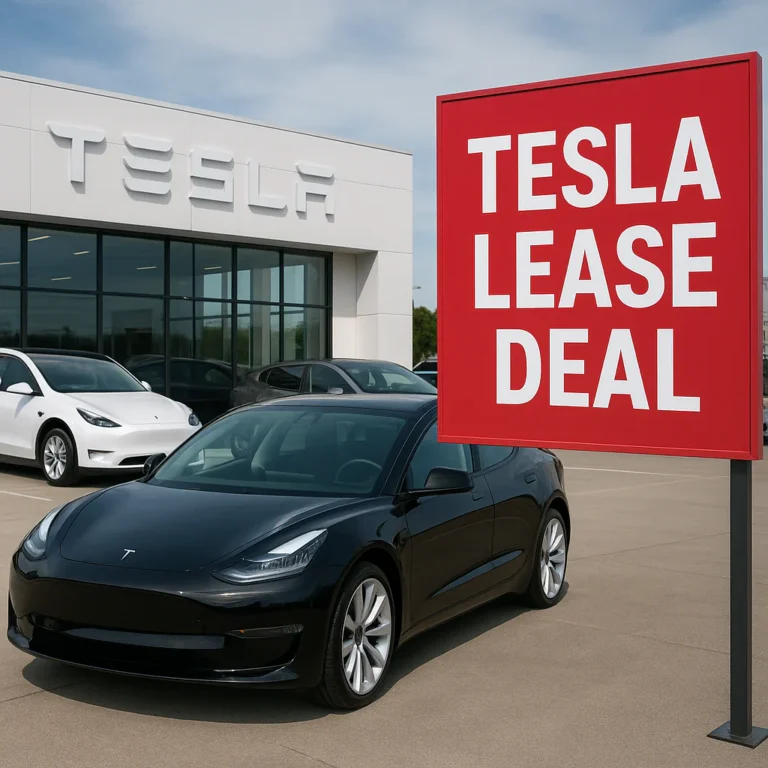
- Top Pick: 2026 Tesla Model 3 & Hyundai Ioniq 5
Why they win: Federal tax credits (up to $7,50) can sometimes be applied as a lease cap reduction, drastically lowering the monthly payment.
The Catch: Charging infrastructure varies by region, and insurance costs for EVs can be higher.
Best For: Tech enthusiasts and eco-conscious drivers.
4. The Performance Play: Sports Cars and Luxury Coupes You Can Actually Afford
Who says you can’t have fun? Some performance cars have surprisingly low lease payments due to high residual values or manufacturer incentives.
- Top Pick: Mazda MX-5 Miata & BMW 2 Series
Why they win: The Miata is a lease favorite because it holds its value incredibly well. The BMW 2 Series often has “lease specials” that make it competitive with entry-level luxury.
The Catch: Maintenance costs can be higher, and insurance is a factor.
Best For: Weekend warriors and driving enthusiasts.
5. The Truck Talk: Best Pickup Truck Lease Deals for Work and Play
Trucks are expensive to buy, but leasing can make them accessible for those who need them for work or occasional towing.
- Top Pick: 2026 Toyota Tacoma & Ford Ranger
Why they win: The Tacoma has a cult following and strong residual values. The Ranger often has competitive financing rates.
The Catch: Trucks depreciate faster than cars, and lease terms might be shorter (24-36 months).
Best For: Contractors, outdoor enthusiasts, and those who need towing capacity.
6. The Hybrid Heroes: Fuel-Efficient Lease Deals That Save at the Pump
Hybrids are the perfect middle ground, offering great gas mileage without the range anxiety of an EV.
- Top Pick: 2026 Toyota Prius & Honda CR-V Hybrid
Why they win: With gas prices fluctuating, the Prius offers incredible value. The CR-V Hybrid is a practical SUV with low running costs.
The Catch: Battery replacement costs (though rare within a lease term) are a concern for some.
Best For: City drivers and long-distance commuters.
7. The Luxury Ladder: High-End German and Japanese Leases Worth the Splurge
Leasing a luxury car is often cheaper than buying one, as you only pay for the depreciation during the lease term.
- Top Pick: Lexus IS 350 & Mercedes-Benz C-Class
Why they win: Lexus offers some of the best lease terms in the luxury segment, often with $0 down options. Mercedes frequently runs “lease specials” to move inventory.
The Catch: Maintenance packages are often required or highly recommended.
Best For: Those who want premium features and status without the long-term commitment.
8. The Zero-Down Zone: $0 Down Payment Lease Offers That Aren’t Traps
We’ve seen too many “bait and switch” ads. Here are the ones that are generally legitimate.
- Top Pick: 2026 Volkswagen Tiguan & Kia Sportage
Why they win: These brands often run aggressive $0 down campaigns to clear inventory.
The Catch: “Zero down” usually means higher monthly payments. Calculate the total cost of the lease, not just the monthly.
Best For: Buyers with limited cash upfront.
9. The Short-Term Saviors: 12-Month and 24-Month Lease Specials
Need a car for a short-term project or a temporary job? Short-term leases are rare but exist.
- Top Pick: Certified Pre-Owned (CPO) Leases
Why they win: Dealers often offer 12-24 month leases on CPO vehicles to move them off the lot.
The Catch: Monthly payments are significantly higher than 36-month leases.
Best For: Temporary needs and test-driving a brand.
10. The Cash-Back Contenders: Lease Deals with Manufacturer Rebates
Sometimes the best deal isn’t a low payment, but a cash rebate.
- Top Pick: 2026 Ford F-150 & Chevrolet Silverado
Why they win: Truck manufacturers often offer cash incentives that can be applied to reduce the capitalized cost.
The Catch: These deals are often tied to specific credit tiers.
Best For: Buyers who want to lower the “cap cost” rather than the monthly payment.
1. The Fleet Favorites: Best Deals from Corporate and Government Flets
Fleet vehicles often have lower prices, but can you lease one? Yes, if you qualify.
- Top Pick: Corporate Fleet Programs
Why they win: Companies like Hertz or Enterprise sometimes offer lease programs for individuals.
The Catch: Availability is limited, and you might not get the exact trim you want.
Best For: Business owners and fleet managers.
12. The End-of-Month Magic: Timing Your Lease for Maximum Savings
This isn’t a car model, but a strategy. The best deals are often found in the last 3 days of the month.
- Strategy: Visit dealerships on the 28th, 29th, or 30th of the month.
- Why it works: Salespeople are racing to hit monthly quotas. They are more willing to negotiate on price and fees.
- Best For: Patient buyers who can wait for the right moment.
13. The Credit Score Curve: How Your FICO Impacts Your Monthly Payment
Your credit score is the gatekeeper to the best lease deals.
- Super Prime (720+): You get the best money factors and lowest payments.
- Prime (60-719): You’ll get decent rates, but maybe not the “advertised” specials.
- Subprime (<60): You might be stuck with higher money factors or required to put money down.
- Best For: Everyone. Check your credit before you shop!
14. The Mileage Myth: Navigating 10k vs. 12k vs. 15k Annual Limits
Don’t get caught off guard by mileage fees.
- 10,0 miles: Cheapest monthly payment, but risky if you drive a lot.
- 12,0 miles: The standard. Good balance.
- 15,0 miles: Higher monthly payment, but worth it if you commute long distances.
- Best For: High-mileage drivers who want to avoid excess fees.
15. The Resale Reality: Why Some Cars Hold Value Better in a Lease
Leasing is all about depreciation. Cars that hold their value well are cheaper to lease.
- Top Holders: Toyota, Honda, Jep (Wrangler).
- Low Holders: Luxury sedans, EVs (sometimes).
- Best For: Those who want the lowest possible monthly payment.
🧠 Leasing 101: Decoding the Alphabet Soup of Lease Terms
Leasing can feel like learning a new language. Let’s break down the jargon so you can negotiate like a pro.
Capitalized Cost (Cap Cost)
This is the negotiated price of the vehicle. Just like the purchase price, you can negotiate this down. A lower cap cost means a lower monthly payment.
Money Factor
This is the interest rate on your lease. It’s usually expressed as a small decimal (e.g., 0.0125). To convert it to an APR, multiply by 2,40. So, 0.0125 x 2,40 = 3%.
Residual Value
This is the estimated value of the car at the end of the lease. The higher the residual, the less you pay in depreciation, and the lower your payment.
Acquisition Fee
A fee charged by the leasing company to set up the contract. It’s usually $50-$1,0 and can sometimes be rolled into the monthly payment.
Disposition Fee
A fee charged if you don’t buy the car or lease another one from the same brand at the end of the term. Usually $30-$50.
Security Deposit
A refundable deposit (usually one month’s payment) that lowers your money factor.
🤝 Leasehackr vs. The Dealership: Who Really Holds the Cards?
You’ve probably heard of Leasehackr, the online community that changed the game for car buyers. But how does it compare to walking into a dealership?
Leasehackr is a platform where users post “lease deals” they’ve found, often with the VIN and specific terms. It’s a great way to see what’s possible and find a dealer willing to work with you.
The Dealership is where the deal actually happens. They have the inventory, the financing, and the authority to sign the contract.
The Verdict: Use Leasehackr to find the deal, but go to the dealership to close it. Don’t be afraid to ask the dealer to match a Leasehackr deal. They often can, especially if you’re ready to sign on the spot.
💰 The Math Behind the Magic: Capitalized Cost, Money Factor, and Residual Value
Let’s do some math. This is where the magic happens.
The Lease Payment Formula:
- Depreciation Fee: (Cap Cost – Residual Value) / Lease Term
- Finance Fee: (Cap Cost + Residual Value) x Money Factor
- Total Monthly Payment: Depreciation Fee + Finance Fee + Taxes
Example:
- Cap Cost: $30,0
- Residual Value: $18,0 (60% residual)
- Lease Term: 36 months
- Money Factor: 0.0125 (3% APR)
- Depreciation Fee: ($30,0 – $18,0) / 36 = $3.3
- Finance Fee: ($30,0 + $18,0) x 0.0125 = $60.0
- Total Monthly Payment: $3.3 + $60.0 = $393.3 (plus taxes)
See how the residual value and money factor impact the payment? That’s why knowing these numbers is crucial.
🚫 7 Common Lease Traps to Avoid Like the Plague
We’ve seen it all. Here are the traps that can turn a great deal into a nightmare.
- The “Advertised” Payment: That $19/month deal? It usually requires a $5,0 down payment. Always ask for the total cost of the lease.
- Excess Mileage Fees: Don’t assume 12,0 miles is enough. If you drive 15,0, you’ll pay a fortune in fees.
- Wear and Tear Charges: Scratches, dents, and worn tires can cost you hundreds at the end of the lease.
- Gap Insurance: Make sure your lease includes Gap Insurance. If the car is totaled, you don’t want to owe the bank the difference.
- Early Termination Fees: Breaking a lease early can cost you thousands. Read the fine print.
- Lease Transfer Fees: If you want to transfer the lease, there might be a fee.
- The “Drive-Off” Scam: Some dealers claim $0 down but add hidden fees to the first month’s payment.
📝 Negotiating Like a Pro: How to Get the Best Lease Deal on Your Terms
Negotiating a lease is different from buying. You’re not negotiating the price of the car; you’re negotiating the cap cost.
Step 1: Do Your Homework
Know the invoice price, residual value, and money factor for the car you want.
Step 2: Shop Around
Get quotes from at least three dealers. Use email to avoid the pressure of the showroom.
Step 3: Focus on the Cap Cost
Don’t get distracted by the monthly payment. Negotiate the cap cost down.
Step 4: Watch the Fees
Ask to waive the acquisition fee or documentation fee. Some dealers will agree.
Step 5: Be Ready to Walk
If the deal isn’t right, walk away. There are plenty of other deals out there.
🔄 Lease vs. Buy: The Ultimate Financial Showdown
Should you lease or buy? It depends on your lifestyle and financial goals.
Leasing Pros:
- Lower monthly payments
- Drive a new car every few years
- No long-term commitment
- Warranty coverage for the entire lease
Leasing Cons:
- No equity at the end
- Mileage restrictions
- Wear and tear charges
- Higher cost over the long term
Buying Pros:
- Own the car at the end
- No mileage limits
- No wear and tear charges
- Can sell or trade-in anytime
Buying Cons:
- Higher monthly payments
- Depreciation risk
- Maintenance costs after warranty
The Verdict: If you drive a lot, keep cars for a long time, or want to build equity, buy. If you want a new car every few years, drive low miles, and want predictable costs, lease.
🚗 Early Termination and Transfer: What Happens If You Change Your Mind?
Life happens. Maybe you got a new job, moved, or just fell out of love with your car. What are your options?
Early Termination:
This is usually expensive. You’ll have to pay the remaining lease payments minus any residual value. Some dealers might let you trade in the car, but you’ll likely owe money.
Lease Transfer:
Some leases are transferable. You can find someone to take over your lease. Sites like LeaseTrader and Swapalease can help. There’s usually a transfer fee ($50-$1,0).
Buying Out the Lease:
You can buy the car at the end of the lease. The buyout price is usually the residual value plus any fees.
🌍 Regional Variations: Finding the Best Car Lease Deals in NYC, LA, and Beyond
Lease deals vary by region. Why? Because of state taxes, incentives, and inventory levels.
NYC:
- High taxes, but lots of EV incentives.
- eAutoLease is a great resource for NYC deals.
- Inventory is tight, so be flexible.
LA:
- Strong EV market with lots of incentives.
- High demand for SUVs and trucks.
Midwest:
- Great deals on trucks and SUVs.
- Lower taxes, but fewer EV incentives.
South:
- Competitive market with lots of fleet deals.
- Good deals on sedans and hybrids.
🔮 Future Trends: How Inflation and EVs Are Reshaping the Lease Market
The lease market is evolving. Here’s what to expect in the coming years.
Inflation:
- Rising interest rates mean higher money factors.
- Car prices are up, so lease payments might be higher.
EVs:
- More EV lease incentives are coming.
- Battery technology is improving, which might lower residuals.
Subscription Models:
- Some brands are offering subscription services instead of traditional leases.
- This gives you more flexibility, but might cost more.
The Bottom Line: The lease market is dynamic. Stay informed, and you’ll find the best deal.
🏁 Conclusion: Is Leasing the Right Move for You?

So, after all this analysis, the question remains: Is leasing the right move for you?
If you value predictability, low monthly payments, and the ability to drive a new car every few years, then leasing is likely your best bet. It’s a fantastic tool for managing cash flow and avoiding the depreciation risk of owning a car.
However, if you drive high miles, plan to keep your car for 10+ years, or want to build equity, then buying might be the smarter financial choice. As we saw in the video analysis, buying a reliable car and driving it into the ground can save you thousands over the long term.
Our Final Recommendation:
- Lease if you want a new car every 3 years, drive under 12,0 miles, and want to avoid maintenance headaches.
- Buy if you drive over 15,0 miles, plan to keep the car for a long time, or want to own an asset.
Remember, the best car lease deal is the one that fits your lifestyle and budget. Don’t get swayed by flashy ads. Do the math, negotiate hard, and drive away with confidence.
🔗 Recommended Links and Tools
Ready to start your search? Here are some of the best resources to help you find the perfect lease.
- 👉 Shop Toyota on: Toyota Official Website | Edmunds Toyota Lease Deals
- 👉 Shop Nissan on: Nissan Official Website | TrueCar Nissan Lease Deals
- 👉 Shop Hyundai on: Hyundai Official Website | Auto Trader Hyundai Lease Deals
- 👉 Shop Tesla on: Tesla Official Website | Edmunds Tesla Lease Deals
- 👉 Shop Mazda on: Mazda Official Website | TrueCar Mazda Lease Deals
- 👉 Shop BMW on: BMW Official Website | Auto Trader BMW Lease Deals
❓ Frequently Asked Questions (FAQ)

What happens at the end of a car lease, and what are my options for renewal or return?
At the end of your lease, you typically have three options:
- Return the car: You walk away, paying any excess mileage or wear-and-tear fees.
- Buy the car: You pay the residual value (plus any fees) to own the vehicle.
- Lease a new car: You start a new lease, often with a “lease-to-lease” incentive.
How long does a typical car lease last, and what are the mileage limitations?
Most leases last 24, 36, or 48 months. The standard mileage limit is 10,0, 12,0, or 15,0 miles per year. You can often negotiate higher mileage limits, but it will increase your monthly payment.
What are the average monthly payments for popular car lease deals?
Payments vary widely based on the car, term, and incentives. However, you can find:
- Compact sedans: $250-$350/month
- SUVs: $350-$50/month
- Luxury cars: $50-$80+/month
- EVs: $30-$60/month (often with incentives)
Read more about “💸 What is the Interest Rate for the Honda HR-V? (2026)”
What are the benefits of leasing a car instead of buying one outright?
- Lower monthly payments
- Drive a new car every few years
- No long-term commitment
- Warranty coverage for the entire lease
- Predictable costs
Read more about “🚗 What Credit Score Do You Need to Lease a Car? (2026 Guide)”
How do I negotiate the best car lease deal for my new vehicle?
- Negotiate the cap cost, not the monthly payment.
- 👉 Shop around and get multiple quotes.
- Know the money factor and residual value.
- Be ready to walk away if the deal isn’t right.
Read more about “🚗 What Is a Car Lease? The Ultimate 2026 Guide to Driving Smart”
What are the current best car lease deals available in the market?
The best deals change weekly. Check our Latest Car Lease Deals section for up-to-date offers.
Read more about “🚗 What is the Hyundai Finance Interest Rate? (2026)”
What is the 1% rule when leasing?
The 1% rule is a quick way to estimate a good lease payment. It suggests that the monthly payment should be around 1% of the car’s MSRP. For a $30,0 car, a good payment would be around $30/month.
Read more about “🚗 Transferring a Car Lease Liability: The Ultimate 2026 Guide”
What is the best month for car lease deals?
The end of the month, end of the quarter, and end of the year are the best times to lease. Dealers are motivated to hit quotas, so they’re more likely to negotiate.
Read more about “🚀 15 Best $0 Down Lease Deals (2026): Drive Away Today!”
Is leasing a vehicle a good idea right now?
It depends on your situation. If you want a new car every few years and drive low miles, leasing is a great option. If you drive high miles or plan to keep the car for a long time, buying might better.
Read more about “Is leasing a vehicle a good idea right now?”
What car brand is the best to lease?
Toyota, Honda, and Lexus often have the best lease deals due to high residual values. Tesla and Hyundai also offer competitive deals, especially on EVs.
Read more about “What car brand is the best to lease?”
Is it cheaper to lease or buy a car?
It depends on how long you keep the car. If you keep the car for 3 years or less, leasing might be cheaper. If you keep it for 5+ years, buying is usually cheaper.
Read more about “🚀 15 Cars with the Highest Residual Value Leases (2026)”
What is the best car lease month?
The last 3 days of the month are the best time to lease. Salespeople are racing to hit quotas, so they’re more willing to negotiate.
Read more about “Lease-End vs. Early Buyout: The 5-Step Money-Saving Guide 🚗💸”
📚 Reference Links and Sources