Support our educational content for free when you purchase through links on our site. Learn more
Zero-Down Car Lease: Credit Score & Approval Tips 🚘

You may qualify for a zero-down car lease with good credit—often around a 670 FICO® Score or higher—but there’s no universal minimum, and approval isn’t guaranteed by a score alone. To improve your odds, check your credit, choose a lease that fits your budget, and ask for the exact amount due at signing: “zero down” doesn’t always mean “nothing due at delivery.”
So, how do I qualify for a zero down car lease, and what are the typical credit score requirements? Start with a solid payment history and manageable debt, then compare offers based on the selling price, lease terms, fees, and total cost—not just the monthly payment. Lenders may also review your income, existing obligations, credit history, and the vehicle you choose.
Here’s the catch shoppers can miss: Experian reported an average credit score of 751 for new-car leases in Q1 2024, but an average is not a cutoff. We’ve seen the advertised “$0 down” headline turn into several charges at signing once taxes and fees entered the picture, so always ask for an itemized quote.
Key Takeaways
- There’s no universal credit-score requirement for a zero-down lease. A score around 670 or higher is generally considered good, but each leasing company sets its own approval standards.
- Lenders look beyond your score. Income, debt obligations, credit history, and the lease vehicle can also affect approval and terms.
- Zero down may still involve money due at signing. Ask for an itemized breakdown of fees, taxes, and the first payment.
- No cap-cost reduction usually means a higher monthly payment than an otherwise identical lease with money down, but it keeps more cash in your pocket upfront.
- Compare the full lease—not just the payment. Check the selling price, term, mileage allowance, fees, and total cost before signing.
Table of Contents
- ⚡️ Quick Tips and Facts: Zero-Down Car Leasing
- 🚘 Zero Down vs. Sign-and-Drive: What “No Money Down” Really Means
- Which upfront lease costs may still be due
- How drive-off fees differ from a down payment
- 📜 How Zero-Down Car Leasing Works
- Lease approval, residual value, money factor, and monthly payment
- Why putting money down can be risky if the car is totaled
- 🎯 Credit Score Requirements for a Zero-Down Lease
- What credit score do you need to lease a car with no down payment?
- How credit tiers affect approval, lease terms, and required cash
- Why there is no universal minimum score
- 🔍 What Lenders Review Besides Your Credit Score
- Income, employment, debt-to-income ratio, and housing costs
- Credit history, recent applications, and previous auto loans
- Co-signers, co-leses, and joint applications
- 🧾 How to Qualify for a Zero-Down Car Lease
- Check your credit reports and correct errors
- Set a realistic budget and lower your debt
- Compare lease offers and ask for a sign-and-drive quote
- Negotiate the vehicle price, not just the monthly payment
- Gather documents and apply strategically
- 🧮 How a Zero-Down Lease Changes Your Monthly Payment
- Capitalized cost, lease term, mileage allowance, and money factor
- Taxes, fees, rebates, and the total cost of the lease
- Zero down versus a larger upfront payment
- ⚠️ Zero-Down Leasing with Bad or Limited Credit
- What to expect if your credit score is low
- How to lease a car with bad credit without overpaying
- Red flags: buy-here-pay-here claims, add-ons, and misleading ads
- 🔄 Alternatives If You Don’t Qualify for a Zero-Down Lease
- Choose a less expensive vehicle or a different trim
- Consider a one-pay lease, used car, or purchase instead
- Wait, build credit, or add a qualified co-signer
- 📈 Build Credit Before Applying for a Car Lease
- Practical ways to improve your credit score
- How checking your credit score works
- How often credit scores update and how long improvement may take
- Does leasing a car build credit?
- 📝 Before You Sign: Zero-Down Lease Checklist
- Questions to ask the dealer and leasing company
- How to review the lease agreement and due-at-signing amount
- Mileage limits, wear, insurance, maintenance, and end-of-lease fees
- ✅ Key Takeaways: Qualifying for a Zero-Down Car Lease
- 🏁 Conclusion
- 🔗 Recommended Links
- ❓ FAQ
- Can I lease a car with no money down and no credit?
- Is zero down the same as no money due at signing?
- Will a higher credit score guarantee a zero-down lease?
- Does applying for a car lease hurt your credit?
- Can I negotiate a zero-down lease offer?
- Is a zero-down lease more expensive overall?
- 📚 Reference Links
⚡️ Quick Tips and Facts: Zero-Down Car Leasing
If you’re comparing zero-down car lease deals, start with one key distinction: “zero down” usually means no cap-cost reduction, not necessarily zero dollars due at signing. Taxes, registration, acquisition and documentation fees, and your first payment may still be collected upfront.
| Quick fact | What it means for you |
|---|---|
| There is no universal minimum credit score | Each leasing company sets its own underwriting rules. A stronger score generally helps with approval and lease terms. Experian |
| Good credit can improve your odds | Experian describes a FICO® Score of 670 or higher as good; some lenders may prefer higher scores. That’s guidance, not a guaranteed zero-down threshold. |
| New-lease borrowers often have strong credit | Experian reported an average credit score of 751 for new-car leases in Q1 2024. An average describes the market, not a cutoff you must meet. |
| Zero down can mean a higher monthly payment | With less money paid upfront, more of the lease cost is reflected in your monthly payments. Compare the total amount due at signing and total lease cost, not just the advertised payment. |
| A large lease down payment carries a risk | If the car is totaled or stolen, a cap-cost reduction may not be recoverable. Check the lease and insurance terms before paying one. |
| Approval depends on more than a score | Income, current debts, credit history, vehicle choice, and lender rules can all matter. |
At Car Leases™, our practical rule is simple: ask for the full “due-at-signing” breakdown and a quote with no cap-cost reduction. That’s the cleanest way to find out whether a deal is truly low-cash-upfront—or just wearing a “zero down” disguise. For more background, see our car lease basics and credit score and car leasing guides. 🔎
🚘 Zero Down vs. Sign-and-Drive: What “No Money Down” Really Means
The phrase “zero down” is often used loosely in car lease advertising. In a lease, “down payment” commonly means a capitalized cost reduction: money paid upfront to reduce the amount being financed through the lease calculation. It doesn’t automatically mean that you can drive away without paying anything on delivery day.
Which upfront lease costs may still be due
Depending on the offer, location, vehicle, and leasing company, you might still owe:
- First monthly payment
- Acquisition or bank fee
- Registration and title fees
- Sales tax or other local taxes
- Dealer documentation fee
- Security deposit, if required
- Optional products you agree to buy
Ask the dealer to list every item in writing. Some ads fold fees into the payment; others collect them upfront. Rules differ by state and lease provider, so verify taxes and fees with the dealer and your local motor-vehicle agency. The Federal Trade Commission’s car-shopping guidance is useful when reviewing advertised claims and purchase paperwork.
How drive-off fees differ from a down payment
A cap-cost reduction lowers the amount used to calculate your lease payment. A registration fee, by contrast, is an administrative cost. Both can be due upfront, but they are not the same thing.
| Lease phrase | Usually refers to | What to ask |
|---|---|---|
| Zero down | No cap-cost reduction | “Is any cash reducing the vehicle’s capitalized cost?” |
| Zero due at signing | No payment collected at delivery, sometimes after fees are rolled in | “What fees or charges are included in the payment?” |
| Sign-and-drive | Often the first payment and eligible fees are rolled into the lease | “What is the total amount financed and total lease cost?” |
| Low drive-off | A small upfront amount, which may include fees and payment | “Please itemize the exact drive-off amount.” |
Don’t let the wording do the negotiating for you. Get two written quotes for the same vehicle and term: one with a cap-cost reduction and one with zero cap-cost reduction. Then compare the payment, due-at-signing amount, and total scheduled payments. Our best lease terms guide covers other numbers worth checking. ✅
📜 How Zero-Down Car Leasing Works
A lease payment is not simply the car’s price divided by the number of months. It generally reflects the vehicle’s expected depreciation during the lease, a financing charge, taxes, and applicable fees. The leasing company—not the dealership alone—sets key program rules and approves your application.
Lease approval, residual value, money factor, and monthly payment
These terms help explain why two similar-looking lease offers can produce different payments:
- Capitalized cost: The negotiated vehicle price plus eligible items rolled into the lease.
- Residual value: The leasing company’s projected value of the vehicle at lease-end.
- Depreciation charge: In simplified terms, the difference between the adjusted capitalized cost and residual value, spread over the lease term.
- Money factor: A lease finance charge expressed differently from a conventional APR. Ask the dealer or leasing company for the factor and how it is calculated.
- Lease term and mileage allowance: The length of the lease and the miles permitted under the contract.
- Taxes and fees: Their treatment varies by location and lease structure.
The Consumer Financial Protection Bureau (CFPB) explains key leasing concepts, including mileage limits and end-of-lease obligations. Your contract is the final word on your particular deal.
| Factor | How it can affect the deal |
|---|---|
| Higher negotiated vehicle price | Can raise the payment |
| Higher residual value | Can reduce the depreciation portion, all else equal |
| Higher money factor | Can increase the finance charge |
| Longer term | May change the payment, but increases the time you’re committed |
| More annual mileage | Can affect the payment and mileage exposure |
| Less cash upfront | Usually leaves more cost in the monthly payments |
For a useful mental model, imagine the lease payment as a three-legged stool: depreciation, financing, and fees. A strong deal needs all three legs checked. Concentrating only on the monthly payment is how shoppers miss a marked-up price, an inflated money factor, or unnecessary add-ons.
Why putting money down can be risky if the car is totaled
A cap-cost reduction can lower the monthly payment, but money paid upfront may be difficult or impossible to recover if the leased vehicle is stolen or declared a total loss. The outcome depends on the lease, insurance settlement, and any applicable gap coverage. Read your contract and insurance policy, and ask the leasing company how a total-loss claim would be handled.
The leasing expert featured in the video at #featured-video makes the case for avoiding a large lease down payment: negotiate the vehicle’s selling price instead, and keep cash in reserve. We agree with the risk-management point, though your own budget and contract matter. A lower payment can be useful; putting a large sum at risk just to make that payment look prettier is a different calculation. 🛡️
🎯 Credit Score Requirements for a Zero-Down Lease
What credit score do you need to lease a car with no down payment?
There isn’t one credit score that guarantees approval for a zero-down lease. Capital One says lease requirements vary by lender and dealership; Experian similarly notes there is no standard minimum. A score around 670 or higher is generally considered good by Experian, and some lenders may prefer 700 or above, but neither number guarantees approval or a zero-down offer.
The practical target is not “hit one magic score.” It’s to present a strong overall application, choose a vehicle and offer that fit the lender’s program, and confirm the exact amount due at signing. The Experian credit-score overview and Capital One’s leasing and bad-credit guide both emphasize that requirements depend on the lender.
How credit tiers affect approval, lease terms, and required cash
Leasing companies may use different scoring models, including auto-focused scores. Capital One notes that FICO® Auto Scores can range from 250 to 900; the score you see in a credit-monitoring app may not be the same score a lender uses.
| Credit profile | What may happen | Smart next move |
|---|---|---|
| Strong, established credit | Better chance of approval and more favorable terms, though not guaranteed | Compare the money factor, fees, and due-at-signing amount |
| Good but limited history | Lender may ask for more documentation or assess the full application closely | Bring proof of income and housing costs; consider a less expensive vehicle |
| Fair or challenged credit | Approval may be harder; the lender could offer less favorable terms or require upfront funds | Request a written quote, compare lenders, and check whether a qualified co-signer is appropriate |
| No established credit | The application may need additional review or a co-applicant | Ask what documentation can support your application; avoid rushed, expensive offers |
These are general patterns, not official credit tiers. Leasing providers may use proprietary standards, and a promotional offer may be limited to applicants who qualify under that manufacturer’s current program.
Why there is no universal minimum score
The sources can sound different because they’re answering different questions. Experian offers useful general score guidance and reports an average score for new-car leses; Capital One stresses lender-by-lender variation and the use of auto-specific scoring. Neither publishes a universal score that qualifies you for zero down.
Trust the lender’s written approval terms over a broad score rule. Your credit score is important, but so are the vehicle, the leasing program, your income and obligations, and the lender’s underwriting decision. A strong score improves your odds; it is not a permission slip signed in advance. For more context, visit our auto financing options section.
🔍 What Lenders Review Besides Your Credit Score
Income, employment, debt-to-income ratio, and housing costs
A lender wants to understand whether the payment fits your financial picture. Depending on its process, it may consider:
- Verified income and its consistency
- Monthly debt obligations, including loans and credit cards
- Housing costs
- Employment or other income stability
- The payment relative to your overall finances
- Whether the application information can be verified
There is no single income or employment-history rule that applies to every zero-down lease. Be ready to document your circumstances accurately. If your income varies, ask the lender what records it accepts rather than guessing.
Credit history, recent applications, and previous auto loans
A score compresses information into a number; a lender may also review the underlying report. Payment history, account balances, length of credit history, and recent credit activity can all be relevant. The CFPB’s guidance on credit reports and scores explains how reports are used and how consumers can review them.
If you’re shopping, avoid sending applications everywhere in a burst without understanding the process. Ask whether the dealership will submit your application to multiple lenders, which lenders it may contact, and what type of credit inquiry may occur. A dealer’s “we’ll find someone” can mean several applications—not necessarily several equally good offers.
Co-signers, co-leses, and joint applications
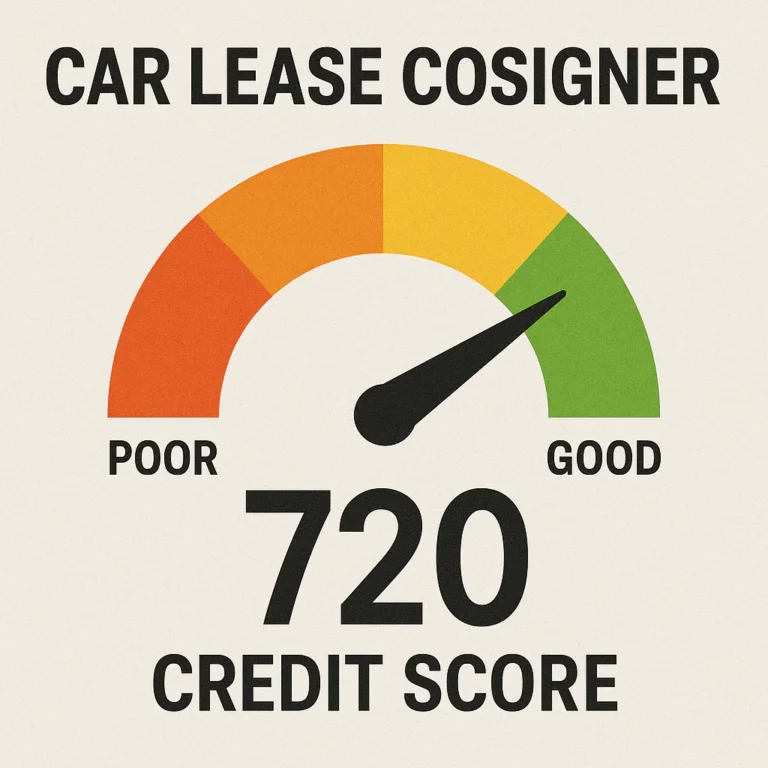
A qualified co-signer or joint applicant may strengthen an application, but it is a serious shared obligation, not a decorative name on a form. The other applicant may be responsible for the lease if payments stop, and missed payments can affect both parties’ credit histories if reported.
Before applying together:
- Confirm whether the leasing company permits a co-signer or co-lesee.
- Ask how the other applicant’s income and credit will be evaluated.
- Make sure both people understand payment responsibility and lease-end obligations.
- Agree in writing about who pays, drives, insures, and handles unexpected charges.
Capital One identifies a co-signer as one possible way to improve approval odds, but lender policies vary. If you’re unsure, compare that route with a lower-cost vehicle or waiting to improve your application. It’s easier to preserve a friendship before the first missed payment than after. 🤝
🧾 How to Qualify for a Zero-Down Car Lease
Here’s a practical approach we use when evaluating a lease quote. It won’t force a lender to approve you, but it helps you apply with clearer numbers and fewer surprises.
Check your credit reports and correct errors
- Review your reports before visiting the dealer. You can access reports through AnnualCreditReport.com, the federally authorized source.
- Look for inaccurate accounts, balances, or payment records.
- Dispute errors with the reporting agency and relevant creditor using the instructions on your report.
- Check the score type and source. A consumer score may differ from a score used by an auto lender.
- Don’t confuse checking your own credit with a lender application. Checking your own score is generally a soft inquiry; a lender may make a hard inquiry when you apply. See the CFPB’s credit inquiry guidance.
Set a realistic budget and lower your debt
Work out what you can afford after rent or mortgage, utilities, insurance, fuel or charging, parking, maintenance, and other debts. A lease payment is only one line in the vehicle’s real monthly cost.
Before you apply:
- Pay every bill on time.
- Reduce high credit-card balances where you can.
- Avoid taking on unnecessary new debt.
- Don’t drain emergency savings just to force a lower advertised payment.
- Include insurance and mileage needs in your vehicle budget.
The CFPB’s car-loan shopping tools focus on loans, but their budgeting and comparison principles are also useful when evaluating a lease. For battery-electric options, our electric vehicle leases coverage can help you think through charging and usage costs.
Compare lease offers and ask for a sign-and-drive quote
Ask each dealer for a quote on the same make, model, trim, lease term, mileage allowance, and due-at-signing structure. Otherwise, you’re comparing apples with a hatchback full of oranges.
Request these details in writing:
- Selling price or agreed vehicle value
- Cap-cost reduction, if any
- Money factor or lease rate
- Residual value
- Term and annual mileage allowance
- Itemized fees and taxes
- Total amount due at signing
- Monthly payment including applicable taxes
- End-of-lease charges and options
Say: “Please quote this with zero cap-cost reduction and show every amount due at signing.” If the dealer cannot or will not itemize it, pause before signing.
Negotiate the vehicle price, not just the monthly payment
A low monthly payment can be created by changing the term, mileage allowance, upfront cash, or vehicle configuration. It does not automatically mean the negotiated price is good. Focus first on the selling price and lease structure, then check the payment.
A lease expert in the featured video puts it plainly: “Instead, focus on selling price to the leasing company.” The same video advises against a large cap-cost reduction and recommends asking about the money factor and acquisition-fe markup. Those are useful questions, but verify the current program and fee rules with the leasing company; not every fee is negotiable, and markups and rules vary.
Gather documents and apply strategically
The leasing provider may request documents such as:
- Driver’s license or other identity documentation
- Proof of residence
- Recent pay stubs or other income evidence
- Employer details
- Housing-cost information
- Insurance information
- Social Security number or other information needed for a credit application
- Co-applicant documents, if applicable
Requirements differ, so ask the lender or dealership for its exact list before applying. Submit accurate information and review the application for errors. A clean, complete application is not a substitute for qualifying credit, but it can avoid delays caused by missing paperwork.
🧮 How a Zero-Down Lease Changes Your Monthly Payment
Capitalized cost, lease term, mileage allowance, and money factor
A zero-down lease generally means you’re not paying a cap-cost reduction to lower the amount used in the payment calculation. That typically raises the monthly payment compared with an otherwise identical lease that has money down, but leaves more cash in your pocket at signing.
Here’s the trade-off in plain English:
| Choice | Typical effect | Main caution |
|---|---|---|
| Zero cap-cost reduction | More cost remains in monthly payments | Payment may be higher |
| Large cap-cost reduction | Lower monthly payment | Cash may be exposed if the car is totaled or stolen |
| Shorter lease term | Fewer payment months, but payment can be higher | Check the full contract and vehicle program |
| Higher mileage allowance | More miles included | May change the payment |
| Lower mileage allowance | May reduce the payment | Extra-mileage charges can add up |
Don’t assume a payment difference can be calculated with a single rule of thumb. Lease programs, money factors, taxes, fees, incentives, and residuals vary. Ask for both written quotes and compare total scheduled payments plus upfront costs.
Taxes, fees, rebates, and the total cost of the lease
A lease advertisement may feature a payment while leaving out the amounts due at delivery, the mileage allowance, or eligibility conditions. The FTC’s advertising guidance for car dealers discusses truthful auto advertising and disclosures; state requirements can add further rules.
Check whether an incentive is:
- A manufacturer lease incentive
- A customer cash rebate
- A loyalty or conquest offer
- A military, student, or other eligibility-based offer
- Already included in the quoted payment
Ask if a rebate reduces the lease cost, requires a particular lender, or depends on qualifying credit. The best offer is the one you can actually qualify for and understand, not the boldest number on the windshield.
Zero down versus a larger upfront payment
A larger upfront payment may make a monthly budget easier to manage, but it can reduce your available savings and may be at risk in a total-loss situation. Zero down preserves cash, although the monthly payment may be higher.
One leasing video offers the advice: “Don’t put ANY money down on a lease!” That’s a useful caution against large cap-cost reductions—not a rule that every driver must follow. Some shoppers deliberately pay fees upfront or prioritize a lower monthly obligation. Make the decision using your emergency savings, total cost, insurance protection, and contract terms. We’d rather see you keep a financial cushion than spend it chasing a payment that looks good in an ad. 💵
⚠️ Zero-Down Leasing with Bad or Limited Credit
What to expect if your credit score is low
A lower score doesn’t automatically disqualify you from leasing, but a zero-down offer may be harder to get. Capital One and Experian both describe possible drawbacks such as fewer vehicle choices, less favorable lease terms, a higher money factor, or a request for more money upfront. The lender’s decision and specific program rules determine what actually applies.
Be wary of anyone promising guaranteed approval without reviewing your application or contract. No credit score alone guarantees a zero-down lease, and “approved” does not always mean the terms fit your budget.
How to lease a car with bad credit without overpaying
If your application is challenged:
- Choose a less expensive vehicle. A lower-cost model may fit more lender programs and leave room for insurance and running costs.
- Get quotes from more than one source. Compare the full terms, not just the payment.
- Ask whether a co-signer is permitted. Discuss the shared responsibility before applying.
- Check your reports for errors and avoid applying until obvious issues are addressed, if timing allows.
- Ask for the money factor and fee breakdown. Compare lender terms and ask whether any dealer-added products are optional.
- Consider waiting. If you can improve payment history or lower revolving balances, you may have a stronger application later.
Capital One also mentions a positive-equity trade-in as a possible way to support a deal. We’d treat trade-in equity carefully: it is your asset, and using it as a cap-cost reduction may expose it to the same total-loss risk as cash down. Get the trade-in value and lease figures separately.
Red flags: buy-here-pay-here claims, add-ons, and misleading ads
Slow down if you see:
- “Guaranteed approval” without clear conditions
- A payment quote with no term, mileage limit, or due-at-signing disclosure
- Pressure to sign before reviewing the contract
- Unexplained products bundled into the lease
- A request for a large deposit before written approval
- A “lease here, pay here” arrangement that you don’t fully understand
The CFPB warns that some “lease here, pay here” arrangements can involve older vehicles, frequent payments, and high rental charges. Read its consumer guidance on auto lending and leasing and get independent advice if the contract is unclear. A difficult credit situation is not a reason to accept mystery math. 🚩
🔄 Alternatives If You Don’t Qualify for a Zero-Down Lease
Choose a less expensive vehicle or a different trim
If a particular vehicle doesn’t fit the lender’s approval or your budget, compare a less expensive model, a different trim, or a vehicle with a more suitable lease program. For example, compare current offers directly with automakers such as Toyota, Honda, Hyundai, or Subaru, then confirm eligibility and final terms with the participating dealer.
A lower payment achieved by dropping mileage below what you actually drive is a false economy. Match the contract to your real commute, weekend trips, and likely life changes.
Consider a one-pay lease, used car, or purchase instead
Possible alternatives include:
- A one-pay lease: You pay multiple scheduled payments upfront, if the provider offers it. Ask how it treats total-loss claims and whether the structure is suitable for you.
- A used vehicle lease: Availability, vehicle age, and lender rules vary. Check the car’s condition, warranty, and lease-end terms carefully.
- Buying a more affordable vehicle: Financing or paying cash may make more sense if you expect to drive high mileage or keep the car for a long time.
- A short-term subscription: Capital One notes subscriptions may offer shorter commitments, but the contract, services included, and total cost vary.
- A lease transfer: Only consider one if the leasing company allows it and you understand who remains liable.
Compare leasing with purchasing using our auto financing options resources. Leasing may suit drivers who prefer changing vehicles and can stay within mileage limits; buying may suit drivers who want ownership and long-term flexibility.
Wait, build credit, or add a qualified co-signer
You don’t have to sign a lease this week. Waiting can give you time to correct credit-report errors, reduce debt, save for fees, or compare a broader range offers. A co-signer may be another option, but only if both applicants fully understand the shared liability.
Capital One notes that leasing companies differ, so compare before deciding. That advice is especially valuable when an application is less straightforward: one rejection isn’t proof every lender will say no, but repeated applications without a plan can add stress without improving the offer.
📈 Build Credit Before Applying for a Car Lease
Practical ways to improve your credit score
There’s no instant, guaranteed path to a higher score, but consistent habits can strengthen a credit profile:
- Pay bills on time; set reminders or autopay for at least the minimum due.
- Keep revolving balances manageable.
- Review credit reports and dispute inaccurate information.
- Avoid unnecessary new applications.
- Keep older accounts open when appropriate and affordable.
- Don’t take on debt just to create a different credit mix.
The CFPB offers consumer information on credit reports and scores, while Experian recommends payment consistency, lower balances, and limiting unnecessary applications. Scores can respond to new information over time; no method guarantees a specific increase by a particular date.
How checking your credit score works
You can review your credit reports through AnnualCreditReport.com and check a consumer score through a bank, card issuer, bureau, or monitoring service. Capital One says its CreditWise tool is available to non-customers as well; check the provider’s current terms for eligibility and features.
Keep in mind:
- Your credit report lists account and inquiry information.
- A credit score is calculated from report data using a scoring model.
- Different models may produce different scores.
- A dealership or leasing company may use an auto-focused score rather than the number shown in your app.
When you apply, ask which bureau or bureaus the lender may check and whether it expects to submit the application to multiple lenders. The CFPB explains hard and soft inquiries.
How often credit scores update and how long improvement may take
There is no single monthly update date for everyone. Creditors report information to the bureaus on their own schedules, and scores may change when the underlying report changes or a scoring model is used. A credit-monitoring service may refresh its display on a different schedule from a lender’s data.
If you’re preparing for a lease, focus on controllable steps well before the application: pay on time, reduce balances where practical, and check for reporting errors. The CFPB’s credit-report resource explains how to obtain and review reports.
Does leasing a car build credit?
A lease may help build a payment history if the leasing company reports payments to the credit bureaus and you pay as agreed. Reporting practices vary, so ask the leasing company before signing. A lease also does not automatically improve every part of your credit profile, and late payments can have negative consequences.
Capital One says positive lease-payment history may remain on reports for up to 10 years, depending on the account and reporting circumstances. For personalized information about what appears on your reports, check with the bureaus and the leasing company. A lease is a commitment first and a possible credit-building tool second.
📝 Before You Sign: Zero-Down Lease Checklist

Questions to ask the dealer and leasing company
Bring this checklist to the dealership:
- Is this zero down, or zero due at signing?
- What is the exact, itemized amount due at signing?
- What is the negotiated vehicle selling price?
- What are the money factor and residual value?
- Which lender or leasing company will hold the contract?
- What mileage allowance and lease term are quoted?
- Are incentives included, and do I qualify for each one?
- Are any dealer products included, and can I decline them?
- Is there a security deposit?
- What fees may apply at lease-end?
- How does the contract handle a total loss or theft?
- Is any gap protection included, and what are its exclusions?
For more leasing fundamentals, browse our car lease basics and best lease terms pages.
How to review the lease agreement and due-at-signing amount
Before signing, compare the written contract with the quote. Confirm the vehicle identification number, term, mileage allowance, monthly payment, due-at-signing amount, fees, and any optional products. If a figure changed, ask why and request an updated itemization.
Don’t sign blank or incomplete forms. Take time to read the contract and ask for an explanation of any term you don’t recognize. The FTC’s car-buying advice recommends reviewing paperwork closely and getting promises in writing.
Mileage limits, wear, insurance, maintenance, and end-of-lease fees
A low payment is only useful if the lease fits your driving and ownership expectations. Check:
- Mileage allowance: Estimate your annual driving honestly; excess mileage can trigger charges.
- Wear and tear: Ask what the contract considers excessive damage.
- Insurance: Confirm coverage requirements with the leasing company and insurer.
- Maintenance: Follow the manufacturer’s maintenance schedule and keep records.
- End-of-lease options: Understand return, purchase, inspection, disposition, and other possible fees.
- Gap protection: Confirm what is covered and what exclusions apply; do not assume it is included.
The CFPB’s car lease explainer covers mileage and end-of-lease responsibilities. A little paperwork now is much cheaper—in time, at least—than discovering an unexpected obligation at turn-in.