Support our educational content for free when you purchase through links on our site. Learn more
🚗 What Credit Score Do You Need to Lease a Car? (2026 Guide)

Think you need a perfect 80 to drive off the lot in a brand-new ride? Think again. At Car Leases™, we’ve seen everything from rock-bottom subprime approvals to super-prime VIP treatments, and the truth is far more nuanced than a single magic number. While the average new car lesee boasts a credit score of 751, the door isn’t slammed shut on those with lower scores—it just costs a little more to walk through.
In this deep dive, we’re pulling back the curtain on the money factor, the hidden fees, and the strategic maneuvers that can turn a “no” into a “yes.” Whether you’re staring at a 620 score or wondering if a 580 is enough, we’ll reveal the exact tiers lenders use, the surprising alternatives like lease transfers, and the step-by-step playbook to negotiate your way into the driver’s seat. Spoiler alert: Your score matters, but your strategy matters more.
🗝️ Key Takeaways
- No Universal Minimum: There is no single “cutoff” score, but 620–640 is often the practical floor for new car leases.
- Score Dictates Cost: Your credit score directly determines your money factor (interest rate); lower scores mean significantly higher monthly payments.
- Strategic Workarounds: If your credit is shaky, a co-signer, a larger down payment, or a lease transfer can bypass strict approval hurdles.
- Leasing Builds Credit: Making on-time payments on a lease can actively repair and improve your credit score over time.
- 👉 Shop Around: Requirements vary wildly by lender; one dealership’s rejection is another’s approval.
Table of Contents
- ⚡️ Quick Tips and Facts
- 🕰️ The Evolution of Auto Leasing: From Luxury Perk to Mainstream Choice
- 📊 Decoding the Numbers: What Credit Score Do You Actually Need to Lease a Car?
- 1. The Subprime Zone: Leasing with a Credit Score Below 60
- 2. The Fair Game: Navigating Leases with Scores Between 60 and 69
- 3. The Sweet Spot: Ideal Credit Scores for Prime Leasing Deals
- 4. The VIP Lounge: Super-Prime Scores and Exclusive Manufacturer Incentives
- 🔍 Beyond the FICO: What Lenders Really Look at When You Lease
- 🚧 Hurdles and Handholds: What to Know When Leasing a Car with Bad Credit
- 🛠️ The Comeback Tour: How to Lease a Car if You Have Bad Credit
- 🔄 Plan B: Alternatives to Leasing a Car with Bad Credit
- 📈 Credit Repair 101: Ways to Improve Your Credit Scores Before You Sign
- ❓ Does Credit Score Matter When Leasing a Car? The Truth Unveiled
- 🏗️ Does Leasing a Car Build Credit? The Long-Term Impact Explained
- ⏳ The Waiting Game: How Long Does It Take to Build Credit?
- 🔄 The Pulse Check: How Often Do Your Credit Scores Update?
- 🔎 The Detective Work: How Do I Check My Credit Score?
- 💡 Key Takeaways: Leasing a Car with Bad Credit
- 🏁 Conclusion
- 🔗 Recommended Links
- ❓ FAQ
- 📚 Reference Links
⚡️ Quick Tips and Facts
Before we dive into the nitty-gritty of credit scores and money factors, let’s hit the rewind button on the most critical takeaways. If you’re in a rush, here’s the cheat sheet to getting that new ride without losing your shirt:
- There is no magic number: Unlike a video game where you need exactly 10 points to win, there is no universal minimum credit score required to lease a car. It varies wildly by lender, dealership, and even the specific car model.
- The “Good” Benchmark: While you can lease with lower scores, the average credit score for a new car lease in 2024 was a whopping 751 according to Experian. If you’re below 70, expect to pay more.
- Money Factor Matters: Your credit score doesn’t just determine if you get approved; it dictates your money factor (the lease equivalent of an interest rate). A lower score means a higher money factor, which equals higher monthly payments.
- The Down Payment Dilemma: If your credit is shaky, a larger capitalized cost reduction (down payment) can act as a safety net for the lender, increasing your approval odds.
- Co-signers are Gold: Adding a co-signer with pristine credit is often the fastest way to bypass bad credit hurdles.
- Check Your Report First: Never walk into a dealership blind. Check your reports for errors at AnnualCreditReport.com before you start negotiating.
For those looking to bypass the down payment entirely, check out our guide on zero down car lease deals to see if you qualify for special manufacturer incentives.
🕰️ The Evolution of Auto Leasing: From Luxury Perk to Mainstream Choice
Remember when leasing a car felt like something only celebrities or corporate executives did? Back in the day, leasing was the “rich person’s game,” reserved for those with super-prime credit and deep pockets. Fast forward today, and leasing accounts for roughly 24% of all new vehicle transactions (per Experian).
Why the shift? It’s simple: affordability and flexibility. In a world where car prices have skyrocketed, leasing allows you to drive a brand-new vehicle with lower monthly payments than a traditional loan. You’re only paying for the car’s depreciation during the time you drive it, not the entire value.
However, as leasing became mainstream, lenders got pickier. They realized that while the monthly payments are lower, the risk of a lesee walking away or defaulting is real. This is where your credit score becomes the gatekeeper.
“Statistically speaking, the better your credit score is, the less likely you are to miss lease payments.” — Experian
But does a lower score mean a hard “no”? Not necessarily. It just means you have to play a different game. We’ll break down exactly how the rules change based on your score later in this article.
📊 Decoding the Numbers: What Credit Score Do You Actually Need to Lease a Car?
So, you’re staring at your credit report, heart pounding, wondering: “What kind of credit score do you need to lease a car?”
The short answer? It depends. The long answer? It’s a tiered system, much like airline status or credit card rewards. Let’s break down the four main tiers you’ll encounter in the wild.
1. The Subprime Zone: Leasing with a Credit Score Below 60
If your score is under 60, you are in the Subprime territory. This is the “hard mode” of leasing.
- The Reality: Most major manufacturers (like Toyota, Honda, Ford) have strict internal policies that make leasing nearly impossible with scores this low. They view you as a high-risk borrower.
- The Workarounds: You might find a “Buy Here, Pay Here” style lease program at a used car dealership, but be warned: these often come with exorbitant money factors (interest rates) and weekly payment schedules that can trap you in debt.
- The Verdict: ❌ Leasing a new car is highly unlikely. You might consider a lease transfer (taking over someone else’s lease) or focusing on building credit first.
2. The Fair Game: Navigating Leases with Scores Between 60 and 69
Welcome to the Non-Prime or Fair Credit zone. This is where the “it depends” factor is strongest.
- The Reality: You can get approved, but you won’t get the “advertised” deals. You’ll likely face:
Higher Money Factors: Your interest rate could be double what a prime borrower pays.
Larger Down Payments: Dealerships will want more cash upfront to offset the risk.
Limited Inventory: You might be restricted to specific models or brands that have more flexible financing arms. - The Strategy: As noted in our analysis of industry standards, scores between 620 and 640 are often the minimum threshold for some lenders to even consider a lease application.
- The Verdict: ✅ Possible, but expensive. You need to shop around aggressively and be prepared to negotiate hard on the “cap cost” (the price of the car).
3. The Sweet Spot: Ideal Credit Scores for Prime Leasing Deals
This is the Prime range (roughly 60 to 79). If you are here, you are in the majority of successful leses.
- The Reality: You will likely get approved for most standard leases. You won’t get the absolute rock-bottom money factor, but you won’t be penalized heavily either.
- The Benefits:
- Standard security deposits (often waived for excellent credit).
- Access to most manufacturer incentives.
- Reasonable monthly payments.
- The Verdict: ✅ Solid approval odds. This is the “safe zone” for most consumers.
4. The VIP Lounge: Super-Prime Scores and Exclusive Manufacturer Incentives
Scores of 780 and above put you in the Super-Prime category. This is the golden ticket.
- The Reality: You are the dream customer. Lenders fight for you.
- The Perks:
Lowest Money Factors: You get the cheapest interest rate possible.
Waived Fees: Many dealerships waive acquisition fees or security deposits for super-prime borrowers.
Exclusive Deals: Some brands offer “loyalty” or “college graduate” programs that are only accessible to those with top-tier credit. - The Verdict: ✅ Best possible terms. You can negotiate from a position of strength.
| Credit Tier | Score Range | Approval Chance | Money Factor | Down Payment Expectation |
|---|---|---|---|---|
| Subprime | < 60 | ❌ Very Low | Very High | High / Co-signer Required |
| Non-Prime | 60 – 69 | ⚠️ Moderate | High | Moderate to High |
| Prime | 70 – 79 | ✅ High | Standard | Low or None |
| Super-Prime | 780+ | ✅ Guaranteed | Lowest | Often Waived |
Data based on general industry trends from Experian and Chase.
🔍 Beyond the FICO: What Lenders Really Look at When You Lease
Here is a secret the dealerships don’t always shout from the rooftops: Your FICO score isn’t the only number that matters.
Lenders use FICO Auto Scores, which are specialized versions of the FICO score tailored specifically for auto lending. These scores range from 250 to 90 (unlike the standard 30-850) and weigh your auto loan history much heavier than your credit card usage.
The Other Factors in the Mix
Even if your score is perfect, a lender will pull your full credit report to check:
- Debt-to-Income Ratio (DTI): Do you have too many other loans? If your monthly debt payments eat up more than 40-50% of your income, you might get rejected regardless of your score.
- Payment History: Have you missed payments in the last 24 months? A single late payment can tank your approval chances.
- Credit Utilization: Are you maxing out your credit cards? High utilization suggests financial stress.
- Hard Inquiries: Have you applied for five other loans in the last month? This looks like you’re desperate for cash.
“Like most financial services, the higher your credit score is, the easier it should be for you to walk away with a deal.” — Chase Bank
But remember, a high score with a terrible DTI is a red flag. Lenders want to know you can afford the lease, not just that you’ve paid bills on time in the past.
🚧 Hurdles and Handholds: What to Know When Leasing a Car with Bad Credit
So, you’ve accepted that your credit isn’t perfect. Now what? The road to leasing with bad credit is full of potholes, but there are handholds if you know where to grab them.
The “More Cash to Close” Trap
The most common hurdle is the upfront cost. With bad credit, the lender wants to minimize their risk. They will ask for a larger capitalized cost reduction (down payment).
- The Risk: Putting a massive down payment on a lease is risky. If the car is totaled in an accident, the insurance payout goes to the lender first. You might lose that down payment if you don’t have Gap Insurance (which is often mandatory for leses with lower credit).
The Limited Inventory
You might find that the “hot” cars (like the Tesla Model Y or the Honda CR-V) are off-limits. Dealerships often reserve their best inventory for prime borrowers.
- The Fix: Be flexible. Look at less popular models or brands that have aggressive leasing programs for subprime borrowers, such as certain domestic brands or specific trim levels.
The Co-Signer Lifeline
If your credit is bad, a co-signer is your best friend. A co-signer with good credit essentially vouches for you.
- How it works: The lender looks at the co-signer’s score. If they have a 750+, you might get the “Prime” rate even with your 620.
- The Catch: If you miss a payment, their credit score takes the hit. This puts a strain on relationships, so only do this with someone you trust implicitly.
🛠️ The Comeback Tour: How to Lease a Car if You Have Bad Credit
Ready to take the wheel? Here is your step-by-step battle plan for leasing with less-than-stellar credit.
Step 1: Know Your Numbers
Before you step foot on a lot, check your credit score. Use free tools like CreditWise from Capital One or Chase Credit Journey.
- Pro Tip: Don’t just look at the number; look at the report. Dispute any errors immediately. A single corrected error can boost your score by 20-50 points.
Step 2: Save for a Down Payment
If you can’t boost your score quickly, you need cash.
- Strategy: Save enough to cover the first month’s payment, a security deposit, and a significant cap cost reduction. This lowers the amount you finance, making the lender feel safer.
Step 3: Shop Around (Don’t Setle)
One dealership’s rejection is another’s approval.
- Action: Contact multiple dealerships. Ask specifically about their “subprime” or “bad credit” leasing programs.
- Warning: Avoid “Lease Here, Pay Here” dealerships that charge weekly payments and astronomical interest rates. Stick to major franchises if possible.
Step 4: Consider a Lease Transfer
This is a sneaky good option. Websites like Swapalease or LeaseTrader allow you to take over someone else’s lease.
- Why it works: The original lesee has already done the credit check. The new lesee (you) often faces less stringent requirements, and the monthly payments might be lower than market rate.
Step 5: Negotiate the Money Factor
Don’t just accept the first number they give you.
- Tactic: Ask the dealer to disclose the money factor. If it’s high, ask if they can lower it. Sometimes, a higher down payment can be traded for a lower money factor.
🔄 Plan B: Alternatives to Leasing a Car with Bad Credit
If the leasing door is firmly shut, don’t panic. There are other ways to get on the road.
1. Buy Instead of Lease
It sounds counterintuitive, but buying a used car might be easier than leasing a new one with bad credit.
- Why: Lenders are often more lenient with used car loans because the car has value as collateral. You can find “Buy Here, Pay Here” lots, but be careful of high interest.
- Better Option: Look for Certified Pre-Owned (CPO) programs from major brands. They often have financing options for lower credit scores.
2. Car Subscription Services
Services like Care by Volvo, Porsche Drive, or Flexdrive offer all-inclusive monthly contracts.
- Pros: No long-term commitment, insurance and maintenance included.
- Cons: Often more expensive than a traditional lease, and credit checks can still be strict.
3. Lease Transfer
As mentioned earlier, taking over an existing lease is a fantastic loophole.
- Where to look: Check Swapalease.com or LeaseTrader.com. You can find deals on luxury cars that are otherwise out of reach.
4. Save and Buy Cash
If you have the discipline, saving up to buy a reliable used car with cash eliminates the credit check entirely. It’s the ultimate freedom.
📈 Credit Repair 101: Ways to Improve Your Credit Scores Before You Sign
Why wait? If you can delay your lease by 3-6 months, you could save thousands interest. Here is how to turbocharge your score.
1. The 30% Rule (Credit Utilization)
Your credit utilization (how much of your limit you use) makes up 30% of your FICO score.
- Action: Pay down credit card balances so they are below 30% of your limit. Ideally, below 10%.
- Example: If you have a $5,0 limit, try to keep the balance under $1,50 (or $50 for best results).
2. The Payment History Powerhouse
Payment history is 35% of your score.
- Action: Set up autopay for all bills. Even one late payment can stay on your report for 7 years.
- Quick Fix: If you have old late payments, try to negotiate a “pay for delete” with the creditor, though this is hard to get.
3. Don’t Open New Accounts
Every time you apply for credit, you get a hard inquiry, which drops your score by a few points.
- Action: Stop applying for new credit cards or loans for at least 6 months before you plan to lease.
4. Become an Authorized User
Ask a family member with excellent credit to add you as an authorized user on their credit card.
- The Magic: Their good payment history gets added to your report, potentially boosting your score instantly. Just make sure they don’t overspend!
❓ Does Credit Score Matter When Leasing a Car? The Truth Unveiled
We’ve danced around it, but let’s be blunt: Yes, your credit score matters immensely.
It determines:
- Approval: Will they say yes or no?
- Cost: How much will you pay per month?
- Terms: How much cash do you need upfront?
However, it’s not a binary “yes/no” switch. It’s a sliding scale. A score of 650 might get you a lease with a $2,0 down payment, while a score of 750 gets you the same car with $0 down. The difference in total cost over 36 months can be thousands of dollars.
“A low credit score could also limit your options when you come to choosing your new lease vehicle.” — Chase Bank
So, while you can lease with bad credit, you are essentially paying a “risk premium” to the lender.
🏗️ Does Leasing a Car Build Credit? The Long-Term Impact Explained
Here is the good news: Leasing can build credit, but only if you play by the rules.
How It Works
Leases are reported to the three major credit bureaus (Experian, Equifax, TransUnion) just like car loans.
- On-Time Payments: Every month you pay on time, it adds a positive mark to your history. This is the biggest factor in your score.
- Credit Mix: Having an installment loan (like a lease) in addition to revolving credit (credit cards) improves your “credit mix,” which can boost your score.
The Danger Zone
If you miss a payment, it hurts just as much as a missed loan payment.
- Reposession: If you default, the car gets repossessed, and that negative mark stays on your report for 7 years, making future leasing or buying nearly impossible.
Verdict: ✅ Yes, leasing builds credit if you are disciplined. It’s a great tool to repair bad credit after you get the car, provided you can afford the payments.
⏳ The Waiting Game: How Long Does It Take to Build Credit?
You can’t fix a broken credit score overnight. It’s a marathon, not a sprint.
- Quick Wins: Paying down credit card balances can show results in 30-45 days (the next billing cycle).
- Medium Term: Establishing a new positive payment history takes about 6 months to significantly impact your score.
- Long Term: Removing negative items (like late payments) takes time. They stay on your report for 7 years, but their impact fades after 2 years if you maintain good habits.
If you are in a rush, focus on utilization first. It’s the fastest way to see a bump.
🔄 The Pulse Check: How Often Do Your Credit Scores Update?
Credit scores are not static; they are snapshots in time.
- Reporting Cycle: Most lenders report to the bureaus once a month, usually when your statement closes.
- Frequency: Your score can change daily if you use a service that updates it frequently, but the underlying data usually changes monthly.
- Tip: If you plan to lease, check your score a few weeks before you apply to ensure the data is fresh.
🔎 The Detective Work: How Do I Check My Credit Score?
You don’t need to pay for this! Here are the best ways to check your score for free:
- AnnualCreditReport.com: The only official site for free credit reports from all three bureaus.
- Bank Apps: Most major banks (Chase, Capital One, Wells Fargo) offer free FICO scores to their customers.
- Credit Monitoring Services: Apps like Credit Karma (uses VantageScore) or CreditWise (uses TransUnion) offer free access.
Note: Checking your own score is a “soft inquiry” and does not hurt your credit. Only applying for new credit causes a “hard inquiry.”
💡 Key Takeaways: Leasing a Car with Bad Credit
Let’s wrap up the heavy lifting with a quick recap of the most vital points:
- No Hard Cutoff: There is no single “minimum” score, but 620-640 is often the practical floor for new car leases.
- Cost of Bad Credit: Lower scores mean higher money factors and larger down payments.
- 👉 Shop Around: Requirements vary by lender. One “no” doesn’t mean all doors are closed.
- Co-signers Work: A co-signer is the most effective way to bypass bad credit hurdles.
- Leasing Builds Credit: If you pay on time, a lease can help repair your score.
- Alternatives Exist: Lease transfers, buying used, or car subscriptions are viable options if a new lease is out of reach.
Remember, the goal isn’t just to get the car; it’s to get the car without digging a financial hole you can’t climb out of.
🏁 Conclusion

So, what kind of credit score do you need to lease a car? The answer is nuanced. If you have a super-prime score (780+), you’re in the VIP lounge with the best deals. If you’re in the prime range (70-79), you’re in the sweet spot. If you’re below 650, the road is bumpy, but not impassable—you just need more cash upfront, a co-signer, or the willingness to shop around.
The automotive world is vast, and while leasing offers incredible flexibility, it demands financial responsibility. Whether you are looking to repair your credit or simply want to drive a new car without a massive loan, understanding your credit score is the first step to success.
Our Recommendation:
If your score is below 620, pause and build credit for 6 months. The savings on interest and down payments will far outweigh the cost of waiting. If you need a car now, look into lease transfers or used car financing as safer alternatives.
Don’t let a number on a screen stop you from getting behind the wheel, but do respect the power that number holds. With the right strategy, you can negotiate a lease that fits your budget and your life.
Ready to find your perfect match? Check out our Latest Car Lease Deals to see what’s available today!
🔗 Recommended Links
- 👉 Shop New Car Leases: Search for Lease Deals on Edmunds | Search on TrueCar | Search on Auto Trader
- Brand Specific Leasing:
- Toyota Lease Offers
- Honda Lease Specials
- Ford Lease Deals
- Tesla Lease Options
- Lease Transfer Platforms: Swapalease | LeaseTrader
❓ FAQ

Does a large down payment help lease approval with bad credit?
Yes, absolutely. A large capitalized cost reduction (down payment) reduces the amount the lender has to finance. This lowers their risk, making them more likely to approve you even with a lower credit score. However, be cautious: putting too much cash down on a lease can be risky if the car is totaled, as you might lose that money without proper Gap Insurance.
Read more about “🚀 5 Big Benefits of Zero Down Car Leases (2026)”
How do credit scores impact lease approval and monthly payments?
Your credit score is the primary determinant of your money factor (interest rate). A higher score secures a lower money factor, resulting in lower monthly payments. Conversely, a lower score increases the money factor, which can significantly inflate your monthly costs. Additionally, lower scores often trigger requirements for larger security deposits and down payments.
Read more about “🚀 How to Qualify for a Zero Down Car Lease (2026 Guide)”
Are there ways to improve your credit score before leasing a car?
Yes. You can improve your score by:
- Paying down credit card balances to lower utilization.
- Ensuring all bills are paid on time.
- Disputing errors on your credit report.
- Becoming an authorized user on a family member’s account.
- Avoiding new hard inquiries.
Read more about “🚀 2026’s Top 15 Zero Down Lease Promotions: Drive Now, Pay Later!”
What credit score do luxury car dealerships require for leasing?
Luxury brands (like BMW, Mercedes-Benz, Audi) typically have stricter requirements. They often look for prime or super-prime scores (70+) to qualify for their best incentives. While some may accept scores in the high 60s, you will likely face higher money factors and stricter terms.
Read more about “7 Fees You’ll Actually Pay on a Zero Down Lease (2026) 🚗💸”
How does your credit score affect car lease rates?
The credit score directly influences the money factor. For example, a borrower with a 780+ score might get a money factor of 0.0125 (approx. 3% APR), while a borrower with a 60 score might get 0.030 (approx. 7.2% APR). This difference can add hundreds of dollars to the total cost of the lease.
Read more about “🚗 What Credit Score Do You Need to Lease a Car? (2026 Guide)”
Can you lease a car with a low credit score?
Yes, but it is difficult. Scores below 60 (subprime) rarely qualify for new car leases from major manufacturers. Scores between 60-69 may qualify but with higher costs. You may need a co-signer or a significant down payment to secure approval.
Read more about “🚨 Do Zero Down Car Leases Cost More? (2026 Truth)”
Are there any alternatives to leasing a car if I have bad credit?
Yes. Consider:
- Buying a used car: Lenders are often more lenient with used car loans.
- Lease transfers: Taking over an existing lease often has lower credit barriers.
- Car subscriptions: Short-term contracts that may have flexible credit requirements.
- Saving to buy cash: Eliminating the need for credit entirely.
Read more about “🚀 15 Best Car Lease Deals with No Money Down (2026)”
Do different car dealerships have different credit score requirements for leasing?
Yes. Each dealership works with different lenders (banks, credit unions, manufacturer captive finance arms). Some lenders are more aggressive with subprime borrowers than others. Shopping around is crucial if you have bad credit.
What can I do to improve my credit score before leasing a car?
Focus on payment history (35% of your score) and credit utilization (30%). Pay off high-balance credit cards, set up autopay for all bills, and avoid opening new credit accounts for at least 6 months before applying.
Read more about “🚗 What Does Zero Down Car Lease Mean? The 2026 Truth Revealed”
What are the advantages of having a good credit score when leasing a car?
A good credit score unlocks:
- Lower monthly payments.
- Waived security deposits.
- Access to exclusive manufacturer incentives.
- Better negotiation power.
- A wider selection of vehicles.
Read more about “🚗 Is It a Good Idea to Lease a Car? The 2026 Truth”
Is it possible to lease a car with no credit?
It is very difficult. “No credit” is often treated similarly to “bad credit” by lenders because there is no history to prove reliability. You will likely need a co-signer, a large down payment, or proof of significant income and assets to get approved.
Read more about “🚀 10 Cheapest Electric Car Leasing Options (2026)”
Can I lease a car with a fair credit score?
Yes. A “fair” credit score (roughly 580-69) can qualify for a lease, but expect higher interest rates and larger down payments. You may need to shop around to find a lender willing to work with you.
Read more about “How to Qualify for a Zero Down Car Lease: Credit Score Secrets (2026) 🚗”
What credit score is considered good for leasing a car?
Generally, a score of 70 or higher is considered “good” for leasing. Scores of 750+ are ideal for securing the best terms and lowest money factors.
Read more about “🚗 Top 10 Honda Lease Deals for 2026: Save Big & Drive Smart”
Can you lease a car with a 580 credit score?
It is highly unlikely to lease a new car with a 580 score. You might find a “Buy Here, Pay Here” used car lease, but these often come with predatory terms. Your best bet is to improve your score to at least 620 or look into lease transfers.
Read more about “How Much Is a Tesla Model 3 Lease? Shocking Truths for 2026 ⚡️”
What credit score do I need for a lease?
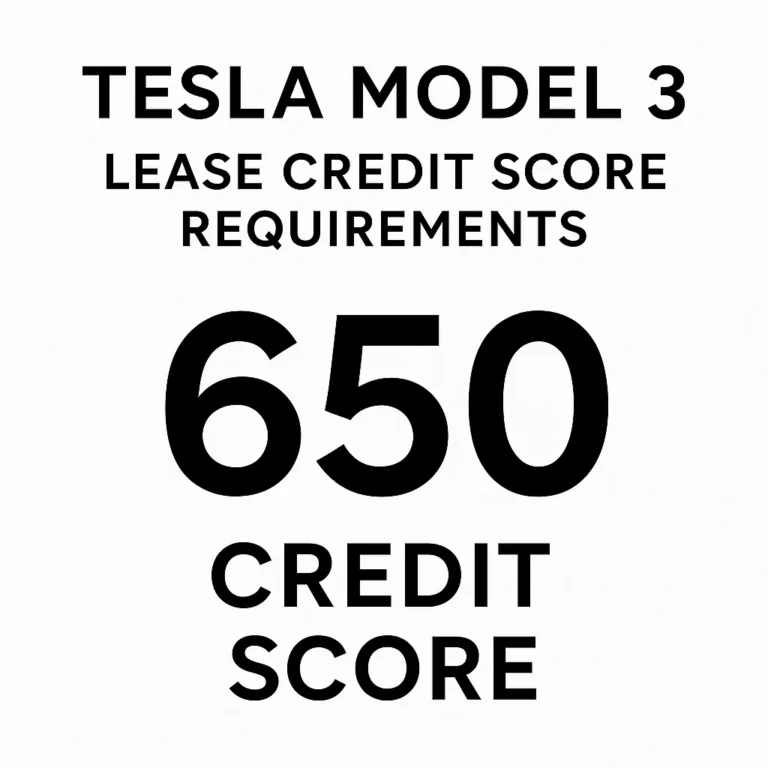
While there is no universal minimum, 620 is often cited as the practical minimum for new car leases. However, 70+ is recommended for favorable terms.
Read more about “🚀 Tesla Model 3 Monthly Lease: The 2026 Truth Behind the Deals”
Is it easier to get approved for a lease or finance?
Financing is generally easier for those with bad credit. Leasing requires a higher credit score because the lender retains the risk of the car’s residual value. Financing allows you to own the car, which reduces the lender’s risk, making them more lenient.
Read more about “Is it easier to get approved for a lease or finance?”
Can I lease a car with a 60 credit score?
Yes, it is possible. With a 60 score, you are in the “non-prime” range. You will likely need a co-signer, a significant down payment, and you should expect higher monthly payments.
Read more about “What FICO Score Does Hyundai Use? Unlock the Secrets (2026) 🔑”
📚 Reference Links
- Experian: State of the Automotive Finance Market Report
- Chase Bank: What Credit Score is Needed to Lease a Car?
- Capital One: Can You Lease a Car with Bad Credit?
- Consumer Financial Protection Bureau (CFPB): Leasing a Car
- AnnualCreditReport.com: Free Credit Reports
- CreditWise (Capital One): Free Credit Score Monitoring
- Chase Credit Journey: Free Credit Score